JSTOR Global Plants Home
  • Home
  • Browse
  • About
  • Access
  • Account
    • Saved Items
    • Profile
  • Log in

Global Plants

Skip to Main Content
  • JSTOR Global Plants Home
  • Global Plants

    • Browse
    • About
    • Access
    • Account
      • Saved Items
      • Profile
Log in
  • Browse
  • About
  • Access
  • Account
    • Saved Items
    • Profile
Advanced Search

Compilation
Lotononis dinteri

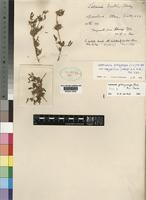
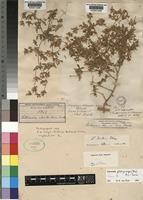
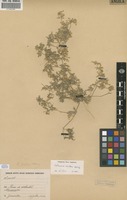
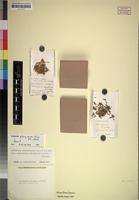
4 Images see all

Type of Lotononis dinteri Schinz [family LEGUMINOSAE-PAPILIONOIDEAE]
Type of Lotononis clandestina (E.Mey.) Benth. [family LEGUMINOSAE-PAPILIONOIDEAE]
Filed as Lotononis dinteri Schinz [family FABACEAE]
Filed as Lotononis platycarpa (Viv.) Pic.Serm. [family LEGUMINOSAE-PAPILIONOIDEAE]
Previous
Next

Name

Identification
Lotononis platycarpa (Viv.) Pic.Serm. [family LEGUMINOSAE-PAPILIONOIDEAE ] (stored under name); Verified by van Wyk, B.-E., Lotononis clandestina (E.Mey.) Benth. [family LEGUMINOSAE-PAPILIONOIDEAE ] Verified by Baker, J.G., Lotononis dinteri Schinz [family LEGUMINOSAE-PAPILIONOIDEAE ] Verified by Dummer, R.,
Related name
  • Lotononis dinteri
  • Lotononis clandestina
  • Lotononis platycarpa

Flora

Entry for Lotononis platycarpa Viv. Pic. Serm. [family LEGUMINOSAE]
Herbarium
Royal Botanic Gardens, Kew (K)
Collection
Flora Zambesiaca
Resource Type
Reference Sources
Entry From
FZ, Vol 3, Part 7, (2003) Author: various authors
Names
Amphinomia lotoidea Del. Maire [family LEGUMINOSAE], Fl. Afr. Nord.: 80 (1987).
Lotononis sp. 3 [family LEGUMINOSAE], (Miller 2269) of Drummond in Kirkia 8: 223 (1972).
Lotononis sp. 4 [family LEGUMINOSAE], (Davies 1224) of Drummond in Kirkia 8: 223 (1972).
Lotononis lotoidea Del. Batt. [family LEGUMINOSAE], Fl. Alg. 1: 209 (1889).
Lotononis dinteri Schinz [family LEGUMINOSAE], in Vierteljahrsschr. Naturf. Ges. Zürich 52: 423 (1907). —Dummer in Trans. Roy. Soc. South Africa 3: 317 (1913). —E.G. Baker, Legum. Trop. Africa: 18 (1926). —Torre in C.F.A. 3: 4 (1962). Type from Namibia.
Lotononis steingroeveriana Schinz Dummer [family LEGUMINOSAE], in Trans. Roy. Soc. South Africa 3: 311 (1913). —Lock, Leg. Afr. Check-list: 224 (1989).
Amphinomia platycarpa Viv. Cufod. [family LEGUMINOSAE], in Bull. Jard. Bot. État 25, Suppl. [Enum. Pl. Aethiop. Sperm.]: 22 (1955); Zweit Nachtr.: 23 (1969).
Lotononis platycarpa Viv. Pic. Serm. [family LEGUMINOSAE], in Webbia 7: 331 (1950). —Torre in C.F.A. 3: 4 (1962). —Schreiber in Merxmüller, Prodr. Fl. SW. Afrika, fam. 60: 83 (1970). —Milne-Redhead in F.T.E.A., Leguminosae, Pap.: 813, fig. 118/11–20 (1971). —Drummond in Kirkia 8: 223 (1972). —Lock, Leg. Afr. Check-list: 222 (1989). —van Wyk in Contrib. Bolus Herb., No. 14: 151, fig. 44 (1991). TAB. 3,7: 53, fig. A. Type from Egypt.
Lotus platycarpos Viv. [family LEGUMINOSAE], Pl. Aegypt., Dec. IV: 14, t. 2/9 (1830).
Leobordea lotoidea Del. [family LEGUMINOSAE], Fragm. Fl. Arab. Pétrée: 23 (1830). Type from Arabia.
Lotononis leobordea Benth. [family LEGUMINOSAE], in Hooker, London J. Bot. 2: 607 (1843). —Harvey in F.C. 2: 61 (1862). —J.G. Baker in F.T.A. 2: 5 (1871). —Dummer in Trans. Roy. Soc. South Africa 3: 311 (1913). —Eyles in Trans. Roy. Soc. South Africa 5: 369 (1916). —E.G. Baker, Legum. Trop. Africa: 17 (1926) nom. superfl., based on Leobordea lotoidea.
Lotononis clandestina [family LEGUMINOSAE], sensu J.G. Baker in F.T.A. 2: 8 (1871).
Lotononis clandestina var. steingroeveriana Schinz [family LEGUMINOSAE], in Verh. Bot. Vereins Prov. Brandenburg 30: 157 (1888). Type from South Africa (Northern Cape).
Information
Annual, with a very short stem, soon developing numerous slender radiating prostrate branches up to 5–50 cm long, pilose, exceptionally perennating with other stems from the top of an undivided taproot. Leaves opposite on flowering shoots, 3-foliolate; leaflets 4–8(20) × 1.5–3(4) mm, oblanceolate, slightly apiculate, glabrous to pilose above, pilose beneath; petiole ± as long as the leaflets or a little shorter; stipules single at a node, 2–4 mm long, linear to linear-lanceolate or linear-oblanceolate. Flowers 1–several clustered at the nodes, sessile; bracts 1–2.5 mm long, linear; bracteoles absent. Calyx 3.5–4.5(6) mm long, pilose; upper and lateral lobes joined slightly higher, 1.5–2.5(3) mm long, subulate. Standard pale yellow, shorter than the keel, narrowly elliptic-ovate, extensively pubescent outside; wings distinctly shorter than the keel; keel 6–7(9) mm long, narrow, slightly upcurved to the bluntly pointed reddish tip, extensively pubescent. Pods 4–7(9) × 1.5–2.5 mm, narrowly oblong, often somewhat tapered to the base, slightly downcurved at the tip, pubescent, sometimes glabrescent, c. 10-seeded. Seeds 1–1.5 mm long, oblique-cordiform, smooth, brown.
Habitat
Open ground, roadsides, cultivated ground and other disturbed places or in short grassland on sand
Range
Widely distributed in the drier parts of Africa and west Asia, from the Cape Verde Is., through North Africa and the Sahel to W Pakistan, and from Arabia and the Horn of Africa to northern Tanzania, then disjunctly south to southern Angola, the Flora Zambesiaca region, Namibia and the westerly part of South Africa.
Altitude range
900–1400 m.
1400
900
Distribution
Zimbabwe S Mberengwa Distr., Belingwe Reserve, fl. & fr. v.1958, Davies 2468 (K; SRGH).Zimbabwe W Bulawayo, road to Gwanda, near “Drive In” cinema, fl. 15.v.1958, Drummond 5817 (K; SRGH).Botswana SE Kweneng Distr., Mantswabese Ranch, fl. & fr. 17.iii.1977, Hansen 3080 (GAB; K: PRE; SRGH).Botswana SW 43 km from Ghanzi on Maun road, fl. & fr. 3.viii.1955, Story 5091 (K; PRE).Zimbabwe N Murehwa Distr., without precise locality, fl. & fr. 4.ix.1931, Rattray 408 (K; SRGH).Botswana N Ngamiland Distr., Aha Hills, near the Nxainxai (Xai-Xai) to Qangwa road, fl. 22.iv.1980, P.A. Smith 3380 (K; SRGH).
Notes
Notably variable over its wide range and particularly so in the western parts of southern Africa, as discussed by van Wyk (loc. cit.). The gatherings from SE and SW Botswana are larger in all parts, the figures given in brackets in the description above. The specimens named as this species from the mountainous Eastern Districts of Zimbabwe belong to the atypical form of L. calycina, described above, but are deceptively similar. In the Flora Zambesiaca area, L. platycarpa only very exceptionally perennates (as in Hansen 3080, cited above), having a short erect stem and many radiating branches from an undivided taproot, the leaves on the flowering shoots are more strictly opposite and the flowers of the normal Zimbabwean form of the species are smaller and probably generally paler in colour.R.M. Davies 1224 (SRGH), the specimen cited for Lotononis sp. 4 (Davies 1224) of Drummond in Kirkia 8: 223 (1972), has not been seen, but as an annual from the Southern Province of Zimbabwe is most likely to be this species or the next.

Related Materials

  • Terms and Conditions
  • Privacy Policy
  • Cookie Policy
  • Cookie Settings
  • Accessibility
  • Help
  • Contact Us
  • Facebook
  • Twitter
ITHAKA

JSTOR is part of ITHAKA, a not-for-profit organization helping the academic community use digital technologies to preserve the scholarly record and to advance research and teaching in sustainable ways.

©2000-2026 ITHAKA. All Rights Reserved. JSTOR®, the JSTOR logo, JPASS®, Aluka®, and ITHAKA® are registered trademarks of ITHAKA.

╳