JSTOR Global Plants Home
  • Home
  • Browse
  • About
  • Access
  • Account
    • Saved Items
    • Profile
  • Log in

Global Plants

Skip to Main Content
  • JSTOR Global Plants Home
  • Global Plants

    • Browse
    • About
    • Access
    • Account
      • Saved Items
      • Profile
Log in
  • Browse
  • About
  • Access
  • Account
    • Saved Items
    • Profile
Advanced Search

Compilation
Lotononis decidua

4 Images see all

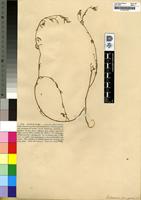
Isotype of Lotononis pungens Eckl. and Zeyh. [family FABACEAE]
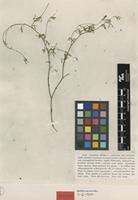
Lectotype of Lotononis decidua Eckl.&Zeyh. [family FABACEAE]
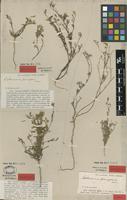
Isolectotype of Lotononis decidua Eckl.&Zeyh. [family FABACEAE]
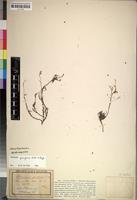
Isotype of Lotononis decidua Eckl. & Zeyh. [family LEGUMINOSAE-PAPILIONOIDEAE]
Previous
Next

Name

Identification
Isotype of Lotononis decidua Eckl. & Zeyh. [family LEGUMINOSAE-PAPILIONOIDEAE ] Verified by Not on sheet, Lotononis pungens Eckl. & Zeyh. [family LEGUMINOSAE-PAPILIONOIDEAE ] (stored under name); Verified by Not on sheet,
Related name
  • Lotononis decidua
  • Lotononis pungens

Flora

Entry for LOTONONIS pungens E. & Z. [family LEGUMINOSAE-PAPILIONOIDEAE]
Herbarium
Royal Botanic Gardens, Kew (K)
Collection
Flora Capensis
Resource Type
Reference Sources
Entry From
Flora Capensis, Vol 2, page 1, (1894) Author: (By W. H. HARVEY).
Names
LOTONONIS pungens E. & Z. [family LEGUMINOSAE-PAPILIONOIDEAE], ! 1277
LOTONONIS affinis E. & Z. [family LEGUMINOSAE-PAPILIONOIDEAE], ! 1279.
LOTONONIS decidua E. & Z. [family LEGUMINOSAE-PAPILIONOIDEAE], ! 1281.
Information
slender, suberect, or diffuse, silky and villous; stipule solitary, linear-lanceolate; leaflets ternate, linear-lanceolate, acute, subpungent; flowers solitary, pedicellate, opposite the leaves; calyx deeply divided, silky, its lobes subequal, subulate, shorter than the corolla; vexillum obovate, acuminate, rather shorter than the broad, falcate, glabrous carina; legume villoso-pilose, twice as long as the calyx, at length turgid. Very similar to L. laxa, but the leaflets are narrower, more lanceolate, and sharper; the pubescence is not silvery but villous, or inclining to pilose, the calyx is more deeply divided and the lobes much narrower; and the corolla is larger and more exserted. The three Ecklonian species here united, differ chiefly in the more or less abundant villosity; the character of the pubescence is the same in all. Stems 6–12 inches long. Leaflets 1/2 inch long, not a line wide.
Distribution
SOUTH AFRICA On barren hills, at Koonabshoogde, Ceded Territory; also between Bosjesman's and Karrega Rivers, Albany, and near Gauritz R., Swell., E. & Z. (Hb. Sd.)

Related Materials

  • Terms and Conditions
  • Privacy Policy
  • Cookie Policy
  • Cookie Settings
  • Accessibility
  • Help
  • Contact Us
  • Facebook
  • Twitter
ITHAKA

JSTOR is part of ITHAKA, a not-for-profit organization helping the academic community use digital technologies to preserve the scholarly record and to advance research and teaching in sustainable ways.

©2000-2026 ITHAKA. All Rights Reserved. JSTOR®, the JSTOR logo, JPASS®, Aluka®, and ITHAKA® are registered trademarks of ITHAKA.

╳