JSTOR Global Plants Home
  • Home
  • Browse
  • About
  • Access
  • Account
    • Saved Items
    • Profile
  • Log in

Global Plants

Skip to Main Content
  • JSTOR Global Plants Home
  • Global Plants

    • Browse
    • About
    • Access
    • Account
      • Saved Items
      • Profile
Log in
  • Browse
  • About
  • Access
  • Account
    • Saved Items
    • Profile
Advanced Search

Compilation
Loranthus gabonensis

12 Images see all

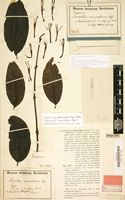
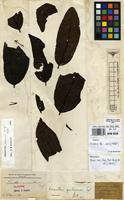
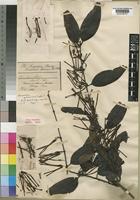
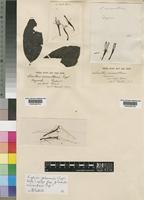
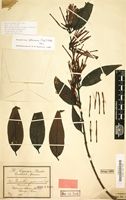
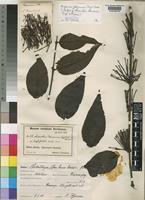
Holotype of Loranthus micrantherus Engl. [family LORANTHACEAE]
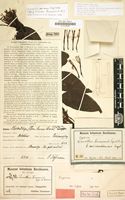
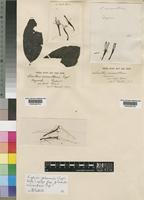
Type of Loranthus tessmannii Engl.&K.Krause [family LORANTHACEAE]
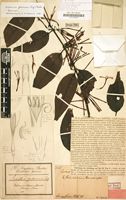
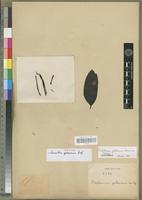
Type of Loranthus gabonensis Engl. [family LORANTHACEAE]
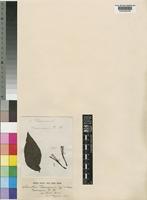
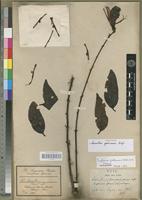
Englerina gabonensis (Engl.) Balle [family LORANTHACEAE]
Isotype of Loranthus micrantherus Engl. [family LORANTHACEAE]
Type of Loranthus gabonensis Engl. [family LORANTHACEAE]
Syntype of Loranthus micrantherus Engl. [family LORANTHACEAE]
Type of Loranthus gabonensis Engl. [family LORANTHACEAE]
Englerina gabonensis (Engl.) Balle [family LORANTHACEAE]
Syntype of Loranthus micrantherus Engl. [family LORANTHACEAE]
Isotype of Loranthus gabonensis Engler [family LORANTHACEAE]
Previous
Next

Name

Identification
Loranthus gabonensis Engl. [family LORANTHACEAE ] Verified by Gebauer, Englerina gabonensis (Engl.) Balle [family LORANTHACEAE ] (stored under name); Verified by Not on sheet.,
Related name
  • Loranthus gabonensis
  • Englerina gabonensis

Flora

Entry for LORANTHUS gabonensis Engl. [family LORANTHACEAE]
Herbarium
Royal Botanic Gardens, Kew (K)
Collection
Flora of Tropical Africa
Resource Type
Reference Sources
Entry From
Flora of Tropical Africa, Vol 6, Part 1, page 255, (1913) Author: (By J. G. Baker, with additions by C. H. Wright.)
Names
LORANTHUS gabonensis Engl. [family LORANTHACEAE], in Engl. Jahrb. xx. 127, t. 3, fig. E.
Stephaniscus gabonensis Van Tiegh. [family LORANTHACEAE], in Bull. Soc. Bot. France, xlii. 261.
Information
Branchlets slender, glabrous, drying blackish, internodes 3/4–1 1/4 in. long. Leaves opposite, lanceolate, obtuse or rounded at the apex, obtuse at the base, 2 1/2–4 in. long, 1–1 1/2 in. broad, coriaceous, glossy, very finely wrinkled and dark brown in a dried state; lateral nerves indistinct; petiole 4–5 lin. long, narrowly winged. Umbels axillary, ternate, about 6-flowered; peduncle 2 lin. long; pedicels 3–3 1/2 lin. long; bract ovate from a saucer-shaped base, acute or narrowly truncate, minutely ciliolate, dorsal margin 3/4 lin. long, strongly umbonate on the lower part, ventral margin patulous, 1/6 lin. long. Receptacle 3/4 lin. long. Calyx ascending, truncate, ciliolate, 1/2 lin. long. Corolla over 1 3/4 in. long, truncate in bud; tube about 11 1/2 lin. long, the lowermost 3 lin. slightly swollen; lobes 10 3/4 lin. long, subspathulate above, thickened and shoulder-shaped at the apex. Filaments inserted 1 1/4 lin. above the base of the corolla-lobes, 8 1/4 lin. long, flattened, slightly tapering upwards, glabrous, tooth subulate, 1/2 lin. long; anthers oblong, 1 lin. long, about 1/3 lin. broad, emarginate at the apex. Disc annular, hardly lobed, 1/6 lin. high.
Distribution
Gaboon Lower Guinea Munda District; Sibange Farm, Soyaux, 305!
Notes
Tessmann, 736, from the Bebar District, Spanish Guinea, probably belongs to L. gabonensis. It has larger, less coriaceous leaves than the type, and the lateral nerves are more distinct. L. Lecomtei, Engl. in Engl. & Prantl, Pflanzenfam. Nachtr. i. 132 (Stephaniscus Lecomtei, Van Tiegh. in Bull. Soc. Bot. France, xlii. 261; Bull. Mus. Hist. Nat. Par. i. 165), from Cape Lopez, is allied to L. gabonensis, according to Van Tieghem. It is said to differ from L. gabonensis in having longer peduncles and flowers one-third shorter. I have not seen a specimen.

Related Materials

  • Terms and Conditions
  • Privacy Policy
  • Cookie Policy
  • Cookie Settings
  • Accessibility
  • Help
  • Contact Us
  • Facebook
  • Twitter
ITHAKA

JSTOR is part of ITHAKA, a not-for-profit organization helping the academic community use digital technologies to preserve the scholarly record and to advance research and teaching in sustainable ways.

©2000-2026 ITHAKA. All Rights Reserved. JSTOR®, the JSTOR logo, JPASS®, Aluka®, and ITHAKA® are registered trademarks of ITHAKA.

╳