JSTOR Global Plants Home
  • Home
  • Browse
  • About
  • Access
  • Account
    • Saved Items
    • Profile
  • Log in

Global Plants

Skip to Main Content
  • JSTOR Global Plants Home
  • Global Plants

    • Browse
    • About
    • Access
    • Account
      • Saved Items
      • Profile
Log in
  • Browse
  • About
  • Access
  • Account
    • Saved Items
    • Profile
Advanced Search

Compilation
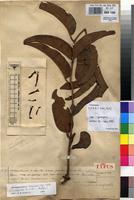
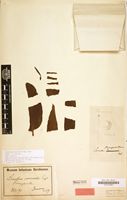
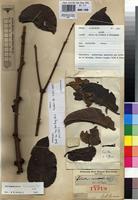
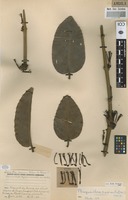
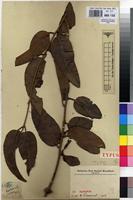
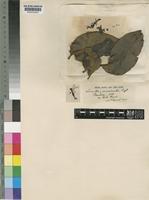
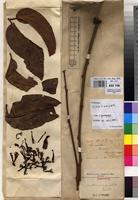
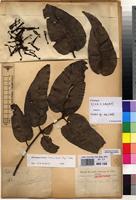
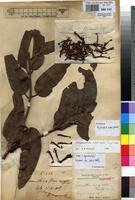
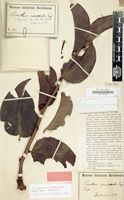
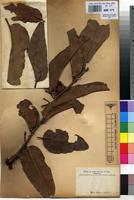
Loranthus crassicaulis

11 Images see all

Filed as Phragmanthera crassicaulis (Engl.) Balle [family LORANTHACEAE]
Syntype of Loranthus marginatus De Wild. [family LORANTHACEAE]
Phragmanthera crassicaulis (Engl.) Balle [family LORANTHACEAE]
Syntype of Loranthus marginatus De Wild. [family LORANTHACEAE]
Syntype of Loranthus crassicaulis Engl. [family LORANTHACEAE]
Lectotype of Loranthus crassicaulis Engl. [family LORANTHACEAE]
Lectotype of Loranthus marginatus De Wild. [family LORANTHACEAE]
Syntype of Loranthus crassicaulis Engl. [family LORANTHACEAE]
Syntype of Loranthus marginatus De Wild. [family LORANTHACEAE]
Lectotype of Loranthus marginatus De Wild. [family LORANTHACEAE]
Previous
Next

Name

Identification
Loranthus crassicaulis Engl. [family LORANTHACEAE ] Verified by Gebauer, Tapinanthus constrictiflorus (Engl.) Danser [family LORANTHACEAE ] (stored under name); Verified by Not on sheet.,
Related name
  • Tapinanthus constrictiflorus
  • Loranthus crassicaulis
  • Phragmanthera crassicaulis

Flora

Entry for LORANTHUS crassicaulis Engl. [family LORANTHACEAE]
Herbarium
Royal Botanic Gardens, Kew (K)
Collection
Flora of Tropical Africa
Resource Type
Reference Sources
Entry From
Flora of Tropical Africa, Vol 6, Part 1, page 255, (1913) Author: (By J. G. Baker, with additions by C. H. Wright.)
Names
LORANTHUS crassicaulis Engl. [family LORANTHACEAE], in Comptes-rendus Soc. Bot. Belg. xxxix. 30, emend. —De Wild. & Th. Dur. Reliq. Dewèvr. 200; De Wild. Études Fl. Baset Moyen-Congo, i. 29.
Information
Branchlets stout, smooth, glabrous, greenish-yellow, with very prominent nodes, 1 1/2–1 3/4 lin. in diam. near the apex. Leaves alternate, ovate or ovate-oblong, obtuse or rounded at the apex, rounded at the base, 3 1/2–4 1/2 in. long, 2 1/4–2 1/2 in. broad, thickly coriaceous, glabrous, dull, minutely corrugated, margin cartilaginous, undulate; midrib slightly impressed on the upper surface, very prominent on the lower; lateral nerves 8–9 on each side, spreading or patulous, anastomosing far from the margin, slightly raised on both surfaces; petiole stout, enlarged at the base, 3 1/2–6 lin. long. Umbels 4–5-flowered; peduncle 1–1 1/2 lin. long at the time of fruiting; pedicels 1/4 lin. long, densely rusty-pilose; bract broadly ovate, very concave, hardly 1/2 lin. long, densely rusty-pilose outside. Receptacle cupular, nearly 1 lin. long, rusty-pilose. Calyx about 1/8 lin. long, subtruncate. Corolla 1–1 1/4 in. long in bud, stellate-puberulous outside, basal swelling ellipsoid, ribbed, 1–1 1/4 lin. long, apical swelling ellipsoid, 1 1/4 lin. long; tube narrowly funnel-shaped, glandular inside; lobes erect, spathulate, apical enlargement ovate acute, 1 lin. long, 5/8 lin. broad. Anthers elliptic-oblong, hardly 1/2 lin. long. Disc sunk, about 1/8 lin. high, 5-lobed, minutely rusty-pilose on the inner surface.
Distribution
Congo Lower Guinea Mayombe District; near Shinganga, Dewèvre, 278! Stanley Pool District; Kimuenza, Gillet, 2036!
Notes
Engler included under his L. crassicaulis two distinct species, one of which (Dewèvre, 278) belongs to the section Rufescentes, and the other (Demeuse, 119) to the section Constrictiflori. Demeuse, 119, was subsequently by some mistake distributed as L. Demeusei; and De Wildeman, recognising that it had nothing to do with L. Demeusei, and apparently unaware that it formed part of Engler's L. crassicaulis, described it as a new species, L. brazzavillensis (Comptesrendus Soc. Bot. Belg. xxxix. 102). Demeuse, 119, having been made the type of a new species, the name L. crassicaulis must be applied to Dewèvre, 278, although Engler's description applies mainly to the former.

Related Materials

  • Terms and Conditions
  • Privacy Policy
  • Cookie Policy
  • Cookie Settings
  • Accessibility
  • Help
  • Contact Us
  • Facebook
  • Twitter
ITHAKA

JSTOR is part of ITHAKA, a not-for-profit organization helping the academic community use digital technologies to preserve the scholarly record and to advance research and teaching in sustainable ways.

©2000-2026 ITHAKA. All Rights Reserved. JSTOR®, the JSTOR logo, JPASS®, Aluka®, and ITHAKA® are registered trademarks of ITHAKA.

╳