JSTOR Global Plants Home
  • Home
  • Browse
  • About
  • Access
  • Account
    • Saved Items
    • Profile
  • Log in

Global Plants

Skip to Main Content
  • JSTOR Global Plants Home
  • Global Plants

    • Browse
    • About
    • Access
    • Account
      • Saved Items
      • Profile
Log in
  • Browse
  • About
  • Access
  • Account
    • Saved Items
    • Profile
Advanced Search

Compilation
Lindackeria bequaertii

5 Images see all

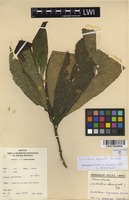
Filed as Lindackeria bequaertii De Wild. [family FLACOURTIACEAE]
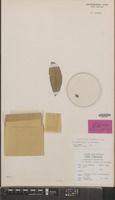
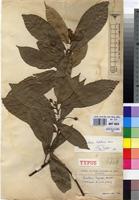
Holotype of Lindackeria bequaertii De Wild. [family FLACOURTIACEAE]
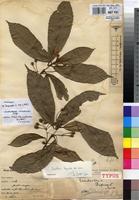
Type of Lindackeria bequaertii De Wild. [family FLACOURTIACEAE]
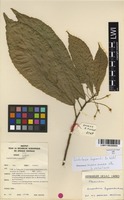
Filed as Lindackeria bequaertii De Wild. [family FLACOURTIACEAE]
Type of Lindackeria bequaertii De Wild. [family FLACOURTIACEAE]
Previous
Next

Name

Identification
Lindackeria bequaertii De Wild. [family FLACOURTIACEAE ] (stored under name); Verified by Not on sheet,
Related name
  • Lindackeria bequaertii
  • Lindackeria bukobensis

Flora

Entry for LINDACKERIA bukobensis Gilg [family FLACOURTIACEAE]
Herbarium
Royal Botanic Gardens, Kew (K)
Collection
Flora of Tropical East Africa
Resource Type
Reference Sources
Entry From
Flora of Tropical East Africa, page 1, (1975) Author: H. Sleumer (Rijksherbarium, Leiden)
Names
LINDACKERIA bukobensis Gilg [family FLACOURTIACEAE], in E.J. 40: 465 (1908); V.E. 3(2): 569 (1921); T.T.C.L.: 233 (1949); Wild in F.Z. 1: 269, t. 44/B (1960); F.F.N.R.: 266 (1962); Bamps in F.C.B., Flacourt.: 34 (1968); Sleumer in E.J. 94: 320 (1974). Type: Tanzania, Bukoba, Stuhlmann 3895 (B, lecto. †, BR, K, isolecto.!)
Oncoba dentata [family FLACOURTIACEAE], [sensu Warb. in P.O.A. C: 277 (1895), non Oliv. Based on Stuhlmann’s collection from Bukoba]
Lindackeria mildbraedii Gilg [family FLACOURTIACEAE], in Z.A.E.: 567 (1913); I.T.U., ed. 2: 149 (1952); Bamps in F.C.B., Flacourt.: 36 (1968). Type: Zaire, Lake Kivu, Idjwi I., Mildbraed 1208 (B, holo. †, B, iso. !)
Lindackeria somalensis Chiov. [family FLACOURTIACEAE], in Result. Sci. Miss. Stef.-Paoli, Coll. Bot.: 24 (1916); E.P.A.: 596 (1959). Type: SE. Somali Republic, Hididle-Hamagudu, Paoli 676 (FI, holo.!)
Lindackeria bequaertii De Wild. [family FLACOURTIACEAE], Pl. Bequaert. 5 : 407 (1932); Bamps in F.C.B., Flacourt.: 33 (1968). Type: Zaire, Djugu, Kilo, Bequaert 4864 (BR, holo. !)
Lindackeria dentata [family FLACOURTIACEAE], [sensu T.T.C.L.: 233 (1949), non (Oliv.) Gilg]
Lindackeria sp. aff. grewioides Sleumer [family FLACOURTIACEAE], [sensu K.T.S.: 226 (1961), based on J. Adamson 271 from Kenya, Lamu District]
Lindackeria kivuensis Bamps [family FLACOURTIACEAE], in B.J.B.B. 34: 497 (1964) & in F.C.B., Flacourt.: 33 (1968). Type: Zaire, Bulembi, Nyabiondo, Gutzwiller 3253 (BR, holo. !)
Information
Shrub or tree, rarely up to 12 m. tall; bark greyish-blackish, thin, rough. Branchlets brownish pubescent to subtomentose at tips, older parts glabrescent and reddish brown, lenticellate. Leaves ± deciduous; blade variable in shape, oblanceolate to oblong or elliptic, sometimes obovate-oblong or even obovate, apex shortly acuminate, subacute or obtuse, base attenuate to obtuse, rarely rounded or subcordate, chartaceous, initially ± densely hairy to subtomentose on both faces, glabrescent with age, midrib and nerves of the undersurface remaining ± densely hairy, sub-entire to rather coarsely sinuate-serrate or -dentate, (7–)9–20(–27) cm. long, (2.5–)4–9(–12) cm. broad; lateral nerves 6–8(–10) pairs, prominent beneath, veins laxly reticulate, slightly raised beneath; petiole pubescent, 1.5–4(–7) cm. long; stipules linear-lanceolate, pubescent, 5–8(–10) mm. long, (0.5–)1–2 mm. broad at base, caducous, sometimes tardily so. Flowers 3–7 in slender, sometimes subumbelliform, racemes or panicles, yellowish tomentellous; peduncle (1–)1.5–3(–5) cm. long; rhachis 0.5–1.5 cm. long, sometimes almost 0; pedicels articulate at the base, 1.5–2.5(–3.5) cm. long; bracts lanceolate, caducous, 2–4 mm. long, 0.5–2 mm. broad at base. Sepals obovate, tomentellous outside, glabrous inside, (6–)7–10 mm. long, 4–6(–7) mm. broad. Petals 8(–10), obovate, clawed, hairy all over or at least at the base outside, and at the base only inside, 9–12(–13) mm. long, (4–)5–7 mm. broad. Filaments puberulous, 2.5–4 mm. long; anthers pubescent, (2–)2.5–3 mm. long. Ovary tomentose and set with short bristles; style simple, hairy except towards the narrow apex. Capsule subglobose, pale apricot colour, (1.3–)2–2.5(–3) cm. in diameter with the spines included, the latter pubescent, subconical-swollen at the base, ± elongate-attenuate to (3–)5–10(–15) mm. distally in fully mature (may be shorter in empty) fruits. Seeds 1–3(–4), subglabrous, blackish-brownish, (5–)6–8 mm. long, 4–5 mm. broad. Fig. 9.
Range
DISTR. U2, 4; K7; T1, 4, 6, 7, 8
Altitude range
(50–)900–1525(–1750) m.
Distribution
KENYA Lamu District Kiunga, Dec. 1946, J. Adamson 271!TANZANIA Kigoma District Tubila, Nov. 1956, Procter 578!TANZANIA Mpanda District Kungwe-Mahali Peninsula, Musenabantu, Aug. 1959, Harley 9359 !TANZANIA Rungwe District Kyimbila, Jan. 1913, Stolz 1839 !UGANDA Bunyoro District Budongo Forest, Apr. 1938, Eggeling 3591 !UGANDA Kigezi District Kayonza, Apr. 1948, Purseglove 2640 !UGANDA Masaka District Bunyama I., June 1925, Maitland 802 !
Distribution (external)
SE. Somali Republic
Sudan (Equatoria)
Zaire
Rwanda
Burundi
Zambia
Malawi
Notes
L. bukobensis is conceived here in a broad sense. Part of the (mainly western) specimens have leaves narrowed at both ends (the “ bequaertii ” and “ mildbraedii ” type), but cannot be separated from other specimens with broader, ± obovate leaves (“ bukobensis ”, “ kivuensis ”, and “ somalensis ” type), as intermediates occur, and no distinctive characters can be found in flowers and fruits. The Kenya specimen has flowers only, and its determination is not beyond question.

Related Materials

  • Terms and Conditions
  • Privacy Policy
  • Cookie Policy
  • Cookie Settings
  • Accessibility
  • Help
  • Contact Us
  • Facebook
  • Twitter
ITHAKA

JSTOR is part of ITHAKA, a not-for-profit organization helping the academic community use digital technologies to preserve the scholarly record and to advance research and teaching in sustainable ways.

©2000-2026 ITHAKA. All Rights Reserved. JSTOR®, the JSTOR logo, JPASS®, Aluka®, and ITHAKA® are registered trademarks of ITHAKA.

╳