Global Plants
Skip to Main Content
Global Plants
Browse
About
Access
Account
Saved Items
Profile
Log in
Browse
About
Access
Account
Saved Items
Profile
Filter search by
Names
Names with Synonyms
Places
People
Free Text
Search
Search
Advanced Search
Compilation
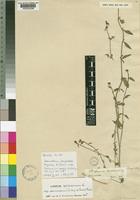
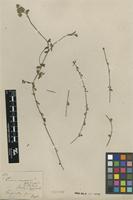
Limeum canescens
2 Images
see all
Limeum africanum L. subsp. canescens (E.Mey. ex Fenzl) Friedr. [family MOLLUGINACEAE]
Isotype of Limeum canescens E.Mey. ex Fenzl [family MOLLUGINACEAE]
Previous
Next
Name
Identification
Limeum canescens
E.Mey.
[family
MOLLUGINACEAE
]
Limeum africanum
L.
[family
MOLLUGINACEAE
] (stored under name); Verified by Friedcrich, H.C.,
Related name
Limeum canescens
Limeum africanum
Flora
Entry for LIMEUM canescens E. Mey. [family MOLLUGINACEAE]
Herbarium
Royal Botanic Gardens, Kew (K)
Collection
Flora Capensis
Resource Type
Reference Sources
Entry From
Flora Capensis, Vol 1, page 151, (
1894
) Author: (By W. H. HARVEY).
Names
LIMEUM canescens
E. Mey.
[family
MOLLUGINACEAE
], MS.;—Moq. in DC. Prod. l. c. p. 21.
Information
“stems herbaceous, procumbent, branching, angular, glabrous, green; leaves petiolate, oblong-linear, acute, muticous or mucronulate, glabrous, covered with a glaucous rime, the lower leaves obovate; cymes terminal, pedunculate, corymbose, many-flowered; sepals ovate, acuminate, nerveless; fruits .....?” “Greenish-canescent, drying darker. Branches 1–1 1/2 foot long, slender. Leaves 4–9 lines long, including the petiole of 1–2 lines, 1 1/2–2 lines wide, tapering to each end. Cymes 5–7 lines wide, with crowded flowers. Sepals with white borders.” Moq. l. c.
Distribution
SOUTH AFRICA S. Africa, Drege 6229. Lange Valley, Zeyher 631, ex parte. (Herb. Sond.).
Notes
I translate Moquin's diagnosis for this species, which I only know by a specimen in Herb. Sond., from Zeyher; by whom it was mixed with L. capense.
Related Materials
╳