JSTOR Global Plants Home
  • Home
  • Browse
  • About
  • Access
  • Account
    • Saved Items
    • Profile
  • Log in

Global Plants

Skip to Main Content
  • JSTOR Global Plants Home
  • Global Plants

    • Browse
    • About
    • Access
    • Account
      • Saved Items
      • Profile
Log in
  • Browse
  • About
  • Access
  • Account
    • Saved Items
    • Profile
Advanced Search

Compilation
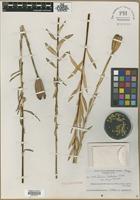
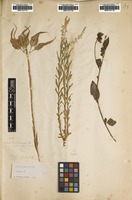
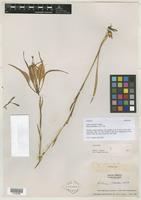
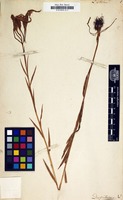
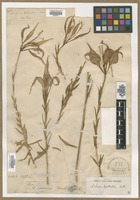
Lilium catesbaei

21 Images see all

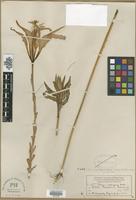
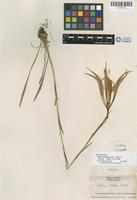
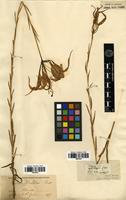
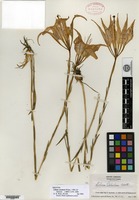
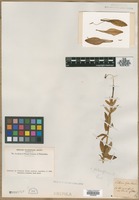
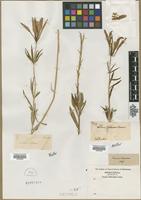
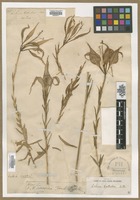
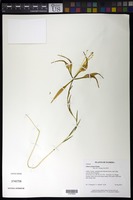
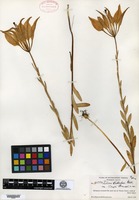
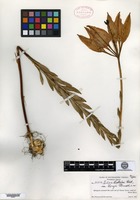
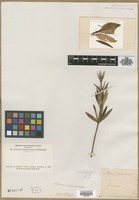
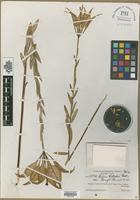
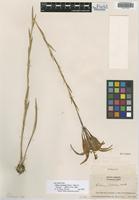
Filed as Lilium catesbaei var. longii Fernald [family LILIACEAE]
Filed as Lilium catesbaei Walter [family LILIACEAE]
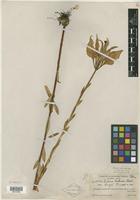
Isoneotype of Lilium catesbaei Walter [family LILIACEAE]
Filed as Lilium catesbaei [family LILIACEAE]
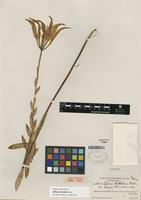
Type of Lilium catesbaei subsp. asprellum Wherry [family LILIACEAE]
Isoneotype of Lilium catesbaei Walter [family LILIACEAE]
Filed as Lilium catesbaei Walter [family LILIACEAE]
Type of Lilium catesbaei Walter var. longii Fernald [family LILIACEAE]
Type of Lilium catesbaei var. longii Fernald [family LILIACEAE]
Neotype of Lilium catesbaei Walter [family LILIACEAE]
Filed as Lilium catesbaei Walter [family LILIACEAE]
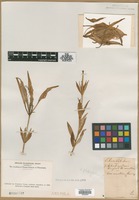
Filed as Lilium sp. [family LILIACEAE]
Filed as Lilium catesbaei Walter [family LILIACEAE]
Lilium catesbaei Walter [family LILIACEAE]
Type of Lilium catesbaei Walter [family LILIACEAE]
Filed as Lilium catesbaei Walter [family LILIACEAE]
Type of Lilium catesbaei Walter var. longii Fernald [family LILIACEAE]
Filed as Lilium catesbaei Walter [family LILIACEAE]
Type of Lilium catesbaei var. longii Fernald [family LILIACEAE]
Isoneotype of Lilium catesbaei Walter [family LILIACEAE]
Filed as Lilium catesbaei Walter [family LILIACEAE]
Previous
Next

Name

Identification
Lilium catesbaei Walter [family LILIACEAE ] (stored under name); Verified by Ward, D. B., 2006
Related name
  • Lilium catesbaei
  • Lilium sp.
Common name
  • Pine lily, Flora of North America Vol. 26

Flora

Entry for Lilium catesbaei Walter [family LILIACEAE]
Herbarium
Flora of North America (FNA)
Collection
Flora of North America
Resource Type
Reference Sources
Entry From
Flora of North America, Vol 26,
Names
Lilium catesbaei Walter [family LILIACEAE], Fl. Carol., 123. 1788
Lilium catesbaei subsp. asprellum Wherry [family LILIACEAE]
Lilium catesbaei var. longii Fernald [family LILIACEAE]
Treatment Author(s)
Mark W. Skinner
Information
Bulbs ovoid, 1.6–2.5 × 1.3–2.4 cm, 0.8–1.6 times taller than long, 2 years’ growth evident, newer bearing prominent basal leaves, older with abscission scars; scales few, loose, unsegmented or 2-segmented, longest 1–1.8 cm; stem roots usually present, often numerous. Stems to 0.9 m. Buds rounded in cross section. Leaves scattered, ascending, distal appressed, 1.8–8.2 × 0.2–1.2 cm, 3.1–10.5 times longer than wide; blade narrowly elliptic, sometimes linear or slightly oblanceolate, margins not undulate, apex acute, acuminate especially in distal leaves; veins and margins ± smooth abaxially. Inflorescences occasionally umbellate, 1(–3)-flowered. Flowers erect, not fragrant; perianth widely campanulate; sepals and petals recurved 2/5–1/2 along length from base, crimson or sometimes pink, distinctly clawed, apex very narrowly acute, nectar guides above claws yellow to pale yellow and spotted maroon or magenta, ± equal; sepals not ridged abaxially, 8.2–12 × 1.2–1.9 cm; petals at proximal widest point much wider than sepals, 7.6–11.1 × 1.8–3.4 cm; stamens moderately exserted; filaments ± parallel to style, barely spreading, diverging 0°–12° from axis, often purple at base; anthers variously colored tan-orange, brown, peachy magenta, or pale greenish, 0.4–1.6 cm; pollen burnt orange or dark tan; pistil 7.6–10.5 cm; ovary 1.4–3.5 cm; style pale green, sometimes darker distally; pedicel 1.8–9.5 cm. Capsules often ridged along valve margins, 2.2–5.3 × 0.8–1.6 cm, 1.7–3.8 times longer than wide. Seeds not counted. 2n = 24.
Phenology
mar-may (spring), jun-aug (summer), sep-nov (fall)
Altitude range
0–200 m;
Distribution
USA Ala.USA Fla.USA Ga.USA La.USA Miss.USA N.C.USA S.C.USA Va.
Discussion
The pine lily’s flower is the largest of any North American lily and one of the largest among our native monocots. In small plants it dwarfs and sometimes topples the slender stem. Leaves are small and relatively few and the bulb is petite, and thus resource limitation in smaller plants undoubtedly contributes to the wide range of fruit sizes within populations. In other North American members of the genus, small plants produce one or a few capsules, but typically these approach normal size.
Lilium catesbaei subsp. asprellum Wherry and L. catesbaei var. longii Fernald have been proposed to account for individuals with leaves concentrated toward the middle of the stem or somewhat wide and lacking basal leaves, respectively. These variants are not emphasized here since both are based primarily on vegetative features that vary greatly in most lilies. Isotypes of var. longii are unremarkable, though with somewhat wide leaves, and the broadly overlapping distribution of this variety with nominate populations (A. E. Radford et al. 1968) strongly suggests that such differences are primarily environmentally induced. Variety longii was described from Virginia, and Fernald’s observation that these northern plants lack basal leaves—which I have not investigated in the field—is unsurprising in those colder climates, and best considered in terms of the normal variation within a fairly wide-ranging species.
Although it is not yet rare, widespread alteration of native longleaf pine (Pinus palustris Miller) and slash pine (P. elliottii Engelmann) savanna, especially conversion to even-age pine plantations, is making steady inroads on populations of this most beautiful lily. It is adapted to frequent fires, and their suppression may contribute to this decline.
Lilium catesbaei is pollinated primarily by the palamedes swallowtail [Papilio palamedes (Drury), family Papilionidae], the only swallowtail that is widely endemic to this lily’s coastal plain habitat. Spicebush swallowtails (P. troilus Linnaeus) visit the pine lily less frequently, and their smaller size suggests that they are less effective pollinators than the larger palamedes.

Related Materials

  • Terms and Conditions
  • Privacy Policy
  • Cookie Policy
  • Cookie Settings
  • Accessibility
  • Help
  • Contact Us
  • Facebook
  • Twitter
ITHAKA

JSTOR is part of ITHAKA, a not-for-profit organization helping the academic community use digital technologies to preserve the scholarly record and to advance research and teaching in sustainable ways.

©2000-2026 ITHAKA. All Rights Reserved. JSTOR®, the JSTOR logo, JPASS®, Aluka®, and ITHAKA® are registered trademarks of ITHAKA.

╳