JSTOR Global Plants Home
  • Home
  • Browse
  • About
  • Access
  • Account
    • Saved Items
    • Profile
  • Log in

Global Plants

Skip to Main Content
  • JSTOR Global Plants Home
  • Global Plants

    • Browse
    • About
    • Access
    • Account
      • Saved Items
      • Profile
Log in
  • Browse
  • About
  • Access
  • Account
    • Saved Items
    • Profile
Advanced Search

Compilation
Leucanthemum maximum

6 Images see all

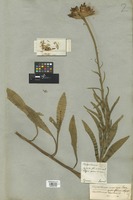
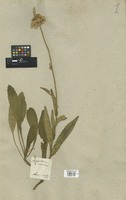
Filed as Leucanthemum maximum (Ramond) DC. [family COMPOSITAE]
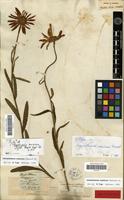
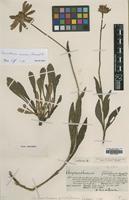
Lectotype of Leucanthemum maximum (Ramond) DC. [family ASTERACEAE]
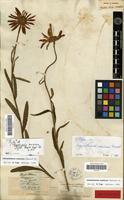
Filed as Leucanthemum maximum (Ramond) DC. [family ASTERACEAE]
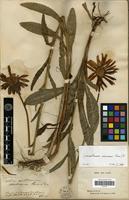
Type of Chrysanthemum grandiflorum Hook. [family ASTERACEAE]
Filed as Leucanthemum maximum (Ramond) DC. [family COMPOSITAE]
Previous
Next

Name

Identification
Chrysanthemum grandiflorum Hook. [family ASTERACEAE ] Leucanthemum maximum (Ramond) DC. [family ASTERACEAE ] (stored under name);
Related name
  • Matricaria maxima
  • Chrysanthemum grandiflorum
  • Leucanthemum maximum
  • Chrysanthemum maximum
Common name
  • Shasta daisy, Flora of North America Vol. 19

Flora

Entry for Leucanthemum maximum (Ramond) de Candolle [family COMPOSITAE]
Herbarium
Flora of North America (FNA)
Collection
Flora of North America
Resource Type
Reference Sources
Entry From
Flora of North America, Vol 19,
Names
Leucanthemum maximum (Ramond) de Candolle [family COMPOSITAE], in A. P. de Candolle and A. L. P. P. de Candolle, Prodr., 6: 46. 1838
Chrysanthemum maximum Ramond [family COMPOSITAE], Bull. Sci. Soc. Philom. Paris, 2: 140. 1800
Treatment Author(s)
John L. Strother
Information
Perennials, 20–60(–80+) cm. Stems simple or distally branched. Basal leaves: petioles 50–80(–200+) mm, expanding into obovate to spatulate blades 50–80(–120+) × 15–25(–35+) mm, margins not lobed, usually toothed, rarely entire. Cauline leaves petiolate or sessile; blades oblanceolate to lanceolate or linear, 50–120+ × 8–22+ mm, margins of mid-stem leaves usually entire proximally, regularly serrate distally. Involucres 18–28+ mm diam. Phyllaries (the larger) 2–3 mm wide. Ray florets 21–34+; laminae 20–30(–40+) mm. Ray cypselae 2–3(–4) mm, apices usually bare, rarely obscurely auriculate. 2n = 90, 108.
Phenology
mar-may (spring), jun-aug (summer)
Altitude range
0–1500+ m;
Distribution
w Europe (widely cultivated).w Europe (sparingly adventive).USA Ala.USA Calif.USA Wyo.
Discussion
The name Shasta daisy of horticulture is associated also with Leucanthemum ×superbum (Bergmans ex J. Ingram) Bergmans ex D. H. Kent, which is generally thought to have been derived from hybrids between L. maximum and L. lacustre. Cultivars of “Shasta daisy” number in the dozens, including “single,” “double,” “quill,” and “shaggy” forms; they may be encountered as waifs or persisting from abandoned plantings.
Native/Introduced
introduced;

Related Materials

  • Terms and Conditions
  • Privacy Policy
  • Cookie Policy
  • Cookie Settings
  • Accessibility
  • Help
  • Contact Us
  • Facebook
  • Twitter
ITHAKA

JSTOR is part of ITHAKA, a not-for-profit organization helping the academic community use digital technologies to preserve the scholarly record and to advance research and teaching in sustainable ways.

©2000-2026 ITHAKA. All Rights Reserved. JSTOR®, the JSTOR logo, JPASS®, Aluka®, and ITHAKA® are registered trademarks of ITHAKA.

╳