JSTOR Global Plants Home
  • Home
  • Browse
  • About
  • Access
  • Account
    • Saved Items
    • Profile
  • Log in

Global Plants

Skip to Main Content
  • JSTOR Global Plants Home
  • Global Plants

    • Browse
    • About
    • Access
    • Account
      • Saved Items
      • Profile
Log in
  • Browse
  • About
  • Access
  • Account
    • Saved Items
    • Profile
Advanced Search

Compilation
Leptoderris harmsiana

3 Images see all

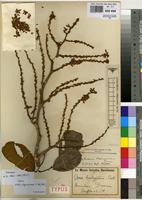
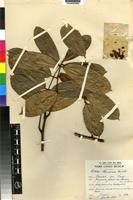
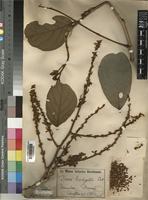
Isotype of Leptoderris harmsiana Dunn [family FABACEAE]
[family ]
Leptoderris harmsiana Dunn [family LEGUMINOSAE-PAPILIONOIDEAE]
Previous
Next

Name

Identification
Isotype of Leptoderris harmsiana Dunn [family FABACEAE ] (stored under name); Verified by Not on sheet,
Related name
  • `
  • Derris brachyptera
  • Leptoderris harmsiana

Flora

Entry for LEPTODERRIS harmsiana Dunn [family LEGUMINOSAE-PAPILIONOIDEAE]
Herbarium
Royal Botanic Gardens, Kew (K)
Collection
Flora of Tropical East Africa
Resource Type
Reference Sources
Entry From
Flora of Tropical East Africa, page 1, (1971) Author: J. B. GILLETT, R. M. POLHILL & B. VERDCOURT
Names
LEPTODERRIS harmsiana Dunn [family LEGUMINOSAE-PAPILIONOIDEAE], in K.B. 1910: 389 (1910); L.T.A.: 556 (1929); T.T.C.L.: 430 (1949). Type: Tanganyika, E. Usambara Mts., Derema, Scheffler 170 (K, holo.!)
Information
Woody climber. Branchlets rather densely covered with short golden-brown crisped hairs, sometimes also with longer spreading hairs intermixed, glabrescent. Leaves 14–38 cm. long; stipules ovate, 5–6 mm. long; rhachis prolonged 1–3.5 cm. beyond the distal pair of leaflets; stipels 1–3 mm. long; lateral leaflets in 2(–3) pairs, elliptic-oblong to oblong-obovate, 7–15 cm. long, 5–9.5 cm. wide, rounded to emarginate (but sometimes acuminate on sucker leaves) with a fragile 2–3 mm. long mucro, narrowed to the broadly cuneate, rounded or cordate base, asymmetric, chartaceous to coriaceous, glabrescent above except sometimes for a short tomentum on the impressed nerves, usually golden-brown spreading pubescent beneath but varying from thinly and inconspicuously puberulous to densely velutinous; primary lateral nerves ascending, 6–9 on either side, prominent; venation ± reticulate but with the oblique veins rather more strongly developed, prominent or covered by the indumentum. Panicles very similar to those of L. goetzei, but the variably developed indumentum golden-brown. Calyx 3.5–4.5 mm. long, with a golden-brown silky tomentum. Corolla ± 10–11 mm. long, white, sometimes marked or flushed rose-pink, ciliolate at petal-tips; wings a little shorter than keel. Young fruit oblong, pointed at either end, shortly stipitate, narrowly winged along the upper edge, up to 7 cm. long and 2 cm. wide, papery, pubescent, venose, 1-seeded; mature fruit not seen.
Range
DISTR. T3 known only from the Usambara Mts.
Altitude range
280–1050 m.
Distribution
TANGANYIKA E. Usambara Mts., Amani, 16 Nov. 1928, Greenway 1005 ! & Kwamkoro, 3 Nov. 1940, Greenway 6051 ! & 24 Nov. 1942, Doughty !
Notes
VARIATION. Within the limited amount of material available for study, there is a most marked variation in the persistence and density of the indumentum. Greenway 1005, Peter 48659a! and 48115 !, all from the vicinity of Amani, have only a very sparse cover of hairs on the leaves, appearing glabrous to the naked eye, while at the other extreme Greenway 6051 (cited above) and Peter 48625 ! (from Mt. Mlinga) have a dense golden-brown velvety tomentum obscuring the leaflet-surface beneath; the type and other gatherings have a conspicuous and variably dense pubescence. These variations are probably related more to the degree of exposure and other growth conditions than to genetic factors, but further field observations are needed for confirmation.

Related Materials

  • Terms and Conditions
  • Privacy Policy
  • Cookie Policy
  • Cookie Settings
  • Accessibility
  • Help
  • Contact Us
  • Facebook
  • Twitter
ITHAKA

JSTOR is part of ITHAKA, a not-for-profit organization helping the academic community use digital technologies to preserve the scholarly record and to advance research and teaching in sustainable ways.

©2000-2026 ITHAKA. All Rights Reserved. JSTOR®, the JSTOR logo, JPASS®, Aluka®, and ITHAKA® are registered trademarks of ITHAKA.

╳