JSTOR Global Plants Home
  • Home
  • Browse
  • About
  • Access
  • Account
    • Saved Items
    • Profile
  • Log in

Global Plants

Skip to Main Content
  • JSTOR Global Plants Home
  • Global Plants

    • Browse
    • About
    • Access
    • Account
      • Saved Items
      • Profile
Log in
  • Browse
  • About
  • Access
  • Account
    • Saved Items
    • Profile
Advanced Search

Compilation
Lepidium pubicarpum

5 Images see all

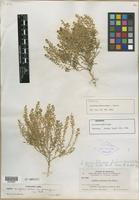
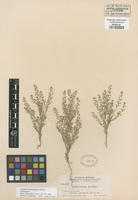
Lectotype of Lepidium pubicarpum A. Nelson [family BRASSICACEAE]
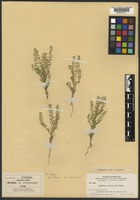
Syntype of Lepidium pubicarpum A. Nelson [family BRASSICACEAE]
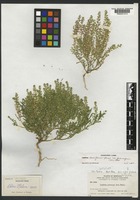
Syntype of Lepidium pubecarpum A. Nelson [family BRASSICACEAE]
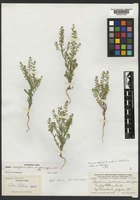
Syntype of Lepidium pubicarpum A. Nelson [family BRASSICACEAE]
Isolectotype of Lepidium pubicarpum A. Nelson [family BRASSICACEAE]
Previous
Next

Name

Identification
Lepidium pubicarpum A. Nelson [family BRASSICACEAE ] (stored under name); Verified by Not on sheet,
Related name
  • Lepidium pubicarpum

Flora

Entry for Lepidium densiflorum Schrader [family CRUCIFERAE]
Herbarium
Flora of North America (FNA)
Collection
Flora of North America
Resource Type
Reference Sources
Entry From
Flora of North America, Vol 7,
Names
Lepidium densiflorum Schrader [family CRUCIFERAE], Index Seminum (Göttingen), 1832: 4. 1832
Lepidium densiflorum var. elongatum (Rydberg) Thellung [family CRUCIFERAE]
Lepidium densiflorum var. macrocarpum G. A. Mulligan [family CRUCIFERAE]
Lepidium densiflorum var. pubicarpum (A. Nelson) Thellung [family CRUCIFERAE]
Lepidium densiflorum var. ramosum (A. Nelson) Thellung [family CRUCIFERAE]
Lepidium elongatum Rydberg [family CRUCIFERAE]
Lepidium neglectum Thellung [family CRUCIFERAE]
Lepidium pubicarpum A. Nelson [family CRUCIFERAE]
Lepidium ramosum A. Nelson [family CRUCIFERAE]
Treatment Author(s)
Ihsan A. Al-Shehbaz
John F. Gaskin
Information
Annuals or biennials; puberulent or glabrous, (trichomes cylindrical). Stems simple from base, erect, branched distally, (1–)2.5–5(–6.5) dm. Basal leaves (early withered); rosulate; petiole 0.5–1.5(–2) cm; blade oblanceolate, spatulate, or oblong, (1.5–)2.5–8(–11) cm × 5–10(–20) mm, margins coarsely serrate or pinnatifid. Cauline leaves shortly petiolate; blade narrowly oblanceolate or linear, (0.7–)1.3–6.2(–8) cm × (0.5–)1.5–10(–18) mm, base attenuate to cuneate, not auriculate, margins usually entire or irregularly serrate to dentate, rarely pinnatifid. Racemes considerably elongated in fruit; rachis puberulent, trichomes straight, slender to subclavate. Fruiting pedicels divaricate-ascending to horizontal, straight or slightly recurved, (terete), (1.5–)2–3.5(–4) × 0.15–0.25 mm, puberulent adaxially. Flowers: sepals oblong, 0.5–0.8(–1) × 0.3–0.5 mm; petals (absent or rudimentary) white, filiform, 0.3–0.9 mm, claw absent; stamens 2, median; filaments 0.6–1(–1.8) mm; anthers 0.1–0.2 mm. Fruits obovate to obovate-suborbicular, (2–)2.5–3(–3.5) × 1.5–2.5(–3) mm (widest beyond middle), apically winged, apical notch 0.2–0.4 mm deep; valves thin, smooth, not veined, glabrous or sparsely puberulent (at least on margin); style 0.1–0.2 mm, included in apical notch. Seeds ovate, 1.1–1.3(–1.5) × 0.8–0.9 mm. 2n = 32.
Phenology
may (spring), jun-jul (summer)
Altitude range
0–3500 m;
Distribution
Mexico (Chihuahua)Mexico (Nuevo León)introduced in EuropeAsia.USA Ala.USA AlaskaUSA Ariz.USA Ark.USA Calif.USA Colo.USA Conn.USA Del.USA D.C.USA Fla.USA Ga.USA IdahoUSA Ill.USA Ind.USA IowaUSA Kans.USA Ky.USA La.USA MaineUSA Md.USA Mass.USA Mich.USA Minn.USA Miss.USA Mo.USA Mont.USA Nebr.USA Nev.USA N.H.USA N.J.USA N.Mex.USA N.Y.USA N.C.USA N.Dak.USA OhioUSA Okla.USA Oreg.USA Pa.USA R.I.USA S.C.USA S.Dak.USA Tenn.USA Tex.USA UtahUSA Vt.USA Va.USA Wash.USA W.Va.USA Wis.USA Wyo.Canada Alta.Canada B.C.Canada Man.Canada N.B.Canada Nfld. and Labr.Canada N.W.T.Canada N.S.Canada Ont.Canada P.E.I.Canada Que.Canada Sask.Canada Yukon
Discussion
North American records of Lepidium apetalum Willdenow mostly represent misidentifications of L. densiflorum. The latter has obovate fruits widest beyond the middle, whereas L. apetalum has elliptic fruits widest at the middle.
The number and limits of the varieties recognized in Lepidium densiflorum, as well as the characters used to delimit them, vary among authors (A. Thellung 1906; C. L. Hitchcock 1936; G. A. Mulligan 1961; R. C. Rollins 1993; N. H. Holmgren 2005b). The variation almost always does not correlate with geography, and the recognition of varieties in this species is neither practical nor very useful. All of those authors admitted that these varieties are “very weak at best” (Rollins, p. 554). Of them, perhaps var. pubicarpum (including var. elongatum) might merit recognition. It is distributed in almost all of the Mountain and Pacific states and is distinguished from the other varieties solely by the presence of trichomes or minute papillae on the fruit valves. The density of these trichomes ranges from moderate and covering the entire valve surface to very sparse and represented by individual papillate trichomes restricted to the valve margin. Furthermore, the length of these trichomes may vary from ca. 0.01 to 0.3 mm. In some species (e.g., L. dictyotum) both glabrous- and pubescent-fruited forms occur, yet none of the above authors gave formal recognition to both forms. It is not known if both glabrous and puberulent fruits occur within the same population in L. densiflorum. The species is autogamous, but nothing is known about the rates of gene flow between and within populations.

Related Materials

  • Terms and Conditions
  • Privacy Policy
  • Cookie Policy
  • Cookie Settings
  • Accessibility
  • Help
  • Contact Us
  • Facebook
  • Twitter
ITHAKA

JSTOR is part of ITHAKA, a not-for-profit organization helping the academic community use digital technologies to preserve the scholarly record and to advance research and teaching in sustainable ways.

©2000-2026 ITHAKA. All Rights Reserved. JSTOR®, the JSTOR logo, JPASS®, Aluka®, and ITHAKA® are registered trademarks of ITHAKA.

╳