JSTOR Global Plants Home
  • Home
  • Browse
  • About
  • Access
  • Account
    • Saved Items
    • Profile
  • Log in

Global Plants

Skip to Main Content
  • JSTOR Global Plants Home
  • Global Plants

    • Browse
    • About
    • Access
    • Account
      • Saved Items
      • Profile
Log in
  • Browse
  • About
  • Access
  • Account
    • Saved Items
    • Profile
Advanced Search

Compilation
Lepidagathis hyssopifolia

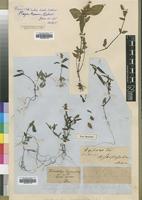
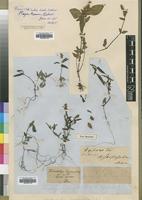
2 Images see all

Type of Lepidagathis hyssopifolia (Benth.) T.Anderson [family ACANTHACEAE]
Previous
Next

Name

Identification
Lepidagathis hyssopifolia (Benth.) T.Anderson [family ACANTHACEAE ] (stored under name);
Related name
  • Lepidagathis hyssopifolia
  • Lepidagathis alopecuroides
  • Teliostachya hyssopifolia

Flora

Entry for LEPIDAGATHIS hyssopifolia T. Anders. [family ACANTHACEAE]
Herbarium
Royal Botanic Gardens, Kew (K)
Collection
Flora of Tropical Africa
Resource Type
Reference Sources
Entry From
Flora of Tropical Africa, page 1, (1900) Author: (By I. H. Burkill and C. B. Clarke.)
Names
LEPIDAGATHIS hyssopifolia T. Anders. [family ACANTHACEAE], in Journ. Linn. Soc. vii. 34.
Teliostachya hyssopifolia Benth. [family ACANTHACEAE], in Hook. Niger Fl. 481.
Information
Very slender. Leaves (at most) 1 by 1/4 in. Spikes up to 3/4 by 1/4 in. Calyx less than 1/5 in. long; posticous sepal hardly 1/24 in. broad; otherwise as L. laguroidea .
Distribution
Sierra Leone Upper Guinea Don!
Notes
I here describe the type example of G. Don only. Among Scott-Elliot's excellent examples (referred above to L. laguroidea), several have been heretofore marked L. hyssopifolia; while Scott-Elliot, 4744, has been supposed a new intermediate species. I doubt if L. hyssopifolia should be considered other than a slender form of L. laguroidea, smaller in all its parts. The two species bear a strong superficial resemblance to Justicia (Rostellularia) diffusa, Willd. and its numerous subspecies or varieties.

Related Materials

  • Terms and Conditions
  • Privacy Policy
  • Cookie Policy
  • Cookie Settings
  • Accessibility
  • Help
  • Contact Us
  • Facebook
  • Twitter
ITHAKA

JSTOR is part of ITHAKA, a not-for-profit organization helping the academic community use digital technologies to preserve the scholarly record and to advance research and teaching in sustainable ways.

©2000-2026 ITHAKA. All Rights Reserved. JSTOR®, the JSTOR logo, JPASS®, Aluka®, and ITHAKA® are registered trademarks of ITHAKA.

╳