JSTOR Global Plants Home
  • Home
  • Browse
  • About
  • Access
  • Account
    • Saved Items
    • Profile
  • Log in

Global Plants

Skip to Main Content
  • JSTOR Global Plants Home
  • Global Plants

    • Browse
    • About
    • Access
    • Account
      • Saved Items
      • Profile
Log in
  • Browse
  • About
  • Access
  • Account
    • Saved Items
    • Profile
Advanced Search

Compilation
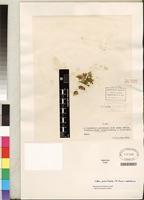
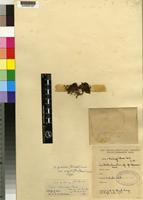
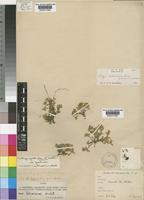
Lelya prostrata

7 Images see all

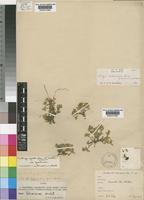
Type of Lelya osteocarpa Bremek. f. dolichostyla [family RUBIACEAE]
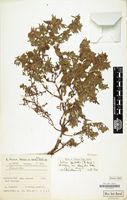
Lelya prostrata W.H.Lewis var. angustifolia (Bremek.) W.H.Lewis [family RUBIACEAE]
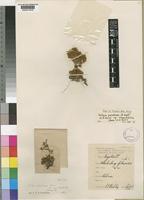
Holotype of Spermacoce prostrata R.D.Good [family RUBIACEAE]
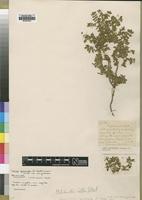
Type of Lelya prostrata (Good) W.H. Lewis [family RUBIACEAE]
Holotype of Lelya prostrata var. elongata Verdc. [family RUBIACEAE]
Isotype of Lelya prostrata (R.D.Good) W.H.Lewis var. angustifolia [family RUBIACEAE]
Type of Lelya osteocarpa Bremek. f. brachystylus [family RUBIACEAE]
Previous
Next

Name

Identification
Lelya prostrata Not on sheet. [family RUBIACEAE ] (stored under name); Verified by Verdcourt, B.,
Related name
  • Lelya osteocarpa
  • Spermacoce prostrata
  • Oldenlandia unrecorded
  • Lelya prostrata

Flora

Entry for LELYA prostrata (Good) W. H. Lewis [family RUBIACEAE]
Herbarium
Royal Botanic Gardens, Kew (K)
Collection
Flora of Tropical East Africa
Resource Type
Reference Sources
Entry From
Flora of Tropical East Africa, page 1, (1976) Author: B. VERDCOURT
Names
LELYA prostrata (Good) W. H. Lewis [family RUBIACEAE], in Ann. Missouri Bot. Gard. 52:189 (1965). Type: Angola, Cuanza Norte, Capijongo, Lucala, Gossweiler 7385 (BM, holo.!)
Information
Perennial herb, with many stems 2.5–10 cm. long radiating from a woody rootstock, much branched at the base, sometimes rooting at nodes fide Staples 153; often forming small mats; branchlets usually spreading pubescent at first, later glabrous or all subglabrescent. Leaf-blades elliptic to almost linear, 0.5–1.5 cm. long, 1–10 mm. wide, acute, apiculate or somewhat obtuse at the apex, cuneate at the base, the margins often recurved, rather thick, frequently drying the curious yellow-green of an aluminium-accumulating plant, glabrous or scabridulous above, pubescent or glabrous beneath with 2–3 distinct lateral nerves; petiole 1–2.5 mm. long, united with the stipule sheath in lower half; stipule-sheath triangular-ovate, 1–2.5 mm. long; lobes 3–5, 0.8–3 mm. long. Pedicels 1–4 mm. long, mostly pubescent. Calyx-tube 0.4–1.8 mm. long, pubescent or glabrous, the limb 2.5–3.5 mm. long, the tubular part up to 0.3–1 mm. long, the lobes 1–2.5 mm. long, up to 1 mm. wide, acute or subobtuse, keeled. Corolla glabrous or sparsely hairy outside; tube 1.6–3 mm. long; lobes 2–5 mm. long, 1.2 mm. wide. Style in short-styled flowers 2 mm. long, in long-styled flowers 3–5.5 mm. long; stigma-lobes 0.4–0.6 mm. long. Capsule globose or ovoid, 2 mm. long, 2–2.3 mm. wide, with short spreading hairs or glabrescent, the beak 0.8 mm. long. Seeds round in outline, 0.7 mm. in diameter.

Related Materials

  • Terms and Conditions
  • Privacy Policy
  • Cookie Policy
  • Cookie Settings
  • Accessibility
  • Help
  • Contact Us
  • Facebook
  • Twitter
ITHAKA

JSTOR is part of ITHAKA, a not-for-profit organization helping the academic community use digital technologies to preserve the scholarly record and to advance research and teaching in sustainable ways.

©2000-2026 ITHAKA. All Rights Reserved. JSTOR®, the JSTOR logo, JPASS®, Aluka®, and ITHAKA® are registered trademarks of ITHAKA.

╳