JSTOR Global Plants Home
  • Home
  • Browse
  • About
  • Access
  • Account
    • Saved Items
    • Profile
  • Log in

Global Plants

Skip to Main Content
  • JSTOR Global Plants Home
  • Global Plants

    • Browse
    • About
    • Access
    • Account
      • Saved Items
      • Profile
Log in
  • Browse
  • About
  • Access
  • Account
    • Saved Items
    • Profile
Advanced Search

Compilation
Lapeirousia rivularis

3 Images see all

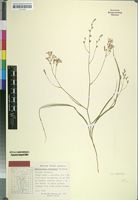
Isotype of Lapeirousia rivularis Wanntorp [family IRIDACEAE]
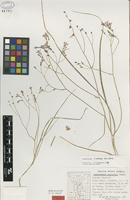
Type of Lapeirousia rivularis Wanntorp [family IRIDACEAE]
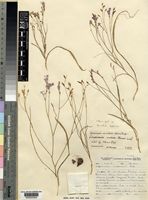
Type of Lapeirousia sandersonii Baker [family IRIDACEAE]
Previous
Next

Name

Identification
Lapeirousia rivularis Wanntorp [family IRIDACEAE ] (stored under name); Verified by Marais, Lapeirousia sandersonii Baker [family IRIDACEAE ] Verified by Unknown, Lapeirousia callosa Marais ined. [family IRIDACEAE ] Verified by Marais,
Related name
  • Lapeirousia rivularis
  • Lapeirousia callosa
  • Lapeirousia sandersonii

Flora

Entry for Lapeirousia rivularis Wanntorp [family IRIDACEAE]
Herbarium
Royal Botanic Gardens, Kew (K)
Collection
Flora Zambesiaca
Resource Type
Reference Sources
Entry From
FZ, Vol 12, Part 4, (1993) Author: P. Goldblatt
Names
Lapeirousia rivularis Wanntorp [family IRIDACEAE], in Svensk Bot. Tidskr. 65: 53–56 (1971). — Goldblatt in Ann. Missouri Bot. Gard. 77: 448 (1990). TAB. 9 fig. A. Type from Namibia.
Information
Plants 30–45 cm high. Corms 12–22 mm in diameter at the base; tunics dark-brown to blackish, coarsely fibrous. Foliage leaves 3–5, the lower 2 more or less basal, channelled for at least half their length, reaching to about the base of the inflorescence, 2–3 mm wide, linear and unifacial above, firm-textured, midrib lightly raised; the upper leaves subtending the inflorescence branches, becoming shorter above. Stem weakly compressed and 3–4-angled, usually laxly branched. Inflorescence a rounded to elongate panicle, the ultimate branches bearing (1)3–5 flowers, laxly arranged; the outer bracts 4–6(9) mm long, green below, membranous and reddish above, apically dry and brown-tipped in bud, later becoming dry for two-thirds of their length, the inner bracts about as long as the outer and entire or apically forked. Flowers zygomorphic, pale blue-mauve, the lower 3 tepals each with a white to cream-coloured nectar guide outlined in deep-violet, sometimes with a median red streak, the reverse of the tube bluish; perianth tube 7–9 mm long, c. 1.3 mm wide at the base and 3 mm wide at the mouth, narrowly campanulate, weakly curved in the upper third; tepals subequal, (7)10–13 × 4–5 mm, lanceolate, the margins somewhat undulate, the dorsal tepal suberect to arching over the stamens, the others directed forwards, the lower 3 nearly horizontal, joined for c. 1 mm more than the dorsal, sometimes each with a tooth-like callus in the median lower half. Stamens unilateral and arcuate; filaments 8.5 mm long, exserted c. 5 mm from the tube; anthers 3.5–4 mm long. Style dividing near the anther apices; style branches c. 3 mm long, each shortly to deeply divided (rarely entire). Capsules 4–5 mm long.
Habitat
Mostly in moist or wet localities, (dambos or pan margins), but also in rocky grassland.
Distribution
Zambia B Machili, 24.xii.1960, Fanshawe 6015 (BR; K; LISC; SRGH).Zambia W Mwinilunga Distr., Kalene Hill, 15.xii.1963, Robinson 6051 (M; WAG).Zambia C Lusaka, Church Road, in grounds of Evelyn Hone College, 11.i.1986, Goldblatt 7537 (E; K; MO; NBG; PRE; S; WAG; WIND).Zambia S Mazabuka, Ridgeway Road, 15.xii.1931, Trapnell 588 (BR; K; PRE; Z).
Distribution (external)
Namibia
Angola
Notes
Easily confused with L. erythrantha in which the dorsal tepal is reflexed in the fully open flower so that it lies in the same plane as the other tepals, and is thus not inclined over the stamens as in L. rivularis.

Related Materials

  • Terms and Conditions
  • Privacy Policy
  • Cookie Policy
  • Cookie Settings
  • Accessibility
  • Help
  • Contact Us
  • Facebook
  • Twitter
ITHAKA

JSTOR is part of ITHAKA, a not-for-profit organization helping the academic community use digital technologies to preserve the scholarly record and to advance research and teaching in sustainable ways.

©2000-2026 ITHAKA. All Rights Reserved. JSTOR®, the JSTOR logo, JPASS®, Aluka®, and ITHAKA® are registered trademarks of ITHAKA.

╳