JSTOR Global Plants Home
  • Home
  • Browse
  • About
  • Access
  • Account
    • Saved Items
    • Profile
  • Log in

Global Plants

Skip to Main Content
  • JSTOR Global Plants Home
  • Global Plants

    • Browse
    • About
    • Access
    • Account
      • Saved Items
      • Profile
Log in
  • Browse
  • About
  • Access
  • Account
    • Saved Items
    • Profile
Advanced Search

Compilation
Lonchocarpus eriocalyx

7 Images see all

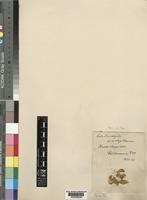
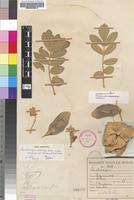
Type of Lonchocarpus eriocalyx Harms [family LEGUMINOSAE-PAPILIONOIDEAE]
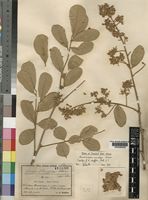
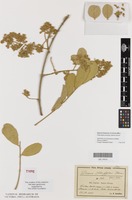
Isotype of Lonchocarpus scheffleri Baker f. [family LEGUMINOSAE-PAPILIONOIDEAE]
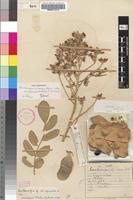
Isotype of Lonchocarpus eriocalyx Harms subsp. wankieensis Mendonça & E.C.Sousa [family FABACEAE]
Isotype of Lonchocarpus scheffleri Harms ex Baker f. [family FABACEAE]
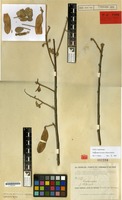
Holotype of Lonchocarpus eriocalyx Harms subsp. wankieensis Mendonça & E.C.Sousa [family FABACEAE]
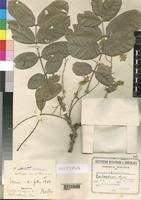
Holotype of Lonchocarpus barlassinae Chiov. [family LEGUMINOSAE]
Isotype of Lonchocarpus brachybotrys Dunn [family LEGUMINOSAE-PAP.]
Previous
Next

Name

Identification
Lonchocarpus eriocalyx Harms [family LEGUMINOSAE ] (stored under name); Verified by Data not digitized, Lonchocarpus barlassinae Chiov. [family LEGUMINOSAE ] Verified by Data not digitized,
Related name
  • Lonchocarpus scheffleri
  • Lonchocarpus barlassinae
  • Lonchocarpus eriocalyx
  • Philenoptera wankieensis

Flora

Entry for LONCHOCARPUS eriocalyx Harms [family LEGUMINOSAE-PAPILIONOIDEAE]
Herbarium
Royal Botanic Gardens, Kew (K)
Collection
Flora of Tropical East Africa
Resource Type
Reference Sources
Entry From
Flora of Tropical East Africa, page 1, (1971) Author: J. B. GILLETT, R. M. POLHILL & B. VERDCOURT
Names
LONCHOCARPUS eriocalyx Harms [family LEGUMINOSAE-PAPILIONOIDEAE], in E.J. 30: 89 (1901) & in V.E. 3 (1): 641 (1915); L.T.A.: 549 (1929); T.T.C.L.: 430 (1949); Hauman in F.C.B. 6: 9 (1954); K.T.S.: 369 (1961); F.F.N.R.: 159 (1962). Type: Tanganyika, “Mas-saisteppe”, Stuhlmann 509 (B, holo. †, K, frag. & drawing !)
LONCHOCARPUS scheffleri Bak. f. [family LEGUMINOSAE-PAPILIONOIDEAE], L.T.A.: 550 (1929); T.T.C.L.: 431 (1949). Type: Kenya, Kibwezi, Scheffler 212 (BM, holo. !, K, iso. !)
LONCHOCARPUS barlassinae Chiov. [family LEGUMINOSAE-PAPILIONOIDEAE], Racc. Bot. Miss. Consol. Kenya: 37 (1935). Type: Kenya, Meru, Balbo 375 (TOM, holo.)
LONCHOCARPUS bussei [family LEGUMINOSAE-PAPILIONOIDEAE], [sensu K.T.S.: 369 (1961), non Harms]
Information
Small deciduous generally slender tree or shrub, 3–12(–15) m. tall, with ± rounded crown; bark pale greyish, smooth to reticulately fissured; slash pinkish-white, producing (? always) a red resinous exudate from the inner side. Young branchlets generally yellowish-grey floccose-tomentose, rarely only crisped pubescent; older branchlets glabrescent. Leaves 10–26 cm. long; stipules linear, linear-lanceolate or subulate, 2–8(–10) mm. long, sometimes rather rigid and subpersistent; rhachis prolonged 1–2(–3) cm. beyond the uppermost pair of leaflets, usually tomentose, sometimes subglabrous to pubescent; stipels 2–4 mm. long, caducous; lateral leaflets in 3–5 pairs, oblong-oblanceolate or oblong-elliptic to elliptic, elliptic-obovate or obovate (the terminal leaflet at least usually broadest above the middle), 3–6(–7) cm. long, 1.6–3.5(–5) cm. wide, bluntly pointed to rounded or emarginate at apex, narrowed to the generally rounded or slightly cordate somewhat unequal-sided base, felted or subcoriaceous, subglabrous to densely pubescent above, appressed pubescent to floccose-tomentose beneath; primary lateral nerves 5–7(–8) on either side, prominent beneath; venation similarly prominent. Panicles aggregated near branch-tips, both terminal and in axils of current or more often fallen leaves, 10–30(–37) cm. long, with numerous relatively short ascending or spreading branches; axes floccose-tomentose; bracts linear to lanceolate, 2–7 mm. long, caducous; bracteoles at top of the 3–5 mm. long pedicel, linear to lanceolate or narrowly elliptic, 1–4 mm. long. Calyx 5–8(–9) mm. long, with a whitish to yellowish or slightly tawny floccose tomentum, occasionally ± sericeous-tomentose; lateral lobes acute to acuminate, 2–3 mm. long. Corolla 9–14 mm. long, mauve or lilac to reddish-purple; standard obovate to suborbicular, basally auriculate and with ridge-shaped calluses above. Fruit usually narrowly oblong, pointed at apex, shortly rounded or less commonly narrowed to the 3–5 mm. long stipe, sinuate between the seeds, 7–15 cm. long, 1.8–2.8(–3.5) cm. wide, pale brown, usually densely pubescent, rarely glabrescent, 1–3-seeded. Fig. 13/12, p. 69.
Range
DISTR. K1–4, 6, 7; T1–5 and northern Zambia; a subspecies described from the Zambezi valley (see remarks on variation below)
Altitude range
500–1680 m.
Distribution
KENYA Elgeyo District Kerio valley, Tot, 19 Mar. 1961, Bally 12334!KENYA Kiambu/Fort Hall District Thika, Apr. 1932, Rammell in F.D. 2733!KENYA Machakos District Kibwezi, 29 Oct. 1908, Scheffler 212 !TANGANYIKA Shinyanga District near Tinde [Tindi] Hills, 17 May 1931, B. D. Burtt 2388!TANGANYIKA Tabora District 35 km. on Tabora–Itigi road, Kigwa, 1 Aug. 1961, Boaler 316 !TANGANYIKA Dodoma District Chaya, 20 Nov. 1961, Semsei 3425 !
Distribution (external)
; Congo (Katanga)
Notes
VARIATION. Very closely related to L. bussei, from which it differs primarily by the slightly larger calyx, with longer acute or acuminate lobes and generally with a dense floccose tomentum; the fruit is usually rather more densely and persistently hairy. The indumentum overall is in fact usually denser and more floccose, but with wide variation probably more related to local growth conditions than genetic factors. L. eriocalyx has a more inland distribution than L. bussei and occurs mostly at higher altitudes. Plants from the northern parts of Kenya differ by the distinctly appressed calyx-indumentum and at least sometimes with glabrescent fruits. In NE. Tanganyika, from the Rift Wall near Lake Manyara to the Pare Mts., there is a complete gradation to forms with the calyx-lobes short and blunt, entirely approaching the form of L. bussei, but with characteristic floccose indumentum and variably glabrescent fruits. Both species occur in the Kondoa District without recorded intermediates. L. nelsii subsp. katangensis also approaches very close to L. eriocalyx, differing only by the fewer more elliptic leaflets and rufous indumentum. A case can be made for regarding L. bussei and the variants of L. nelsii as no more than subspecies of L. eriocalyx, or even including all under L. laxiflorus. Nevertheless the transitional forms are relatively restricted in distribution and the total variation is so considerable that specific rank seems marginally preferable and more convenient. Subsp. wankieënsis Mendonça & E. P. Sousa, apart from the differences given, has a narrow rostrate keel, which within limits of the material I have seen makes me doubt whether it should be included within this species.

Related Materials

  • Terms and Conditions
  • Privacy Policy
  • Cookie Policy
  • Cookie Settings
  • Accessibility
  • Help
  • Contact Us
  • Facebook
  • Twitter
ITHAKA

JSTOR is part of ITHAKA, a not-for-profit organization helping the academic community use digital technologies to preserve the scholarly record and to advance research and teaching in sustainable ways.

©2000-2026 ITHAKA. All Rights Reserved. JSTOR®, the JSTOR logo, JPASS®, Aluka®, and ITHAKA® are registered trademarks of ITHAKA.

╳