JSTOR Global Plants Home
  • Home
  • Browse
  • About
  • Access
  • Account
    • Saved Items
    • Profile
  • Log in

Global Plants

Skip to Main Content
  • JSTOR Global Plants Home
  • Global Plants

    • Browse
    • About
    • Access
    • Account
      • Saved Items
      • Profile
Log in
  • Browse
  • About
  • Access
  • Account
    • Saved Items
    • Profile
Advanced Search

Compilation
Lonchocarpus capassa

3 Images see all

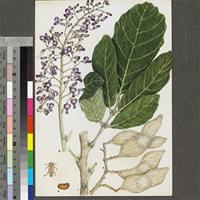
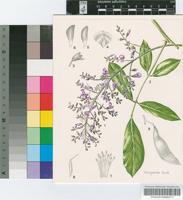
Lonchocarpus capassa Rolfe original illustration from the 'Trees of Central Africa'
Lonchocarpus capassa Rolfe
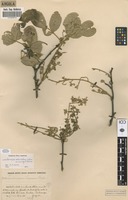
Filed as Lonchocarpus nelsii (Schinz) Heering & Grimme [family FABACEAE]
Previous
Next

Name

Identification
Lonchocarpus capassa Rolfe [family LEGUMINOSAE ]
Related name
  • Lonchocarpus capassa

Flora

Entry for LONCHOCARPUS capassa Rolfe [family LEGUMINOSAE-PAPILIONOIDEAE]
Herbarium
Royal Botanic Gardens, Kew (K)
Collection
Flora of Tropical East Africa
Resource Type
Reference Sources
Entry From
Flora of Tropical East Africa, page 1, (1971) Author: J. B. GILLETT, R. M. POLHILL & B. VERDCOURT
Names
LONCHOCARPUS capassa Rolfe [family LEGUMINOSAE-PAPILIONOIDEAE], in Oates, Matabeleland, ed. 2: 397 (1889); L.T.A.: 551 (1929), pro parte, excl. specim. Angol.; T.T.C.L.: 430 (1949); Hauman in F.C.B. 6: 11 (1954); Coates Palgrave, Trees of Centr. Afr.: 324, t. & photo. (1957); F.F.N.R.: 159, fig. 27/H (1962). Type: Mozambique, Manica e Sofala, Sena, Peters (K, iso.!)
LONCHOCARPUS philenoptera [family LEGUMINOSAE-PAPILIONOIDEAE], [sensu Benth. in J.L.S. 4, Suppl.: 97 (1860), pro parte, quoad specim. Afr. austr.; Harv. in Fl. Cap. 2: 263 (1862), quoad specim. cit. et descr. pro parte, non Benth. sensu stricto]
Capassa violacea Klotzsch [family LEGUMINOSAE-PAPILIONOIDEAE], in Peters, Reise Mossamb. Bot. 1: 28, t. 5 (1861); Mendonça & E. P. Sousa in Webbia 19: 836 (1965); E. P. Sousa in C.F.A. 3: 367 (1966). Type: as for species
Lonchocarpus laxiflorus var. sericeus [family LEGUMINOSAE-PAPILIONOIDEAE], [sensu Bak. in F.T.A. 2: 242 (1871), pro parte; Taub. in P.O.A. C: 218 (1895), non Bak. sensu stricto]
Lonchocarpus violaceus (Klotzsch) Oliv. [family LEGUMINOSAE-PAPILIONOIDEAE], in Trans. Linn. Soc. 29: 63 (1872), non Kunth, nom. illegit.
Lonchocarpus laxiflorus [family LEGUMINOSAE-PAPILIONOIDEAE], [sensu Taub. in P.O.A. C: 218 (1895); Harms in E.J. 28: 408 (1900) & 30: 330 (1901), non Guill. & Perr.]
Derris violacea (Klotzsch) Harms [family LEGUMINOSAE-PAPILIONOIDEAE], in E.J. 33: 174 (1902), pro parte, & in V.E. 3 (1): 642 (1915)
Information
More or less evergreen tree, 4.5–21 (–27) m. tall, with a rounded crown; bark grey, becoming reticulately fissured, rough and flaking; slash cream to yellow-green, sometimes at least producing a red sticky exudate. Young branchlets with a ± dense grey or yellowish-grey indumentum of small crisped hairs; older branchlets glabrescent. Leaves ± 17–32 cm. long; stipules linear-lanceolate to pointed-oblong, 6–8 mm. long, sometimes rather rigid and subpersistent; stipels setaceous, 2–4 mm. long; lateral leaflets in 1–2 (vary rarely –3) pairs, lanceolate to ovate or elliptic-oblong, 5.5–12(–17) cm. long, 2–6.5(–10) cm. wide, pointed to rounded at apex, narrowed to the cuneate, rounded or slightly cordate base, a little unequal-sided, ultimately coriaceous, densely covered at least beneath with a greyish or yellowish-grey indumentum of very short crisped hairs, usually ± glabrescent above and to some extent beneath, but sometimes rather persistently floccose-tomentose; primary lateral nerves 7–9 on either side, fairly closely spaced, prominent beneath; venation rather closely reticulate, similarly prominent. Panicles predominantly terminal, ultimately pendulous, with numerous relatively snort slender branches, up to 15–34 cm. long; axes ± densely and shortly covered with hairs like those of the branchlets; bracts linear or lanceolate, 1–2 mm. long, evanescent; bracteoles near top of the 2–5 mm. long pedicel, linear, 1–2 mm. long, caducous. Calyx 4.5–7 mm. long, with a short silvery-grey tomentum; lateral lobes pointed, often acuminate, 2–3 mm. long. Corolla 9–12 mm. long, pale mauve to purplish, faintly scented, often (almost invariably in East Africa) sparsely and shortly hairy at least at the tip of the standard outside; standard obovate, basally auriculate and with small calluses just above. Fruit elliptic-oblong to linear-oblong, with a narrow wing along the upper edge, pointed or acuminate, abruptly to attenuately narrowed to a 5–15 mm. long stipe, 7–15(–21) cm. long, 2–3.5(–4) cm. wide, covered with a short ± dense crisped indumentum (sometimes wearing away on older fruits), laxly venose, 1–2(–3)-seeded.
Range
DISTR. T1, 4–8 widespread in the drier parts of southern Africa, extending to the Congo (Katanga), SE. Angola, South West Africa and South Africa (NW. Cape Province, Natal and Transvaal), characteristic of major river drainage systems
Altitude range
150–1650 m.
Distribution
TANGANYIKA Ufipa District Sakalilo, 16 Oct. 1950, Bullock 3433 !TANGANYIKA Dodoma District 21 km. W. of Itigi Station on Tabora track, 14 Apr. 1964, Greenway & Polhill 11569 !TANGANYIKA Uluguru Mts., Oct. 1935, Bounce 487 !

Related Materials

  • Terms and Conditions
  • Privacy Policy
  • Cookie Policy
  • Cookie Settings
  • Accessibility
  • Help
  • Contact Us
  • Facebook
  • Twitter
ITHAKA

JSTOR is part of ITHAKA, a not-for-profit organization helping the academic community use digital technologies to preserve the scholarly record and to advance research and teaching in sustainable ways.

©2000-2026 ITHAKA. All Rights Reserved. JSTOR®, the JSTOR logo, JPASS®, Aluka®, and ITHAKA® are registered trademarks of ITHAKA.

╳