JSTOR Global Plants Home
  • Home
  • Browse
  • About
  • Access
  • Account
    • Saved Items
    • Profile
  • Log in

Global Plants

Skip to Main Content
  • JSTOR Global Plants Home
  • Global Plants

    • Browse
    • About
    • Access
    • Account
      • Saved Items
      • Profile
Log in
  • Browse
  • About
  • Access
  • Account
    • Saved Items
    • Profile
Advanced Search

Compilation
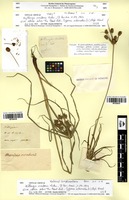
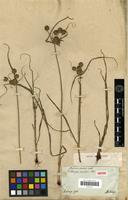
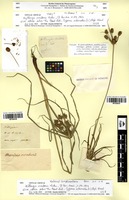
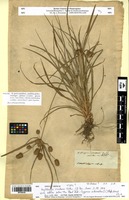
Kyllinga ovularis

4 Images see all

Kyllinga ovularis Michx. [family CYPERACEAE]
Isotype of Kyllinga ovularis Michx. var. polystachya Cherm. [family CYPERACEAE]
Type? of Kyllinga ovularis Michx. [family CYPERACEAE]
Previous
Next

Name

Identification
Mariscus ovularis (Michx.) Vahl [family CYPERACEAE ] (stored under name); Verified by Not on sheet, Isotype of Kyllinga ovularis Michx. [family CYPERACEAE ] Verified by Not on sheet,
Related name
  • Mariscus ovularis
  • Kyllinga ovularis
Common name
  • Teasel sedge, Flora of North America Vol. 23

Flora

Entry for Cyperus echinatus (Linnaeus) Alph. Wood [family CYPERACEAE]
Herbarium
Flora of North America (FNA)
Collection
Flora of North America
Resource Type
Reference Sources
Entry From
Flora of North America, Vol 23,
Names
Cyperus echinatus (Linnaeus) Alph. Wood [family CYPERACEAE], Class-book Bot. ed. s.n.(b), 734. 1861
Scirpus echinatus Linnaeus [family CYPERACEAE], Sp. Pl., 1: 50. 1753
Cyperus ovularis (Michaux) Torrey [family CYPERACEAE]
Cyperus ovularis var. americanus Boeckeler [family CYPERACEAE]
Cyperus ovularis var. sphaericus Boeckeler [family CYPERACEAE]
Cyperus ovularis var. wolfii (Alph. Wood) Kükenthal [family CYPERACEAE]
Cyperus wolfii Alph. Wood [family CYPERACEAE]
Kyllinga ovularis Michaux [family CYPERACEAE]
Mariscus ovularis (Michaux) Vahl [family CYPERACEAE]
Information
Herbs, perennial, single-stemmed to loosely cespitose. Culms basally cormlike, trigonous, (15–)30–100 cm × 0.5–3.5 mm, glabrous. Leaves flat to V-shaped, 10–65 cm × 3–9 mm, adaxial surface, margins minutely scabridulous. Inflorescences: spikes densely globose to globose-ovoid, 8–17 mm wide; rays 3–12, 2–12 cm, scaberous adaxially especially distally; rachis 4–8 mm; bracts (3–)4–7, ascending at 30(–45)°, flat, 5–35 cm × 2–9 mm; rachilla persistent, wings 0.5–0.7 mm wide. Spikelets 50–100, oblong-lanceoloid, ± terete-quadrangular, (3.5–)4–7 × 1–1.4 mm; distal spikelet spreading or ascending; floral scales persistent, 3–5, appressed, stramineous to brownish, 4-ribbed laterally, oblong-elliptic, 3.5–4.5 × 1–1.8 mm, membranous, apex entire or emarginate with mucro to 0.3 mm. Flowers: anthers 0.4–0.8 mm; styles 0.5–0.6 mm; stigmas 1 mm. Achenes brown, ± stipitate, oblong, (1.5–)1.8–2.3 × 0.5–0.6(–0.7) mm (1/2 length of floral scales), apex obtuse, surfaces puncticulate.
Phenology Fruiting
summer
jun
jul
aug
fall
sep
oct
nov
Altitude range
0–500 m;
Distribution
West Indies.USA Ala.USA Ark.USA Del.USA D.C.USA Fla.USA Ga.USA Ill.USA Ind.USA Kans.USA Ky.USA La.USA Md.USA Miss.USA Mo.USA N.J.USA N.Y.USA N.C.USA OhioUSA Okla.USA Pa.USA R.I.USA S.C.USA Tenn.USA Tex.USA Va.USA W.Va.USA Wis.
Discussion
The records for Rhode Island and Wisconsin are according to M. L. Horvat (1941); we have not seen specimens from those states.
Cyperus echinatus is usually recognized by its tight, nearly spheric spikes; it may occasionally be hard to distinguish from C. croceus and C. retrorsus. Compared to C. retrorsus, C. echinatus has larger spikelets and longer floral scales, anthers, and achenes. In contrast to C. echinatus, C. croceus has looser spikes, shorter, broader, greenish or yellowish floral scales, shorter, more ovoid achenes, and shorter anthers. Furthermore, C. echinatus is predominantly an inland species of roadsides, pastures, and other disturbed ground; C. retrorsus is primarily a coastal species and occurs in drier, sandier sites.

Related Materials

  • Terms and Conditions
  • Privacy Policy
  • Cookie Policy
  • Cookie Settings
  • Accessibility
  • Help
  • Contact Us
  • Facebook
  • Twitter
ITHAKA

JSTOR is part of ITHAKA, a not-for-profit organization helping the academic community use digital technologies to preserve the scholarly record and to advance research and teaching in sustainable ways.

©2000-2026 ITHAKA. All Rights Reserved. JSTOR®, the JSTOR logo, JPASS®, Aluka®, and ITHAKA® are registered trademarks of ITHAKA.

╳