JSTOR Global Plants Home
  • Home
  • Browse
  • About
  • Access
  • Account
    • Saved Items
    • Profile
  • Log in

Global Plants

Skip to Main Content
  • JSTOR Global Plants Home
  • Global Plants

    • Browse
    • About
    • Access
    • Account
      • Saved Items
      • Profile
Log in
  • Browse
  • About
  • Access
  • Account
    • Saved Items
    • Profile
Advanced Search

Compilation
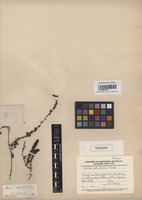
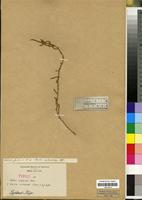
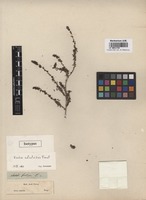
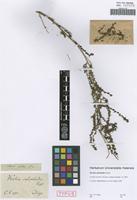
Kochia salsoloides

5 Images see all

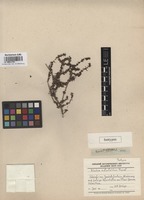
Isotype of Kochia salsoloides Fenzl [family CHENOPODIACEAE]
Type of Bassia salsoloides (Fenzl) A.J. Scott [family CHENOPODIACEAE]
Isotype of Kochia salsoloides Fenzl [family CHENOPODIACEAE]
Original material of Kochia salsoloides Fenzl [family CHENOPODIACEAE]
Isotype of Kochia salsoloides Fenzl [family CHENOPODIACEAE]
Previous
Next

Name

Identification
Kochia salsoloides Fenzl [family CHENOPODIACEAE ] (stored under name); Verified by E. Frenzl,
Related name
  • Kochia salsoloides
  • Bassia salsoloides

Flora

Entry for KOCHIA salsoloides Fenzl [family CHENOPODIACEAE]
Herbarium
Royal Botanic Gardens, Kew (K)
Collection
Flora of Tropical Africa
Resource Type
Reference Sources
Entry From
Flora of Tropical Africa, Vol 6, Part 1, page 76, (1913) Author: (By J. G. Baker, with additions by C. H. Wright.)
Names
KOCHIA salsoloides Fenzl [family CHENOPODIACEAE], in Endl. et Fenzl, Nov. Stirp. Decad. Vindob. 1839, 74. —Moquin in DC. Prodr. xiii. ii. 131; Volk. in Engl. & Prantl, Pflanzenfam. iii. 1A, 70; Schinz in Bull. Herb. Boiss. v. Append. iii. 60; O. Kuntze in Jahrb. Königl. Bot. Gart. Berlin, iv. 273.
KOCHIA pubescens Moquin [family CHENOPODIACEAE], Chenop. Enum. 192, in DC. Prodr. xiii. ii. 131; Volk. in Engl. & Prantl, Pflanzenfam. iii. 1A, 70.
Information
A branched undershrub, 1–2 ft. long; young parts pubescent; stem when in fruit pubescent at the top or nearly glabrate. Leaves 1/4– 1/3 by 1/20 in., flat or subcylindric.
Range
Also in South-west Africa
Distribution
German East Africa Lower Guinea Hereroland, Pechuel Loesche, Fleck, 406.
Notes
The variations in degree of pubescence which constitute two species with Volkens are (for me) altogether insufficient. J. G. Baker, indeed, doubts whether this species is well separated from the Mediterranean K. prostrata, Schrad.

Related Materials

  • Terms and Conditions
  • Privacy Policy
  • Cookie Policy
  • Cookie Settings
  • Accessibility
  • Help
  • Contact Us
  • Facebook
  • Twitter
ITHAKA

JSTOR is part of ITHAKA, a not-for-profit organization helping the academic community use digital technologies to preserve the scholarly record and to advance research and teaching in sustainable ways.

©2000-2026 ITHAKA. All Rights Reserved. JSTOR®, the JSTOR logo, JPASS®, Aluka®, and ITHAKA® are registered trademarks of ITHAKA.

╳