JSTOR Global Plants Home
  • Home
  • Browse
  • About
  • Access
  • Account
    • Saved Items
    • Profile
  • Log in

Global Plants

Skip to Main Content
  • JSTOR Global Plants Home
  • Global Plants

    • Browse
    • About
    • Access
    • Account
      • Saved Items
      • Profile
Log in
  • Browse
  • About
  • Access
  • Account
    • Saved Items
    • Profile
Advanced Search

Compilation
Kniphofia splendida

11 Images see all

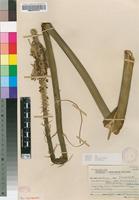
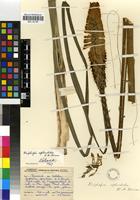
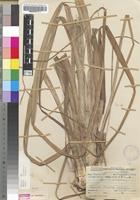
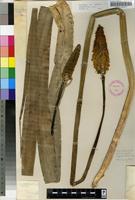
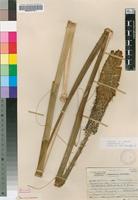
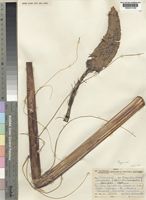
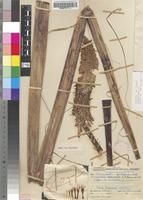
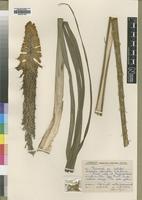
Isotype of Kniphofia splendida E.A.Bruce [family ASPHODELACEAE]
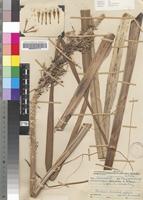
Holotype of Kniphofia splendida E.A.Bruce [family ASPHODELACEAE]
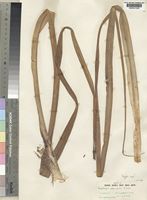
Filed as Kniphofia splendida E.A.Bruce [family ASPHODELACEAE]
Isotype of Kniphofia splendida E.A.Bruce [family ASPHODELACEAE]
Holotype of Kniphofia splendida E.A.Bruce [family ASPHODELACEAE]
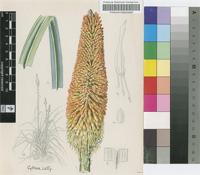
Kniphofia splendida E.A.Bruce
Isotype of Kniphofia splendida E.A.Bruce [family ASPHODELACEAE]
Holotype of Kniphofia splendida E.A.Bruce [family ASPHODELACEAE]
Filed as Kniphofia splendida E.A.Bruce [family ASPHODELACEAE]
Previous
Next

Name

Identification
Kniphofia splendida E.A.Bruce [family ASPHODELACEAE ]
Related name
  • Kniphofia splendida

Flora

Entry for Kniphofia splendida [family ALOACEAE]
Herbarium
South African National Biodiversity Institute, Compton Herbarium, Cape Town (SAM)
Collection
Flora of Southern Africa
Resource Type
Reference Sources
Entry From
Flora of South Africa, (2003) Author: Dr J.P. Roux
Names
Kniphofia splendida [family ALOACEAE]
Common names
K. praecox subsp. bruceae Codd: 449 (1968). K. uvaria sensu Jacq.: t. 4 (1800).
Information
Plants many-stemmed. Leaves fairly rigid, distinctly nervose when dry, at first erect, later recurved, 0.3-2.0 m long, 10-20(-30) mm broad, keeled below, channelled above, mid-green; margin and keel finely and somewhat irregularly serrulate, rarely almost smooth. Scape 1.2-2.5 m long, overtopping recurved leaves. Raceme very dense, subcylindrical, 100-220 x 50-60 mm, usually tapering towards apex, buds yellow to yellow-green, usually tipped with orange-red to scarlet; flowers spreading to pendulous, lemon-yellow to orange-yellow. Pedicels 1.5-4.0 mm long. Bracts ovate-lanceolate to lanceolate, 5-9 mm long; margin slightly to distinctly serrulate. Perianth narrowly funnel-shaped, 19-25 mm long, slightly constricted and 1.5-2.0 mm diam. at the base, expanding about the middle to 4-6 mm and ± 5-7 mm near throat. Stamens well exserted by 5-10 mm at anthesis. Fruit subglo-bose, 5.0-6.5 mm long. Flowering time: February to March. Figure 19. Plants several- to many-stemmed. Leaves somewhat spreading, nervose when dry, 0.9-1.5 m long, 20-30 mm broad, keeled below, chan­nelled above; margin and keel sparsely to dis­tinctly serrulate. Scape 1.0-1.8 m tall, overtop­ping leaves. Raceme dense, subcylindrical, taper­ing somewhat to apex, 150-300 x 60-70 mm; buds orange to reddish orange; flowers spreading to pendulous, yellow. Pedicels 5-8 mm long, elongating to 10 mm in fruit. Bracts linear-lance­olate, 8-12 mm long; margin finely eroso-dentic-ulate. Perianth narrowly funnel-shaped, 24-30 mm long, ± 2 mm diam. near base, expanding about 10 mm above base to 5-7 mm near throat. Stamens exserted by 8-15 mm at anthesis. Fruit subglobose, 5-7 mm long. Figure 20.
Habitat
Its nearest affinity is probably with the fol­lowing species, K. bruceae, from which it dif­fers in its shorter perianth and pedicels and somewhat narrower leaves. The flowers are usually orange-yellow with red-tipped buds, but around Sabie, in Mpumalanga, the flowers lack red pigment and are greenish yellow.
Use
21. Kniphofia splendida E.A.Bruce in The Flowering Plants of Africa 30: t 1183 (1955a); Letty: 33, t. 20 (1962); Codd: 443 (1968); Retief & P.PJ.Herman: 102 (1997) Type: Transvaal [Mpumalanga], Magoebas-kloof (cultivated in Pretoria), Groeneveld in PRE28420 (PRE, holo.!).
Range
Distributed from Swaziland along the east­ern Mpumalanga escarpment to the Soutpans-berg and extending to the mountains of eastern Zimbabwe and Malawi, growing among rocks or in tall grassland, often adjacent to forest. Map 11. Found in grassy valleys and low-lying places at altitudes of 100-300 m in three disjunct areas: (a) Komga-King Williams Town; (b) Plettenberg Bay-Knysna; and (c) Willowmore District. Map 11.

Related Materials

  • Terms and Conditions
  • Privacy Policy
  • Cookie Policy
  • Cookie Settings
  • Accessibility
  • Help
  • Contact Us
  • Facebook
  • Twitter
ITHAKA

JSTOR is part of ITHAKA, a not-for-profit organization helping the academic community use digital technologies to preserve the scholarly record and to advance research and teaching in sustainable ways.

©2000-2026 ITHAKA. All Rights Reserved. JSTOR®, the JSTOR logo, JPASS®, Aluka®, and ITHAKA® are registered trademarks of ITHAKA.

╳