Entry From
Flora of South Africa, (2003) Author: Dr J.P. Roux
Habitat
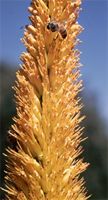
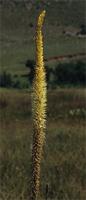
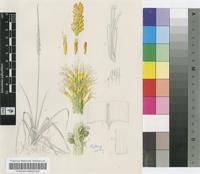
Readily distinguished from other South AfriÂcan species by the exceptionally long, narrow raceme. There are two colour forms, separated geographically. In the south, from Van Reenen to Wakkerstroom, the typical form occurs with greenish white buds and whitish to cream-coloured flowers. From the Carolina and Barberton Districts northwards, the buds are orange-yellow, often tinged with red, and the flowers on opening are pale to deep yellow.
Use
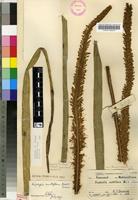
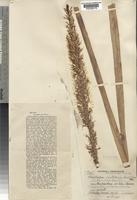
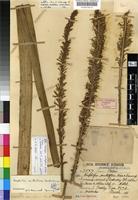
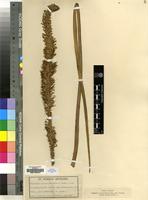
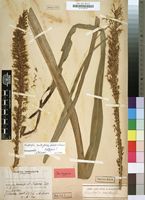
1. Kniphofia multiflora J.M.Wood & M.S.Evans in Journal of Botany, British and Foreign 35: 353 (1897); J.M.Wood: t. 206 (1900) J.M.Wood: 56 (1901); Hook.f.: t. 7832 (1902) A.Berger: 44 (1908); Codd: 1.1445 (1965a); Codd 400 (1968); A.Fabian & Germish.: 42, t. 13c (1997) Retief & P.P.J.Herman: 101 (1997). Type: Natal [KwaZulu-Natal], between Van Reenen and Nelson's Kop, J.M.Wood 5972 (NH, nolo.!; K!).
Range
Distributed along the Drakensberg escarpÂment from Van Reenen and Harrismith in the south to northern KwaZulu-Natal, Swaziland and Mpumalanga, reaching its northernmost limit on the Soutpansberg in Limpopo. It grows in mountain marshes, vleis and on streambanks, usually at altitudes of 1 300 to 2 000 m, but in Mpumalanga, it is found in vleis east of the escarpment as low as 800 m. Map 1.