JSTOR Global Plants Home
  • Home
  • Browse
  • About
  • Access
  • Account
    • Saved Items
    • Profile
  • Log in

Global Plants

Skip to Main Content
  • JSTOR Global Plants Home
  • Global Plants

    • Browse
    • About
    • Access
    • Account
      • Saved Items
      • Profile
Log in
  • Browse
  • About
  • Access
  • Account
    • Saved Items
    • Profile
Advanced Search

Compilation
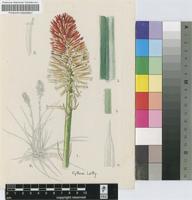
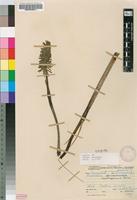
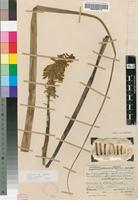
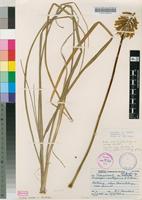
Kniphofia coralligemma

11 Images see all

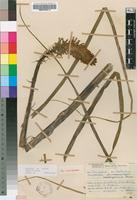
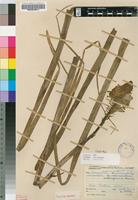
Isotype of Kniphofia coralligemma E.A.Bruce [family ASPHODELACEAE]
Kniphofia coralligemma E.A.Bruce
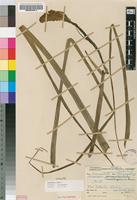
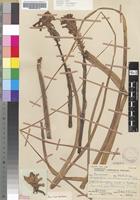
Holotype of Kniphofia coralligemma E.A.Bruce [family ASPHODELACEAE]
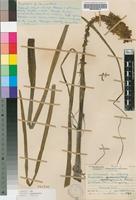
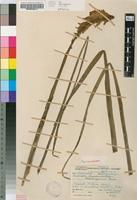
Filed as Kniphofia coralligemma E.A.Bruce [family ASPHODELACEAE]
Isotype of Kniphofia coralligemma E.A.Bruce [family ASPHODELACEAE]
Holotype of Kniphofia coralligemma E.A.Bruce [family ASPHODELACEAE]
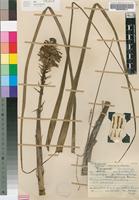
Isotype of Kniphofia coralligemma E.A.Bruce [family ASPHODELACEAE]
Previous
Next

Name

Identification
Kniphofia coralligemma E.A.Bruce [family ASPHODELACEAE ]
Related name
  • Kniphofia coralligemma

Flora

Entry for Kniphofia coralligemma [family ALOACEAE]
Herbarium
South African National Biodiversity Institute, Compton Herbarium, Cape Town (SAM)
Collection
Flora of Southern Africa
Resource Type
Reference Sources
Entry From
Flora of South Africa, (2003) Author: Dr J.P. Roux
Names
Kniphofia coralligemma [family ALOACEAE]
Information
Plants solitary to several-stemmed. Leaves at first erect, later bending over about the mid­dle, 0.55-1.1 m long, 10-20 mm broad, soft in texture, channelled above and keeled below, midgreen to slightly glaucous; margin distantly serrulate towards apex, generally smooth in lower part and on keel. Scape 0.6-1.2 m tall, overtopping recurved leaves. Raceme ovoid, cylindrical, usually tapering slightly towards apex, 80-150 x 40-50 mm, dense, or some­times rather lax at apex; buds at first ascending, later spreading, coral to pale orange or orange-scarlet; flowers varying in colour according to locality (see notes) from cream-coloured or ivory, to creamy yellow or orange-yellow. Pedicels 2-5 mm long. Bracts at first erect, later deflexed, oblong-lanceolate to narrowly lanceolate, acute to acuminate, 7—12(—16) mm long, minutely serrulate to entire. Perianth sub-cylindrical, 22-25 mm long; lobes about 3 mm long, slightly spreading. Stamens exserted by about 2 mm at anthesis, later withdrawn. Fruit ovoid-triquetrous, 5 mm long. Flowering time: February to April. Figure 23.
Habitat
Flower colour varies according to the three localities indicated above: (a) in the typical form, known from only a small area on the western extremity of the Waterberg (Kransberg), the buds are coral-pink shading to creamy white or ivory as the flowers mature; (b) on the high­est point of the Blouberg, the plants tend to be smaller with orange-yellow buds, becoming pale yellow in open flowers; (c) in the Sout­pansberg to Wolkberg area, the plants tend to be more robust than the typical form, with orange-scarlet buds changing to orange-yellow towards the base of the raceme, bearing a superficial resemblance to K. linearifolia (No. 46), but dif­fering in the narrower leaves and lanceolate-acuminate bracts.
Use
25. Kniphofia coralligemma E.A.Bruce in The Flowering Plants of Africa 30: t. 1186 (1955d); Letty: 36, t. 20,2 (1962); Codd: 453 (1968); Relief & P.P.J.Herman: 101 (1997). Type: Transvaal [Limpopo], Waterberg District, Kransberg, Codd & Erens 2090 (PRE, holo.!).
Range
Found in marshy places, forest margins and grassy, south-facing slopes at altitudes of 1 700-2 000 m in three mountainous areas of Limpopo: (a) Kransberg (Waterberg); (b) Blou-berg; and (c) Soutpansberg, Wolkberg and Hae-nertsburg. Map 12.

Related Materials

  • Terms and Conditions
  • Privacy Policy
  • Cookie Policy
  • Cookie Settings
  • Accessibility
  • Help
  • Contact Us
  • Facebook
  • Twitter
ITHAKA

JSTOR is part of ITHAKA, a not-for-profit organization helping the academic community use digital technologies to preserve the scholarly record and to advance research and teaching in sustainable ways.

©2000-2026 ITHAKA. All Rights Reserved. JSTOR®, the JSTOR logo, JPASS®, Aluka®, and ITHAKA® are registered trademarks of ITHAKA.

╳