JSTOR Global Plants Home
  • Home
  • Browse
  • About
  • Access
  • Account
    • Saved Items
    • Profile
  • Log in

Global Plants

Skip to Main Content
  • JSTOR Global Plants Home
  • Global Plants

    • Browse
    • About
    • Access
    • Account
      • Saved Items
      • Profile
Log in
  • Browse
  • About
  • Access
  • Account
    • Saved Items
    • Profile
Advanced Search

Compilation
Kiaeria blyttii

6 Images see all

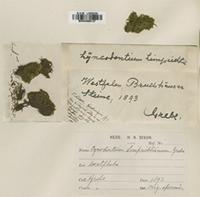
Type of Cynodontium limprichtianum Grebe [family DICRANACEAE]
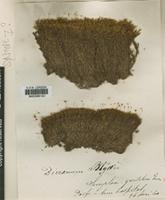
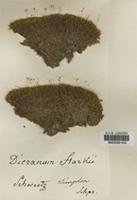
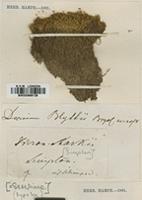
Type? of Dicranum blyttii Bruch, Schimp. & W.Gümbel [family DICRANACEAE]
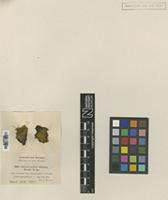
Type of Dicranoweisia obliqua Kindb. [family DICRANACEAE]
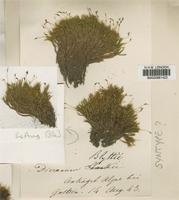
Type? of Dicranum blyttii Bruch, Schimp. & W.Gümbel [family DICRANACEAE]
Previous
Next

Name

Identification
Kiaeria blyttii (Bruch, Schimp. & W.Gümbel) Broth. [family DICRANACEAE ] (stored under name); Dicranum blyttii Bruch, Schimp. & W.Gümbel [family DICRANACEAE ]
Related name
  • Dicranum blyttii
  • Kiaeria blyttii
  • Dicranoweisia obliqua
  • Cynodontium limprichtianum

Flora

Entry for Kiaeria blyttii (Bruch & Schimper) Brotherus [family ]
Herbarium
Flora of North America (FNA)
Collection
Flora of North America
Resource Type
Reference Sources
Entry From
Flora of North America, Vol 27,
Names
Kiaeria blyttii (Bruch & Schimper) Brotherus [family ], Laubm. Fennoskand., 87. 1923,
Dicranum blyttii Bruch & Schimper [family ], Kongl. Vetensk. Acad. Handl., 34: 164. 1846
Arctoa blyttii (Bruch & Schimper) Loeske [family ]
Arctoa blyttii var. hispidula (R. S. Williams) Grout [family ]
Treatment Author(s)
Steven G. Newmaster
Information
Plants in loose or brown tufts, dark green, dull. Stems 1–2 cm. Branch leaves erect-spreading, flexuose and somewhat crisped when dry, lanceolate, gradually subulate, 2–4 mm, margins occasionally distally 2-stratose; costa 35–50 µm at base; distal laminal cells mostly subquadrate (1–2:1), 8–11 µm wide, papillose on the dorsal surface; basal laminal cells elongate, smooth, sometimes porose, alar cells gradually enlarged. Perichaetial leaves similar to the cauline. Perigonia terminal on separate branches or located well below the perichaetia. Capsule not ribbed when dry, urn 1–1.2 mm. Spores 13–23 µm.
Altitude range
alpine elevations;
Distribution
EuropeAsia.USA AlaskaUSA Calif.USA IdahoUSA MaineUSA N.H.USA N.Y.USA Oreg.USA Wash.Canada Alta.Canada B.C.Canada Nfld. and Labr. (Nfld.)Canada N.W.T.Canada N.S.Canada Ont.Canada Que.Canada Yukon
Discussion
Kiaeria blyttii is distinguished by position of the male inflorescence at the ends of separate branches or well below the perichaetia, giving the appearance of separate stems (polyoicous). In the field, it can be distinguished from small sterile forms of K. starkei by its more terrestrial habit, spreading leaves, dull, dark green or brownish color, and lack of grooves on the dry capsules.

Related Materials

  • Terms and Conditions
  • Privacy Policy
  • Cookie Policy
  • Cookie Settings
  • Accessibility
  • Help
  • Contact Us
  • Facebook
  • Twitter
ITHAKA

JSTOR is part of ITHAKA, a not-for-profit organization helping the academic community use digital technologies to preserve the scholarly record and to advance research and teaching in sustainable ways.

©2000-2026 ITHAKA. All Rights Reserved. JSTOR®, the JSTOR logo, JPASS®, Aluka®, and ITHAKA® are registered trademarks of ITHAKA.

╳