JSTOR Global Plants Home
  • Home
  • Browse
  • About
  • Access
  • Account
    • Saved Items
    • Profile
  • Log in

Global Plants

Skip to Main Content
  • JSTOR Global Plants Home
  • Global Plants

    • Browse
    • About
    • Access
    • Account
      • Saved Items
      • Profile
Log in
  • Browse
  • About
  • Access
  • Account
    • Saved Items
    • Profile
Advanced Search

Compilation
Khaya nyasica

7 Images see all

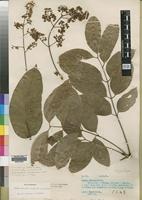
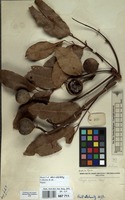
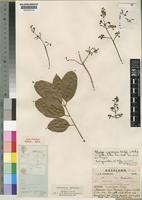
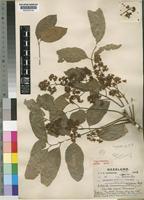
Filed as Khaya nyasica Stapf ex Baker f. [family MELIACEAE]
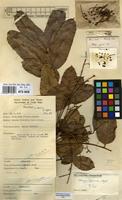
Type of Khaya nyasica Stapf ex Baker f. [family MELIACEAE]
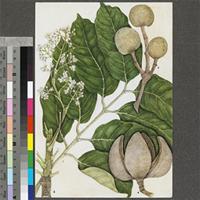
Filed as Khaya nyasica Stapf ex Baker f. [family MELIACEAE]
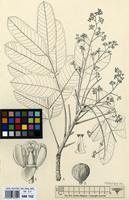
Khaya nyasica Stapf ex Baker f. original illustration from the 'Trees of Central Africa'
Filed as Khaya nyasica Stapf ex Baker f. [family MELIACEAE]
Type of Khaya nyasica Stapf ex Baker f. [family MELIACEAE]
Previous
Next

Name

Identification
Khaya nyasica Stapf ex Baker f. [family MELIACEAE ]
Related name
  • Khaya nyasica

Flora

Entry for Khaya nyasica Stapf ex Bak. f. [family MELIACEAE]
Herbarium
Royal Botanic Gardens, Kew (K)
Collection
Flora Zambesiaca
Resource Type
Reference Sources
Entry From
FZ, Vol 2, Part 1, page 285, (1963) Author: F. White and B. T. Styles
Names
Khaya senegalensis [family MELIACEAE], sensu Oliver, F.T.A. 1: 388 (1868) pro parte quoad plant. mossamb. — Sim, For. Fl. Port. E. Afr.: 27, t. 21 (1909).
Khaya zambesiaca Stapf ex Engl. [family MELIACEAE], Pflanzenw. Afr. 3, 1: 803 (1915) nom. nud.
Khaya nyasica Stapf ex Bak. f. [family MELIACEAE], in Journ. Linn. Soc., Bot. 40: 42, t. 1 fig. 4 (“3 in text. sphalm.”) (1911). — Eyles in Trans. Roy. Soc. S. Afr. 5: 388 (1916). — Steedman, Trees etc. S. Rhod.: 32–3 (1933). — Staner in Bull. Jard. Bot. Brux. 16: 217 (1941). — Brenan, T.T.C.L.: 317 (1949). — Gomes e Sousa, Dendrol. Mozamb., 1: 174 cum tab. (1951); op. cit. 5: 161 cum tab. (1960). — Pardy in Rhod. Agr. Journ. 50: 153 cum photogr. (1953). — Garcia in Contr. Conhec. Fl. Moçamb. 2: 143 (1954). — Williamson, Useful Pl. Nyasal.: 72 (1956). — Palgrave, Trees of Central Afr.: 222 cum photogr. et tab. (1957). — Staner & Gilbert, F.C.B. 7: 178, t. 21 (1958). — White, F.F.N.R.: 181, fig. 35F–H (1962). TAB. 54. Type: Mozambique, Lower Umswirizwi R. and Chirinda Forest, fl. x.1904, Swynnerton 15 (BM, holotype; K; SRGH).
Information
Large evergreen tree up to 40 (60 or more) m. tall; bole of large trees markedly buttressed at the base to a height of 3–4 m., very straight and reaching a considerable height before branching, up to 4 m. or more in diam. above the buttresses; bark with a smooth surface but exfoliating in scales the size of a half-crown, mottled grey and brown. Leaves paripinnate; petiole and rhachis 8–36 cm. long, glabrous; leaflets up to 17 × 7 cm., usually much smaller, opposite or subopposite, 2–7 (8)-jugate, usually oblong-elliptic, sometimes lanceolate-oblong, apex cuspidate, base cuneate to obtuse, slightly asymmetric, glabrous, coriaceous, upper surface glossy; petiolules 5–15 mm. long. Flowers white, sweet-scented, in large many-flowered axillary panicles; peduncle 3–14 cm. long; pedicels 2–3 mm. long; bracts minute, 1 mm. long, squamiform, persistent. Calyx 1–1·5 mm. long, lobed almost to the base, lobes subcircular, ciliate. Petals up to 5·5 × 3 mm., elliptic, somewhat hooded, glabrous. Staminal tube 4·5–5·5 mm. long. Anthers 1 mm. long in male flowers; antherodes 0·5 mm. long and not producing pollen in female flowers. Ovary 1·5–2 mm. in diam.; style less than 1 mm. long; pistillode similar to ovary but much more slender. Capsule 4–6 cm. in diam., dehiscing by 4–5 valves. Seeds 1–2 × 1·5–3 cm., 6–12 per loculus.
Habitat
In riverine forest ; nearly always near water.
Altitude range
at low and medium altitudes
1500
0
inferred from medium and low
Distribution
Mozambique GI Vilanculos, Macovane, fr. v.1947, Hornby 2713 (SRGH).Mozambique MS Inhandoa R., Gorongosa, fl. x.1956, Gomes e Sousa 4326 (COI; FHO; K; LMJ; PRE; SRGH).Mozambique T Moatize, fr. iv.1948, Mendonça 4126 (LISC).Mozambique Z Mocuba, Namagoa, fr. x.1944, fl. vi.1946, Faulkner 17 (BM; COI; FI; K; PRE; SRGH).Malawi S Malabri Hill near Limbe, fl., Townsend 100–104 (FHO).Malawi C Namikokwe R., st. ix.1929, Burtt Davy 21686 (FHO).Zimbabwe E Chirinda, fr. x.1947, Wild 2211 (K; SRGH).Zimbabwe C Greenwood Park, Salisbury, fl. x.1937, Finlay M148/37 (BM; FHO) cult.Zambia S Mululu, Chibilwabilwa Valley, Gwembe, fr. ix.1961, Bainbridge 592 (FHO).Zambia E Fort Jameson, fr. iv.1952, White 2461 (BR; FHO; K; ND).Zambia C between Luangwa Bridge and Rufunsa, fr. ix.1947, Brenan & Greenway 7816 (FHO; K).Zambia W Kasaria Forest Reserve, Ndola, fl. ix.1951, Holmes 202 (FHO).Mozambique N Nampula, fl. & fr. xi.1948, Andrada 1469 (COI; LISC).Malawi N near Rumpi Boma, fr. vi.1953, Chapman 123 (FHO).Zimbabwe N Lomagundi, fl., Eyles 6193 (SRGH).Zambia N Kawambwa, fl. viii.1957, Fanshawe 3632 (K; SRGH).
Distribution (external)
Tanganyika
Congo
Notes
The well-known “Big-tree” in the Chirinda forest near Chipinga in Southern Rhodesia, which is this species, is more than 60 m. high and is probably the tallest tree in the Flora Zambesiaca area. The bark is astringent in taste, reminding one of quinine, hence the African name “Umbaba” (Southern Rhodesia) meaning “to be bitter”. The timber is reddish in colour with a handsome grain, hard but fairly easily worked, takes a fine finish and polishes well; it weathers well above ground and is untouched by termites and borers (Swynnerton). It is considered an excellent wood for furniture and general cabinet making. Over large parts of Mozambique, Nyasaland and N. Rhodesia it is the most important indigenous timber species, but supplies have been sadly depleted by exploitation. Artificial regeneration in its natural habitat in Nyasaland has given promising results so far. It is under trial in many parts of the tropics and in Florida it grows twice as rapidly as the indigenous pines.Khaya senegalensis (Desr.) A. Juss. has recently been introduced at Lake Bangweulu for trial for forestry purposes. It and K. grandifoliola C.DC. are under trial in Nyasaland.

Related Materials

  • Terms and Conditions
  • Privacy Policy
  • Cookie Policy
  • Cookie Settings
  • Accessibility
  • Help
  • Contact Us
  • Facebook
  • Twitter
ITHAKA

JSTOR is part of ITHAKA, a not-for-profit organization helping the academic community use digital technologies to preserve the scholarly record and to advance research and teaching in sustainable ways.

©2000-2026 ITHAKA. All Rights Reserved. JSTOR®, the JSTOR logo, JPASS®, Aluka®, and ITHAKA® are registered trademarks of ITHAKA.

╳