JSTOR Global Plants Home
  • Home
  • Browse
  • About
  • Access
  • Account
    • Saved Items
    • Profile
  • Log in

Global Plants

Skip to Main Content
  • JSTOR Global Plants Home
  • Global Plants

    • Browse
    • About
    • Access
    • Account
      • Saved Items
      • Profile
Log in
  • Browse
  • About
  • Access
  • Account
    • Saved Items
    • Profile
Advanced Search

Compilation
Keayodendron bridelioides

4 Images see all

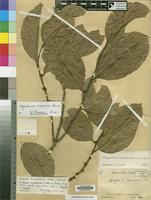
Isotype of Keayodendron bridelioides Léandri [family EUPHORBIACEAE]
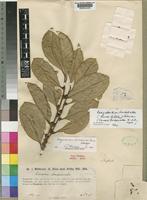
Keayodendron bridelioides (Gilg & Mildbr. ex Hutch. & Dalziel) Leandri [family EUPHORBIACEAE]
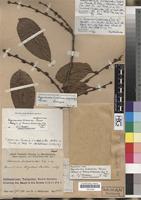
Lectotype of Casearia bridelioides Gilg ex Engl. [family EUPHORBIACEAE]
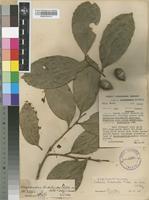
Filed as Keayodendron bridelioides (Mildbr.ex Hutch.& Dalz.) J. Leandri [family FLACOURTIACEAE]
Previous
Next

Name

Identification
Keayodendron bridelioides (Mildbr.ex Hutch.& Dalz.) J. Leandri [family FLACOURTIACEAE ] (stored under name); Verified by Latilo, M. G., 1966
Related name
  • Casearia bridelioides
  • Keayodendron bridelioides
Common name
  • ebo (Sankey; KO&S) (NIGERIA, YORUBA), Burkill, H.M. 1985. The useful plants of west tropical Africa, Vol. 2

Information

Entry for Keayodendron bridelioides (Mildbr.) Léandri [family EUPHORBIACEAE]
Herbarium
Royal Botanic Gardens, Kew (K)
Collection
Useful Plants of West Tropical Africa
Resource Type
Reference Sources
Entry From
Burkill, H.M. 1985. The useful plants of west tropical Africa, Vol 2
Names
Casearia bridelioides Mildbr. [family FLACOURTIACEAE]
Drypetes sassandraensis Aubrév.nom. nud. [family EUPHORBIACEAE]
Keayodendron bridelioides (Mildbr.) Léandri [family EUPHORBIACEAE]
Common names
NIGERIA: YORUBA ebo (Sankey; KO&S)
Uses
Phytochemistry: glycosides, saponims, steroids wood Products: carpentry and related applications
Description
A tree of the lowland rain-forest, reaching 35 m height, bole to 2.5 m girth, straight, cylindrical, to 22 m long to lowest branching. Recorded from Ivory Coast to S Nigeria, and in E Cameroun and Gabon.The wood is brown to dark red, hard, heavy, easily worked and not too heavy for joinery (2–5).Phytochemical tests show the presence of traces of saponosides (1).
References
References:
Contributor
Royal Botanic Gardens, Kew (K)

Related Materials

  • Terms and Conditions
  • Privacy Policy
  • Cookie Policy
  • Cookie Settings
  • Accessibility
  • Help
  • Contact Us
  • Facebook
  • Twitter
ITHAKA

JSTOR is part of ITHAKA, a not-for-profit organization helping the academic community use digital technologies to preserve the scholarly record and to advance research and teaching in sustainable ways.

©2000-2026 ITHAKA. All Rights Reserved. JSTOR®, the JSTOR logo, JPASS®, Aluka®, and ITHAKA® are registered trademarks of ITHAKA.

╳