JSTOR Global Plants Home
  • Home
  • Browse
  • About
  • Access
  • Account
    • Saved Items
    • Profile
  • Log in

Global Plants

Skip to Main Content
  • JSTOR Global Plants Home
  • Global Plants

    • Browse
    • About
    • Access
    • Account
      • Saved Items
      • Profile
Log in
  • Browse
  • About
  • Access
  • Account
    • Saved Items
    • Profile
Advanced Search

Compilation
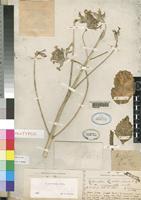
Kalanchoe petitiana

4 Images see all

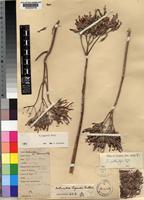
Kalanchoe prittwitzii Engl. [family CRASSULACEAE]
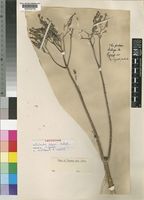
Type of Kalanchoe gloveri Cufod. [family CRASSULACEAE]
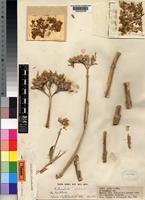
Holotype of Kalanchoe quartiniana A.Rich. var. micrantha Pamp. [family CRASSULACEAE]
Previous
Next

Name

Identification
Kalanchoe petitiana A.Rich. [family CRASSULACEAE ] (stored under name); Verified by Data not digitized, Kalanchoe quartiniana A.Rich. [family CRASSULACEAE ] Verified by Data not digitized,
Related name
  • Kalanchoe unrecorded
  • Kalanchoe prittwitzii
  • Kalanchoe quartiniana
  • Kalanchoe laciniata
  • Kalanchoe lugardii
  • Kalanchoe gloveri
  • Kalanchoe petitiana

Flora

Entry for KALANCHOE crenata Haw. [family CRASSULACEAE]
Herbarium
Royal Botanic Gardens, Kew (K)
Collection
Flora of Tropical Africa
Resource Type
Reference Sources
Entry From
Flora of Tropical Africa, Vol 2, page 385, (1871) Author: (By Mr. J. G. Baker.)
Names
KALANCHOE crenata Haw. [family CRASSULACEAE], Syn. 109; DC. Prod. iii. 395. Harv. Fl. Cap. ii. 379; Don, Gen. Syst. iii. 108.
KALANCHOE ægyptiaca DC. [family CRASSULACEAE], Pl. Grasses, t. 64; Prod. iii. 395; Hook. f. in Journ. Linn. Soc. vii. 192.
KALANCHOE Petitiana A. Rich. [family CRASSULACEAE], Fl. Abyss. i. 311 (ex. descr.).
KALANCHOE spathulata DC. [family CRASSULACEAE], Pl. Grasses, t. 65; Prod. iii. 395.
KALANCHOE Verea Pers. [family CRASSULACEAE], Syn. i. 446.
KALANCHOE brasiliensis Camb. [family CRASSULACEAE], Fl. Bras. Merid. ii. 196.
Cotyledon crenata Vent. [family CRASSULACEAE], Jard. Malm. t. 49; Sims, Bot. Mag. t. 1436.
Cotyledon Verea Jacq. [family CRASSULACEAE], Hort. Schœnbr. t. 435.
Cotyledon deficiens Forsk. [family CRASSULACEAE], Fl. Ægypt. 89.
Information
Root thick, fibrous. Stem 2–6 ft. high, glabrous throughout or hispidulous in the upper portion. Leaves 2–3 in. long, oblong or roundish ovate or spathulate, coarsely crenate, obtuse, cuneate at the base, glabrous, all but the uppermost distinctly petiolate, petioles 1–1 1/2 in. long; upper leaves sometimes entire. Inflorescence glabrous or hispidulous in trichotomous many-flowered axillary and terminal cymes; peduncles of axillary cymes long, the lowest 6–7 in. in length; internodes 3–6 in. long. Bracts narrow, lanceolate, petiolate; bracteoles setaceous. Calyx-lobes glabrous or hispidulous and viscid, lanceolate, acute, very slightly cohering at the base, 2–3 lines long; pedicels slender, 2–3 lines long. Flowers bright yellow or orange; tube 1/2 in. long, glabrous or pubescent; limb-segments oblong-lanceolate, acute. Squamulæ linear, 1–1 1/2 lines long. Carpels narrow, 3 lines long.
Distribution
Angola Lower Guinea Pungo Andongo, sporadically in rocky places and by road sides, Dr. Welwitsch!Abyssinia Nile Land Yedjou, Petit. (K. Petitiana, Rich).Sierra Leone Upper Guinea Afzelius! W. Winwood Reade!Upper Guinea Cameroons mountains, 3–7000 ft., Mann!
Distribution (external)
at the Cape
Notes
Of the figures quoted those of DC. and Vent. represent the glabrous form; those of Jacq. and Sims the hispidulous variety. The specimens from Sierra Leone and Angola are hispidulous: those from the Camaroons are quite glabrous. I see no grounds for separating from the hispidulous form of this species K. brasiliensis, Camb., the only representative of the genus in Tropical America. To the glabrous form I refer K. ægyptiaca, DC., of which I have seen no authentic specimens, but which, from the figure in Pl. Grasses, seems to differ from K. crenata merely in the dentate leaves, which are described as “crenate-sinuate,” and orange flowers (as they appear also in Mann's specimens); K. Petitiana, which Richard describes as “very near K. ægyptiaca and K. spathulata; ” and K. spathulata, also unknown to me, save from the figure and description in the same work, which may be a distinct species, but agrees with the figure of K. ægyptiaca, except that the flowers are bright yellow, and the panicle is looser. K. ægyptiaca is an Arabian plant, cultivated in Egypt; K. spathulata is from China.

Related Materials

  • Terms and Conditions
  • Privacy Policy
  • Cookie Policy
  • Cookie Settings
  • Accessibility
  • Help
  • Contact Us
  • Facebook
  • Twitter
ITHAKA

JSTOR is part of ITHAKA, a not-for-profit organization helping the academic community use digital technologies to preserve the scholarly record and to advance research and teaching in sustainable ways.

©2000-2026 ITHAKA. All Rights Reserved. JSTOR®, the JSTOR logo, JPASS®, Aluka®, and ITHAKA® are registered trademarks of ITHAKA.

╳