JSTOR Global Plants Home
  • Home
  • Browse
  • About
  • Access
  • Account
    • Saved Items
    • Profile
  • Log in

Global Plants

Skip to Main Content
  • JSTOR Global Plants Home
  • Global Plants

    • Browse
    • About
    • Access
    • Account
      • Saved Items
      • Profile
Log in
  • Browse
  • About
  • Access
  • Account
    • Saved Items
    • Profile
Advanced Search

Compilation
Kalanchoe brachyloba

11 Images see all

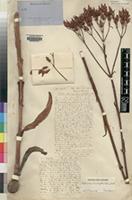
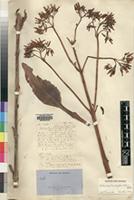
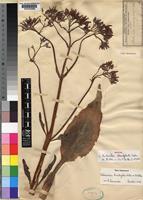
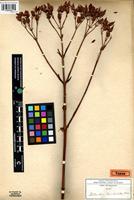
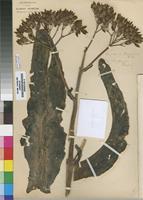
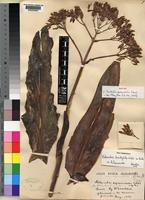
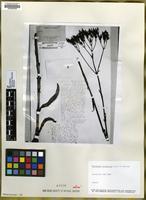
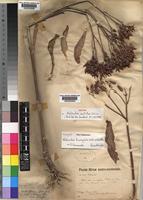
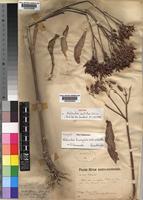
Type of Kalanchoe brachyloba Welw. ex Britten [family CRASSULACEAE]
Kalanchoe brachyloba Welw. ex Britten [family CRASSULACEAE]
Type of Kalanchoe brachyloba Welw. ex Britten [family CRASSULACEAE]
Isotype of Kalanchoe brachyloba Welw. ex Britten [family CRASSULACEAE]
Filed as Kalanchoe brachyloba Welw. ex Oliv. [family CRASSULACEAE]
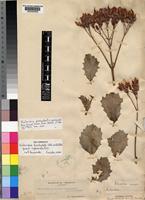
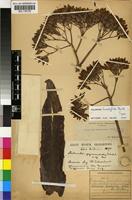
Holotype of Kalanchoe pyramidalis Schonland [family CRASSULACEAE]
Isotype of Kalanchoe pyramidalis Schönland [family CRASSULACEAE]
Kalanchoe brachyloba Welw. ex Britten [family CRASSULACEAE]
Isotype of Kalanchoe multiflora Schinz [family CRASSULACEAE]
Kalanchoe brachyloba Welw. ex Britten [family CRASSULACEAE]
Previous
Next

Name

Identification
Kalanchoe brachyloba Welw. ex Britten [family CRASSULACEAE ] (stored under name); Verified by Fernández,R.,
Related name
  • Kalanchoe unrecorded
  • Kalanchoe multiflora
  • Kalanchoe praesidentis-vervoerdii
  • Kalanchoe paniculata
  • Kalanchoe pyramidalis
  • Kalanchoe brachyloba

Flora

Entry for Kalanchoe brachyloba [family CRASSULACEAE]
Herbarium
South African National Biodiversity Institute, Compton Herbarium, Cape Town (SAM)
Collection
Flora of Southern Africa
Resource Type
Reference Sources
Entry From
Flora of South Africa, (2003) Author: Dr J.P. Roux
Names
Kalanchoe brachyloba [family CRASSULACEAE]
Common names
K. multiflora Schinz in Verh. bot. Ver. Prov. Bran-denb. 30: 172 (1888); N.E. Br. in Kew Bull. 1909; 110 (1909); Dinter in Reprium nov. Spec. Regni veg. 18: 434 (1922). Type: Botswana, south-west of Lake Ngami, Schinz 177 (Z, holo.!; K). K. pruinosa Dinter in Reprium nov. Spec. Regni veg. 18: 434 (1922); 19: 147 (1923). Type: South West Africa/Namibia, Auas Mountains, Dinter 4432 (Bt). K. pyramidalis Schonl. in Rec. Albany Mus. 2: 154 (1907). Type: Botswana, near Serowe, Schonland s.n. K, holo.!;BOL!; SAM!).
Information
Rosettes usually developing only one erect terete stem up to 2 m high; rootstock swollen. Leaves sessile, oblong-lanceolate, 100-180(-280) x 40-80 mm, cuneate but with distinctly clasping base, with blunt teeth and/or lobes, rarely almost smooth folded lengthwise, grey-green, more or less tinged red along margin. Inflorescence a flat-topped thyrse with many loose dichasia ending in monochasia. Calyx with lobes broadly triangular, l,5-3(-4) mm long. Co­rolla: tube quadrangular-cylindrical to al­most pyramidal, 10,5-13 mm long, yellow­ish green; lobes usually ovate, 2,5-4 x 2-3 mm, yellow. Anthers c. 1 mm long. Squa­mae oblong, 2,5-3,5 (-4) mm long, rounded, truncate or emarginate. Seeds 1,6-2 mm long. Fig. 8:2.
Habitat
The leaves are characteristically lobed except in southern South West Africa/Namibia where they are entire or almost so. The sharp margin of the clasping leaves will distinguish K. brachyloba from K. panicu­lata (no. 7) in the north-eastern Cape.
Use
8. Kalanchoe brachyloba Welw. ex Britten in F.T.A. 2: 392 (1871); Hiern, Cat. Afr. PI. Welw. 1,1: 326 (1896); R-Hamet in Bull. Herb. Boissier, ser. 2,7: 896 (1907); Friedr. in F.S.W.A.52: 37 (1968); R. Fer-nandes in C.F.A. 70: 27 (1982); in F.Z. 7,1: 63 (1983). Type: Angola, Huilla, Welwitsch 2486 (K!).
Range
Widespread in Southern Africa from central, rarely southern, South West Africa/Namibia, to north­ern and central Botswana, widespread in Transvaal, Swaziland and north-eastern Natal; also northwards in southern Angola and southern Zimbabwe, Mozambi­que, Zambia and Zaire. Usually growing on sandy soils in relatively dry Acacia bushveld.

Related Materials

  • Terms and Conditions
  • Privacy Policy
  • Cookie Policy
  • Cookie Settings
  • Accessibility
  • Help
  • Contact Us
  • Facebook
  • Twitter
ITHAKA

JSTOR is part of ITHAKA, a not-for-profit organization helping the academic community use digital technologies to preserve the scholarly record and to advance research and teaching in sustainable ways.

©2000-2026 ITHAKA. All Rights Reserved. JSTOR®, the JSTOR logo, JPASS®, Aluka®, and ITHAKA® are registered trademarks of ITHAKA.

╳