JSTOR Global Plants Home
  • Home
  • Browse
  • About
  • Access
  • Account
    • Saved Items
    • Profile
  • Log in

Global Plants

Skip to Main Content
  • JSTOR Global Plants Home
  • Global Plants

    • Browse
    • About
    • Access
    • Account
      • Saved Items
      • Profile
Log in
  • Browse
  • About
  • Access
  • Account
    • Saved Items
    • Profile
Advanced Search

Compilation
Kalanchoe brachycalyx

11 Images see all

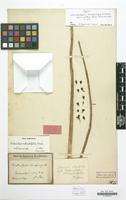
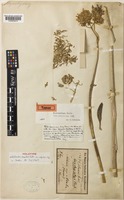
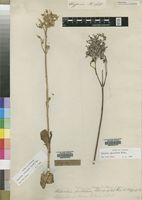
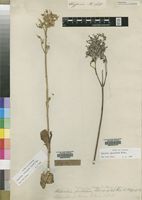
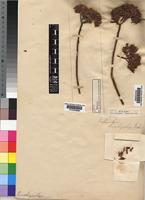
Kalanchoe brachycalyx Baker. [family CRASSULACEAE]
Type of Kalanchoe brachycalyx A. Rich. [family CRASSULACEAE]
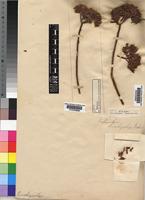
Type of Kalanchoe brachycalyx Baker [family CRASSULACEAE]
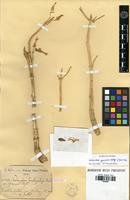
Syntype of Kalanchoe brachycalyx A. Rich. var. yemensis Deflers [family CRASSULACEAE]
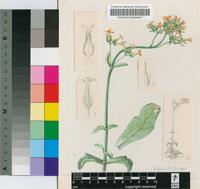
Kalanchoe brachycalyx A.Rich.
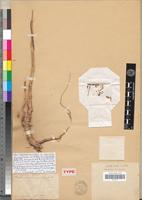
Holotype of Kalanchoe densiflora Rolfe var. subpilosa Cuf. [family CRASSULACEAE]
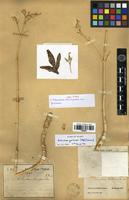
Isotype of Kalanchoe lanceolata (Forssk.) Pers. [family CRASSULACEAE]
Isotype of Kalanchoe glaucescens Britten [family CRASSULACEAE]
Kalanchoe brachycalyx Baker [family CRASSULACEAE]
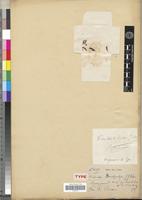
Type of Meristostylus brachycalyx Klotzsch [family CRASSULACEAE]
Syntype of Kalanchoe brachycalyx A. Rich. var. yemensis Deflers [family CRASSULACEAE]
Previous
Next

Name

Identification
Kalanchoe brachycalyx A.Rich. [family CRASSULACEAE ]
Related name
  • Kalanchoe brachycalyx

Flora

Entry for Kalanchoe lanceolata Forssk. Pers. [family CRASSULACEAE]
Herbarium
Royal Botanic Gardens, Kew (K)
Collection
Flora Zambesiaca
Resource Type
Reference Sources
Entry From
FZ, Vol 7, Part 1, page 3, (1983) Author: R. Fernandes
Names
Kalanchoe lanceolata Forssk. Pers. [family CRASSULACEAE], Synops. Sp. Pl. 1: 446 (1805), “Calanchoe”. — DC., Prodr. 3: 395 (1828). — Haw. in Phil. Mag. 6: 304 (1829). — Schweinf. in Bull. Herb. Boiss. 4, App. 2: 202 (1896), “Calanchoe”. — Sacleux in Bull. Mus. Nat. Hist. Nat., Paris 1± 244 (1908). — R.-Hamet in Bull. Herb. Boiss., Sér. 2, 8: 32 (1908). — Engl., Pflanzenw. Afr.1: 121, 122 et 136 (1910); op. cit. 3: 285 (1915). — Fiori in N. Giorn. Bot. Ital. 19: 446 (1912). — Schönl. in S. Afr.Journ. Sci. 17, 2: 187 (1921). — Burtt Davy, F.P.F.T. 1: 144 (1926). — Hutch. & Dalz., F.W.T.A. 1: 105 (1927). — Exell in Journ. Bot., Lond., 67, Suppl. Polyp.: 161 (1928) pro parte. — Berger in Engl. & Prantl, Nat. Pflanzenfam. ed, 2, 18a: 406 (1930). — Cufod. in Miss. Biol. Borana, ± 54 (1939). — E. Francois in Rev. Hort., N. Sér., 26: 68 (1938). — Schwartz, Fl. Trop. Arab.: 79 (1939). — Hutch. & Bruce in Kew Bull. 1941: 88 (1941). — Hutch., Botanist in S. Afr. : 459, 465 et 484 (1946). — R.-Hamet in Bull. Jard. Bot. Bruxelles, 19: 437 (1949). — F.W. Andr., Fl. Pl. Anglo-Egypt. Sudan: 79 (1950). — J. Blake, Gard. E. Afr. : 180 (1950). — Toussaint in F.C.B. 2: 5 .64 (1951). — Suesseng. & Merxm. in Trans. Rhodes. Sci. Assoc. 43:15 (1951). — Wild, Guide Fl. Vict. Falls: 143 (1953). — Brenan in Mem. N.Y. Bot. Gard. 8: 435 (1954). — Cufod. in Bull. Jard. Bot. Brux .24, Suppl.: 168 (1954). — Keay, F.W.T.A. ed. 2, 1; 118 (1954). — Chapman, Veg. Mlanje Mt. Nyasal.: 32 (1962). — Morton in Compt. Rend. 4. ème Réun. AETFAT: 292, map 2 (1962). — R.-Hamet & Marnier-Lapostolle in Arch. Mus. Nation. Hist. Nat. Paris., Sér. 7, 8: 77, t. 26 fig. 86 et t. 27 fig. 87-88 (1964). — Cufod. in Webbia, 19, 2: 728 (1965). — Binns, H.C.L.M.: 41 (1968). — Friedr. in Prodr. Fl. SW. Afr.52: 38 (1968). — Jacobs., Das Sukk. Lexikon: 253 (1970). — Greenway & Fitzgerald in E. Afr.Nat. Hist. Mus. 28, no. 130: 5 (1972). — Raadts in Willdenowia, 8: 139 (1977). — R. Fernandes in Bol. Soc. Brot., Sér. 2, 53: 381 (1980). TAB. 6. Type from Arabia (Yemen).
Cotyledon lanceolata Forssk. [family CRASSULACEAE], Fl. Aegypt.-Arab.: CXI et 89 (1775). — Vahl, Symb. Bot. 2: 51 (1791). — Willd. in L., Sp. Pl. ed. 4, 2, 1:758 (1799). Type as above.
Kalanchoe pubescens R. Br. [family CRASSULACEAE], in Salt, Voy. Abyss., App. ± LXIV (1814) nom. nud., non Bak. (1887).
Verea lanceolata Forsk. Spreng. [family CRASSULACEAE], Syst. Veg. ed. 16, 2: 260 (1825). Type as for Kalanchoe lanceolata.
Kalanchoe ritchieana Dalziell [family CRASSULACEAE], in Hook. Journ. of Bot. ± 346 (1852). — Dalziell & Gibson, Bombay Fl.: 105 (1861). — Drury, Handb. Ind. Fl. 1: 105 (1864). Type from India.
Meristostylus macrocalyx Klotzsch [family CRASSULACEAE], in Peters, Reise Mossamb., Bot. 1: 269 (1861). — Harms in Engl. & Prantl, Nat. Pflanzenfam. ed. 2, 18a: 404 (1930) in adnot. Type: Mozambique, Boror, Peters s.n. (B).
Kalanchoe modesta Kotschy & Peyr. [family CRASSULACEAE], Pl. Tinn.: 18 (1867). Type ?
Kalanchoe brachycalyx [family CRASSULACEAE], sensu Britten in F.T.A. 2: 396 (1871) pro parte. — Engl., Hochgebirgsfl. Trop. Afr. : 233 (1892) pro parte. — Pichi-Sermolli in Miss. Lago Tana 7, 1: 47(1951). — Cufod. in Bull. Jard. Bot. Brux., Suppl.: 166 (1954) non A. Rich. (1848).
Kalanchoe platysepala Welw. ex Britten [family CRASSULACEAE], in F.T.A. 2: 393 (1871). — Engl., Pflanzenw. Ost-Afr.C: 189 (1895). — Hiern, Cat. Afr.Pl. Welw. 1: 327 (1896). — R.-Hamet in Bull. Herb. Boiss., Sér. 2, 8: 31 (1908). — Berger in Engl. & Prantl, Nat. Pflanzenfam. ed, 2, 18a: 406 (1930). — Binns, H.C.L.M.: 41 (1968). Type from Angola.
Kalanchoe crenata var. collina Engl. [family CRASSULACEAE], Pflanzenw. Ost-Afr.C: 189 (1895) pro parte.
Kalanchoe pentheri Schlecht. [family CRASSULACEAE], in Journ. of Bot. 35: 341 (1897). — R.-Hamet in Bull. Herb. Boiss., Sér. 2, 8: 32 (1908); in Bull. Soc. Bot. Fr. 57: 22 (1910). — Schönl. in S. Afr.Journ. Sci. 17, 2: 188 (1921). — Burtt Davy, F.P.F.T. 1: 144(1926). Type from S. Africa (Transvaal).
Kalanchoe glandulosa var. rhodesica Bak. f. [family CRASSULACEAE], in Journ. of Bot. 37: 434 (1899). — Engl. in Sitz. Königl. Preuss. Akad. Wiss. 52: 892 et 896 (1906). — Rendle in Journ. of Bot. 70: 91 (1932). Type: Zimbabwe, Salisbury, Rand 465 (BM, holotype).
Kalanchoe glandulosa var. tomentosa Keissler [family CRASSULACEAE], in Ann. Naturh. Mus. Wien, 15: 36 (1900).
Kalanchoe goetzei Engl. [family CRASSULACEAE], in Bot. Jahrb. 30: 312 (1901). Type from Tanzania.
Kalanchoe laciniata [family CRASSULACEAE], sensu R.-Hamet in Bull. Herb. Boiss., Sér. 2, 8: 18 (1908) quoad Courbon 217 (P) non L. (1753).
Kalanchoe hirta [family CRASSULACEAE], sensu Dinter, Deutsch-Südw.-Afr.Flora, Forst-und-landwirtsch. Fragm.: 70 (1909) non Harv. (1862).
Kalanchoe ellacombei N.E. Br. [family CRASSULACEAE], in Kew Bull. 1912: 329 (1912). — R.E. Fr. in Wiss. Ergebn. Schwed. Rhod.-Kongo-Exped. 1: 58 (1916). — Wild, Guide Fl. Vict. Falls: 143 (1953). Type: Zambia, Livingstone, on the N. bank of River Zambezi, Ellacombe (K, holotype).
Kalanchoe homblei forma reducta De Wild. [family CRASSULACEAE], in Ann. Soc. Sci. Brux., loc. cit. (1914) et (1921). Type from Zaire.
Kalanchoe laciniata var. brachycalyx Chiov. [family CRASSULACEAE], Risult. Sci. Miss. Stef.-Paoli: 75 (1916), “Calanchoe”.
Kalanchoe glandulosa Hochst. ex A. Rich [family CRASSULACEAE], ,Tent. Fl. Abyss. 1: 312 (1848). — Schweinf.,Beitr. Fl. Aeth.: 81 (1867). — Aschers. & Schweinf. in Schweinf.,op. cit.,Aufzählung: 271 (1867). — Britten in F.T.A. 2: 396 (1871). — C. B. Clarke in Hook.,Fl. Br. India 2: 414 (1878). — Engl.,Hochgebirgsfl. Trop. Afr. : 233 (1892); Pflanzenw. Ost-Afr.C: 189 (1895); in Ann. R. 1st. Bot. Roma,9: 252 (1902). — Penzig in Estr. Atti Congr. Intern. Bot. Geneva: 34 (1892). — Schweinf.,Abyss. Pflanzen-Nam.: 57 (1893). — Cooke,Bombay Fl. 1: 466 (1903). — Pax in Engl.,Bot. Jahrb. 39: 621 (1907). — Th. & H. Dur.,Syll. Fl. Cong.: 193 (1909). — Rendle in Journ. of Bot .70: 90 (1932). Type from Ethiopia.
Kalanchoe pilosa Bak. [family CRASSULACEAE], in Kew Bull. 1895: 289 (1895). Type: Zambia, Mwero Plateau, Carson 3 (K, holotype).
Kalanchoe glandulosa var. benguellensis Engl. [family CRASSULACEAE], Hochgebirgsfl. Trop. Afr. : 233 (1892). — Hiern, Cat. Afr.Pl. Welw. 1: 328 (err. 823) (1896). — Schinz in Bull. Herb. Boiss. 5, App. 3: 99 (1897). — De Wild., Ann. Mus. Congo, Bot., Sér. 4, 1: 179 (1903); Contr. Fl. Katanga: 65 (1921). — Engl. & Gilg in Warb., Kunene-Samb.-Exped. Baum: 242 (1903). — Th.&H. Dur., Syll. Fl. Cong.: 193 (1909). Type from Angola.
Kalanchoe gregaria Dinter [family CRASSULACEAE], in Fedde, Repert. 18: 433 (1922). Type from Namibia.
Kalanchoe diversa [family CRASSULACEAE], sensu Hutch. & Gillett in Kew Bull. 1941: 88 (1941) non N.E. Br. (1902).
Kalanchoe lanceolata var. lanceolata [family CRASSULACEAE], — Cufod. in Webbia 19, 2: 729 (1965).
Kalanchoe lanceolata var. glandulosa Hochst. ex A. Rich. Cufod. [family CRASSULACEAE], tom. cit.: 730 (1965). — Jacobs., Das Sukk. Lexikon: 253 (1970). Type as for Kalanchoe glandulosa.
Kalanchoe homblei De Wild. [family CRASSULACEAE], in Fedde, Repert. 12: 298 (1913); in Ann. Soc. Sci. Brux. 38: 12 (1914); op. cit. 40: 88 (1921); Contr. Fl. Katanga: 65 (1921); op. cit., Suppl. 1: 16 (1927). — R.-Hamet in Bull. Jard. Bot. Brux. 19: 437 (1949). Type from Zaire (Katanga).
Information
Annual or biennial succulent viscid herb, 11·5-150 cm. high (incl. the inflorescence). Stem erect, usually simple, rarely furcate or branched above the base, 3-15 mm. thick below, 4-gonous to narrowly winged or subterete and with 4 longitudinal raised lines, green or whitish on drying, glabrous or sparsely hairy below, more densely and with longer hairs above, the hairs slender, soft, spreading, up to 3 mm. long, minutely capitate-glandular; internodes 1-8·5 cm. long. Leaves 3-23(30) x 0·7-9 cm., obovate, obovate-oblong to narrowly oblong- or linear-lanceolate, obtuse to acute, entire or sinuate to crenate or sometimes irregularly shallow-lobed, sessile, connate (sheath up to 0·5 cm.) or the uppermost free, decurrent, glabrous to shortly glandular-hairy, succulent but not thickly fleshy, flat, papery to membranous and yellowish-green on drying. Flowers erect in ± long cymes grouped in panicle- or thyrse-like inflorescences up to 50 cm. long or sometimes reduced to the terminal group and then corymbose; internodes of inflorescences ± long, the lower ones up to 12·5 cm. long; branches of inflorescences up to 20 cm. long, erect, in the axils of leaf-like bracts, glandular-hairy; pedicels 1·5-3 mm. long, glandular-hairy. Calyx (4)5-7(9) mm. long, rounded at the base, green, glandular-hairy; tube less than 5 to slightly more than 1/3 of the total calyx length; sepals up to 3·5 mm. broad at base, ovate, ovate-lanceolate or elliptic-oblong, attenuate-cuspidate, pale green, glandular-hairy on both sides. Corolla-tube (8)9-14 mm. long, 4-gonous in the part included into the calyx, contracted above the ovary in a slender subcylindrical tubular portion, then suddenly dilatate below the limb, membranaceous, pale yellow or pale pink, pilose and matt outside, somewhat shining and glabrous inside, somewhat innate and slightly rigid in fruit, splitting ready above the follicles and falling off; corolla-lobes 3-6 x 1·7-3·5(4) mm., obovate or broadly ovate, abruptly apiculate (apicule ± 0·75 mm.), rarely attenuate, pale yellow or greenish yellow to deep yellow, salmon, scarlet or deep orange. Stamens included, insertedd above the middle of corolla-tube; filaments of lower stamens 0·5 mm., those of the upper ones 1·5 mm. long; anthers 0·5-0·75 mm. long, ovate, pale yellow, the upper ones c. 1·75-2 mm. below the mouth of corolla-tube. Follicles 5-8 mm. long, fusiform, attenuate above, pale; styles 0·5-0·75 mm. long. Scales 2·5-4·5 mm. long, linear. Seeds 0·5-0·75 mm. long, clavate, with longitudinal raised lines.
Habitat
In various habitats: under trees and rocks in woodland, in savannas, on rock crevices of dry cliffs, on damp termite mounds, on river banks, etc.
Range
A very frequent species with a large distribution in tropical Africa (from Ethiopia and Somalia to Transvaal and Madagascar in the East; from Mali and Ghana to Namibia in the west; and widespread also in the central region)
Distribution
Zambia N Abercorn, lake Tanganyika, Mpulungu, rocks and very dry cliffs of Crocodile Island, 780 m., 12.iv.1957, Richards 11204 (BR; K; LISC).Botswana SE 75 miles W. NW. of Francistown on Maun road, near a tributary of R. Masupe, 960 m., 2.v.1957, Drummond 5292 (SRGH).Botswana SW 15 miles W. Ghanzi, 25.iv.1963, Ballance 633 (SRGH).Mozambique N Niassa, Malema, 26.v.1937, Torre 1520 (COI; LISC).Malawi C Ntchisi Distr., Ntchisi Mt., 1400 m., 5.viii.1946, Brass 17134 (K).Zimbabwe N Darwin, Mzarabani Tribal Trust Land, on peak of escarpment, 2.v.1972, Mavi 1386 (COI; K; SRGH).Zambia B Gonya Falls, among rocks on river bank, c. 1088 m., 18.vii.1952, Codd 7119 (BM; K; PRE).Botswana N Okavango swamps on Gwetshaa island, 3.v.1973, Smith 565 (SRGH).Caprivi Strip all over the Caprivi, 15.iv.1946, Krüger s. no.(PRE).Mozambique M Umbeluzi, 8.ix.1968, Ferreira Marques 56 (COI).Mozambique GI Gaza, Caniçado, 17 km. from Massingir to the Singuédzi River, near the village of chief Bengo, 19.vii.1969, Correia & Marques 977 (LMU).Mozambique MS Beira, Chemba, 29 km. from Tambara to the plateau of “Serra Lupata” (Nhamalongo Mts.), c. 430 m., 14.v.1971, Torre & Correia 18405 (LISC; LMA; LMU).Mozambique T Tete, Songo, at the lower side of the Zanco, 17.iv.1972, Macedo 5204 (COI; LISC; LMA).Mozambique Z Quelimane, Lugela-Mocuba, Namagoa Estate, viii.1946, Faulkner 75 (BR; COI; EA; K; P; SRGH).Malawi S Chikwawa Distr., Chikwawa, 2000 m., 2.x.1946, Brass 17887 (BR; K; PRE; SRGH).Zimbabwe S Lundi River, 30.vi.1930, Hutchinson & Gillett 3251 (BM; K).Zimbabwe E Umtali, 3 miles S. of Odzi, 12.vi.1968, Plowes 2898 (K; LISC; SRGH).Zimbabwe C Gwelo, 13 miles E. of Gwelo, 3.vii.1930, Hutchinson & Gillett 3398 (BM; COI; K; LISC; SRGH).Zimbabwe W Matopos, near Maleme Dam, 16.v.1967, Plowes 2859 (K; LISC; SRGH).Zambia S Livingstone, Katambora, c. 960 m., 7.vi.1956, Gilges 622 (K; SRGH).Zambia E Lukusuzi Game Reserve, c. 1088 m., 6.v.1970, Sayer 167? (SRGH).Zambia C Walamba, 23.v.1954, Fanshawe 1247 (K; SRGH).Zambia W Kitwe, 2.vii.1955, Fanshawe 2359 (BR; EA; K; SRGH).
Distribution (external)
Asia (Yemen and India)
Notes
Very variable as is reflected by the vast synonymy. Two varieties, based on degree of connation of calyx, were recently distinguished: var. lanceolata with the sepals somewhat more than half the total calyx-length, and var. glandulosa with the sepals equalling to slightly shorter than the connate portion. Considering that there is a nearly continuous variation in the extension of the connate part from less than 1/3 to more than 1/2 of total calyx-length, we prefer (at least at present) to ignore varieties based on this character. In the F.Z. area, however, plants with a short calyx-tube are the dominant ones. The specimen Andrada 677 (LISU) from Mozambique, in its somewhat tawny indumentum, distinctly petiolate and shorter leaves, narrower sepals and shorter connate portion of calyx, is perhaps a hybrid between K. lanceolata and K. lateritia Engl. ‘K. pilosa Bak. is excluded by Cufodontis (tom. cit.: 740, 741,1965) from the synonymy of K. lanceolata on account of the hairs being not glandular. However, we have seen glands at the apex of the shortest hairs. The type is a delicate specimen with the calyx-tube subequalling the calyx-lobes (cf. R. Fernandes in Bol. Soc. Brot., Sér. 2, 53: 391, 1980). Kalanchoe diversa N.E. Br., described from Somalia, was considered by Cufodontis (tom. cit.: 729, 1965) as identical with K. lanceolata but as an independent species (Bull. Jard. Bot. Brux. 24, Suppl.: 167 (1954). Its stem is not 4-angled and it has shorter hairs than in K. lanceolata (and only towards the extremity), the leaves are petiolate whereas in K. lanceolata they are sessile, and the sepals are free nearly to the base of calyx. It is a doubtful plant, which must not be regarded as a synonym of K. lanceolata (cf. R. Fernandes, tom. cit.: 392). Kalanchoe brachycalyx A. Rich. is another taxon of doubtful position and must also be removed from K. lanceolata’s synonymy (cf. R. Fernandes, tom. cit.: 384, 1980). Kalanchoe floribunda Wight & Arn, (type from Ceylon does not seem to us identical with K. lanceolata as Cufodontis (tom. cit.: 728, 1965) asserts, but possibly to K. crenata (cf. R. Fernandes, tom. cit.: 382, 1980).

Related Materials

  • Terms and Conditions
  • Privacy Policy
  • Cookie Policy
  • Cookie Settings
  • Accessibility
  • Help
  • Contact Us
  • Facebook
  • Twitter
ITHAKA

JSTOR is part of ITHAKA, a not-for-profit organization helping the academic community use digital technologies to preserve the scholarly record and to advance research and teaching in sustainable ways.

©2000-2026 ITHAKA. All Rights Reserved. JSTOR®, the JSTOR logo, JPASS®, Aluka®, and ITHAKA® are registered trademarks of ITHAKA.

╳