JSTOR Global Plants Home
  • Home
  • Browse
  • About
  • Access
  • Account
    • Saved Items
    • Profile
  • Log in

Global Plants

Skip to Main Content
  • JSTOR Global Plants Home
  • Global Plants

    • Browse
    • About
    • Access
    • Account
      • Saved Items
      • Profile
Log in
  • Browse
  • About
  • Access
  • Account
    • Saved Items
    • Profile
Advanced Search

Compilation
Kniphofia thomsonii

9 Images see all

[family ]
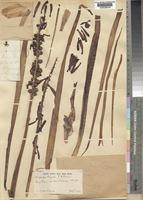
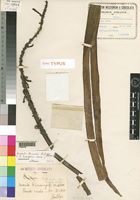
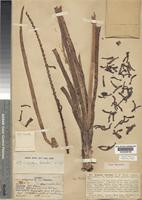
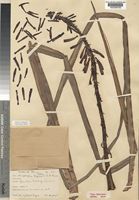
Filed as Kniphofia thomsonii Baker [family ASPHODELACEAE]
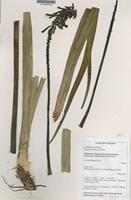
Holotype of Kniphofia goetzei Engl. [family LILIACEAE]
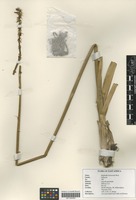
Holotype of Kniphofia rogersii E.A.Bruce [family ASPHODELACEAE]
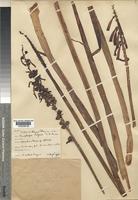
Holotype of Kniphofia thomsonii Baker [family ASPHODELACEAE]
Holotype of Kniphofia rogersii E.A.Bruce [family ASPHODELACEAE]
Syntype of Kniphofia subalpina Chiov. [family ASPHODELACEAE]
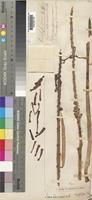
Holotype of Kniphofia thomsonii Baker var. snowdenii (C.H.Wright)Marais [family ASPHODELACEAE]
Holotype of Kniphofia rogersii E.A.Bruce [family ASPHODELACEAE]
Previous
Next

Name

Identification
Kniphofia goetzei Engl. [family LILIACEAE ] Verified by Marais, W., Kniphofia thomsonii Baker [family LILIACEAE ] (stored under name); Verified by Not on sheet.,
Related name
  • Kniphofia snowdeni
  • `
  • Kniphofia rogersii
  • Kniphofia goetzei
  • Kniphofia subalpina
  • Kniphofia thomsonii

Flora

Entry for KNIPHOFIA thomsonii Baker [family ]
Herbarium
Royal Botanic Gardens, Kew (K)
Collection
Flora of Tropical East Africa
Resource Type
Reference Sources
Entry From
Flora of Tropical East Africa, page 1, (2002) Author: CHRISTOPHER WHITEHOUSE
Names
KNIPHOFIA thomsonii Baker [family ], in J.L.S. 21: 406 (1885); P.O.A. C: 140 (1895); Baker in F.T.A. 7: 451 (1898); V.E. 2: 316, fig. 214/h–k (1908); A. Berger in E.P. IV, 38: 52, fig. 20/h–k (1908); Bullock in K.B. 2: 98 (1933); Polh. in Journ. E. Afr. Nat. Hist. Soc. 24: 21 (1962); E.P.A.: 1541 (1971); Marais in K.B. 28: 467 (1973), pro parte; Hanid in U.K.W.F.: 688 (1974); Blundell, Wild Fl. E. Afr.: 423, t. 490 (1987), pro parte; U.K.W.F., ed. 2: 313 (1994); Sebsebe & Nordal in Fl. Ethiopia 6: 111, fig. 191.4 (1997); Grant-Downton in The New Plantsman 4: 148–156 (1997). Type: Tanzania, Moshi District, Kilimanjaro, Thomson (K!, holo.)
Information
Perennial herb from a thick rhizome up to 6 cm long, 2.5 cm in diameter, with spreading fleshy yellowish roots 1.5–3 mm in diameter. Leaves in a basal rosette, lanceolate to linear-lanceolate, 30–150 cm long, 1–3.5 cm wide towards the base, 3-angled and channelled, the outer leaves reduced to membranous sheaths up to 5.5 cm long. Inflorescence 30–120(–305) cm high; peduncle 9–13 mm in diameter; raceme lax to dense, 7–40 cm long, 3.5–7 cm wide; fertile bracts ovate to cuspidate, (6–)9–15 mm long, 1–4 mm wide at the base, acute to acuminate or filiform at the apex, the keel extended often well beyond the margins; pedicels 2–4 mm long, up to 6 mm long in fruit. Flowers orange-red to yellow or a mixture, usually redder towards the apex of the raceme, pendent, often decurved; the perianth-tube 18–38 mm long, 3–6 mm wide at mouth, 3–5 mm wide around ovary, constricted above the ovary to 1.5–2.5 mm wide, the lobes 1–3 mm long, sometimes spreading; stamens included within the tube or slightly exserted, style exserted up to 8 mm in older flowers; filaments, style and stigma pale yellow, anthers dark brown with yellow pollen. Capsule ovoid to trigonous, 6–10 mm long, 5–8 mm wide, pointed at the apex from the remains of the style-base, transversely ridged; seed 3-angled, 2–4 mm long, 1.5–3 mm wide, black.
Notes
ON SPECIES. The only tropical species of Kniphofia presently widely cultivated. Plants called K. snowdenii or var. snowdenii in cultivation today are usually found in fact to be var. thomsonii (Grant-Downton, 1997).Chromosome counts and pollen studies on K. thomsonii (Jan.-Ammal, 1950) have produced interesting results. It appears that wild populations have both fertile diploid (n=12) and tetraploid (n=24) and infertile triploid (n=18) plants naturally occurring amongst them. The triploid and tetraploid plants are generally much more vigorous than the diploid plants, so much so that when var. snowdenii was first grown from seed at Kew it was thought that it might be a different species. The diploid plants tend to grow up to about 1.2 m high, whereas the robust polyploids have been reputedly recorded at up to 3 m high.

Related Materials

  • Terms and Conditions
  • Privacy Policy
  • Cookie Policy
  • Cookie Settings
  • Accessibility
  • Help
  • Contact Us
  • Facebook
  • Twitter
ITHAKA

JSTOR is part of ITHAKA, a not-for-profit organization helping the academic community use digital technologies to preserve the scholarly record and to advance research and teaching in sustainable ways.

©2000-2026 ITHAKA. All Rights Reserved. JSTOR®, the JSTOR logo, JPASS®, Aluka®, and ITHAKA® are registered trademarks of ITHAKA.

╳