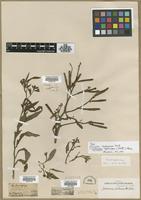
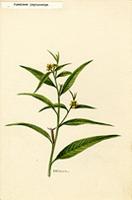
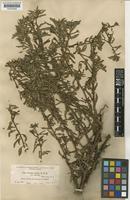
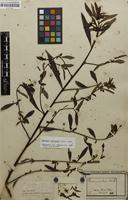
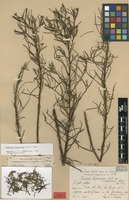
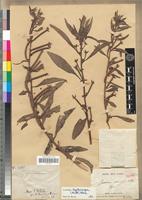
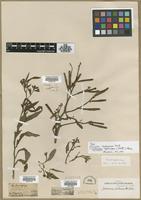
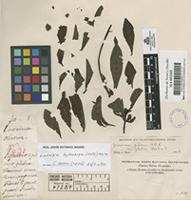
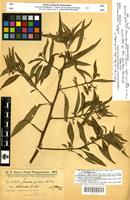
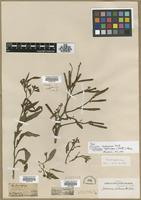
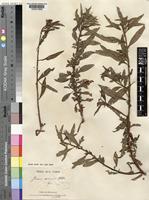
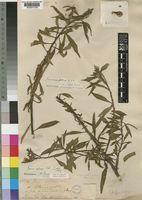
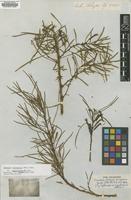
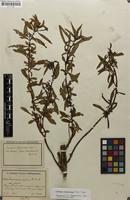
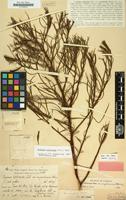
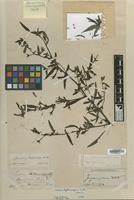
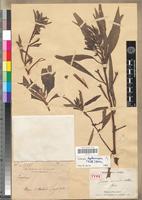
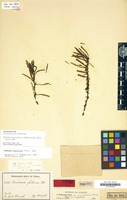
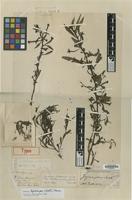
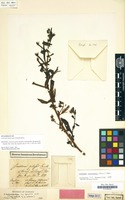
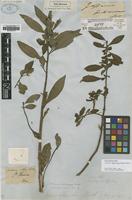
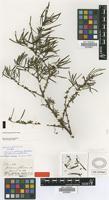
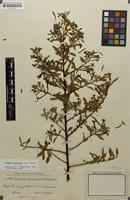
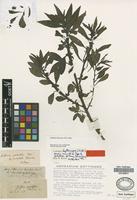
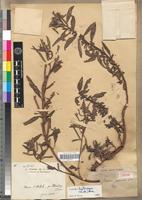
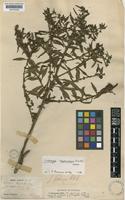
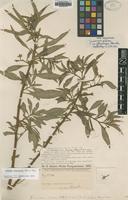
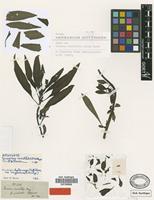
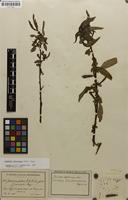
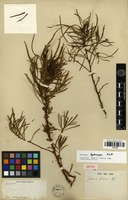
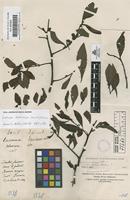
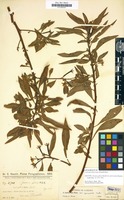
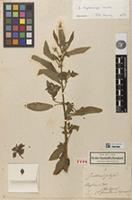
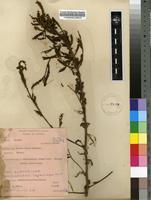
Herb, sometimes slightly woody, 0.4–2 m. high, with more or less numerous sometimes dense spreading hairs especially on young parts, also with an “understorey” of more or less dense very short puberulous hairs (variants occur in the New World lacking the longer hairs or even completely glabrous). Leaves normally lanceolate to sometimes elliptic, variable in size according to position, mostly 3.5–15 cm. long, 1–4 cm. wide (only 2–3 mm. wide in a linear-leaved Cuban variant), usually acute at apex, lateral nerves 11–20 each side of midrib; petiole 2–20 mm. long. Sepals usually 5, sometimes 4, 6 or even 7, 5–10 mm. long, 1.5–2.25 mm. wide. Petals yellow, obovate, 5–11 mm. long, 4.5–8 mm. wide. Stamens twice as many as sepals. Apex of ovary, supporting the 3–4.5 mm. long style, flat or only slightly (to 0.75 mm.) raised. Capsules thin-walled, slowly dehiscent, 1.5–4.5 (–5) cm. long, 2.5–4 mm. wide, marked on the outside with little bumps about 0.5 mm. apart, corresponding to the seeds; pedicels 0.2–2 cm. long. Seeds uniseriate in each cell, horizontal, each surrounded by but free within a horseshoe-shaped piece of powdery brown endocarp about 1–1.5 mm. long and 1 mm. wide, the actual seed flattened oblong-ellipsoid, narrow-raphed, 0.8–1 mm. long, 0.5 mm. wide, pale brown. Fig. 2/6, (p. 7).