JSTOR Global Plants Home
  • Home
  • Browse
  • About
  • Access
  • Account
    • Saved Items
    • Profile
  • Log in

Global Plants

Skip to Main Content
  • JSTOR Global Plants Home
  • Global Plants

    • Browse
    • About
    • Access
    • Account
      • Saved Items
      • Profile
Log in
  • Browse
  • About
  • Access
  • Account
    • Saved Items
    • Profile
Advanced Search

Compilation
Juncus mertensianus

15 Images see all

Juncus mertensianus Suksd. [family JUNCACEAE]
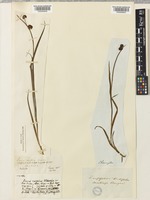
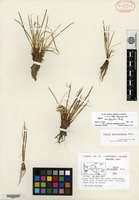
Syntype of Juncus mertensianus Bong. [family JUNCACEAE]
Type of Juncus mertensianus var. paniculatus Engelm. [family JUNCACEAE]
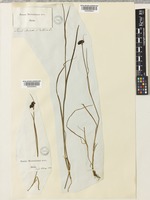
Type of Juncus mertensianus Bong. [family JUNCACEAE]
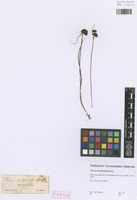
Juncus mertensianus Bong. [family JUNCACEAE]
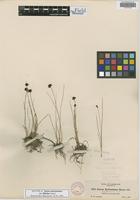
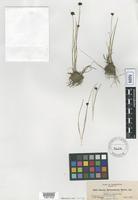
Isotype of Juncus mertensianus Bong. var. filifolius Suksd. [family JUNCACEAE]
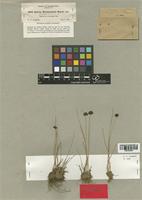
Isotype of Juncus mertensianus Bong. [family JUNCACEAE]
Juncus mertensianus Bong. [family JUNCACEAE]
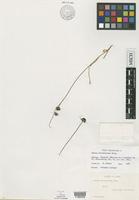
Isotype of Juncus duranii Ewan [family JUNCACEAE]
Isotype of Juncus mertensianus var. filifolius Suksd. [family JUNCACEAE]
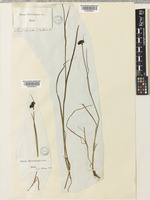
Type of Juncus mertensianus Bong. [family JUNCACEAE]
Type of Juncus slwookoorum S. B. Young [family JUNCACEAE]
Isotype of Juncus mertensianus Bong. var. filifolius Suksd. [family JUNCACEAE]
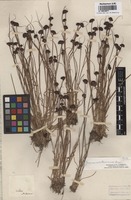
Juncus mertensianus Bong. [family JUNCACEAE]
Previous
Next

Name

Identification
Isotype of Juncus mertensianus Bong. [family JUNCACEAE ] (stored under name); Verified by Not on sheet,
Related name
  • Juncus ensifolius
  • Juncus mertensianus

Flora

Entry for Juncus mertensianus Bongard [family JUNCACEAE]
Herbarium
Flora of North America (FNA)
Collection
Flora of North America
Resource Type
Reference Sources
Entry From
Flora of North America, Vol 22,
Names
Juncus mertensianus Bongard [family JUNCACEAE], Mém. Acad. Imp. Sci. St.-Pétersbourg, Sér. 6, Sci. Math., 2: 167. 1833
Juncus duranii Ewan [family JUNCACEAE]
Juncus mertensianus var. duranii (Ewan) F. J. Hermann [family JUNCACEAE]
Juncus mertensianus var. filifolius Suksdorf [family JUNCACEAE]
Juncus slwookoorum S. Young [family JUNCACEAE]
Treatment Author(s)
Ralph E. Brooks*
Steven E. Clemants*
Information
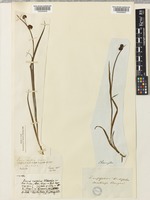
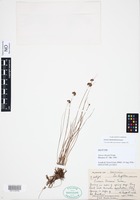
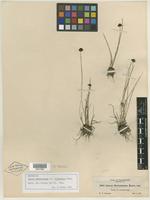
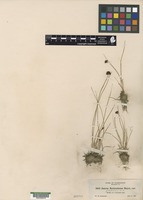
Herbs, perennial, rhizomatous to cespitose, 0.5--4 dm. Rhizomes 1--2 mm diam., not swollen. Culms erect, terete, 1--3 mm diam., smooth. Cataphylls 0--1, straw-colored to chestnut brown, apex acute. Leaves: basal 1--2, cauline 0--1; auricles 1--1.2 mm, apex rounded to acute, membranaceous or scarious; blade green to straw-colored, terete, 3--15 cm x 0.3--0.6 mm. Inflorescences terminal single head (rarely cluster of 2 heads), 0.5--1.6 cm; primary bract erect; heads 12--60-flowered, spheric (to hemispheric), 4.5--15 mm diam. Flowers: tepals dark purplish brown to black, lanceolate to lance-ovate, apex acute, mucro subulate; outer tepals 2.4--4.9 mm; inner tepals 2.3--4.3 mm; stamens 6, anthers 1/4 to equal filament length. Capsules included or slightly exserted, chestnut brown, 1-locular, obovoid, 1.9--3.5 mm, apex obtuse or rounded, valves separating at dehiscence, fertile throughout or only proximal to middle. Seeds ellipsoid, 0.4--0.5 mm, not tailed; body clear yellow-brown. 2n = 40.
Phenology Fruiting
Fruiting mid summer--fall
Altitude range
(400--)1900--3300 m
Distribution
USA AlaskaUSA Ariz.USA Calif.USA Colo.USA IdahoUSA Mont.USA Nev.USA N.Mex.USA Oreg.USA UtahUSA Wash.USA Wyo.Canada Alta.Canada B.C.Canada N.W.T.Canada Sask.Canada Yukon
Discussion
Populations from southern California with brown tepals, anthers equaling filaments, and rounded to acute, translucent auricles have been separated as Juncus duranii; the typical form is so highly variable, however, that it can easily accommodate this local form. This species passes into Juncus nevadensis and has often been combined with that species (F. J. Hermann 1964). The two species can generally be separated, and we are following those treatments (F. J. Hermann 1975; A. Cronquist et al. 1972+, vol. 6).

Related Materials

  • Terms and Conditions
  • Privacy Policy
  • Cookie Policy
  • Cookie Settings
  • Accessibility
  • Help
  • Contact Us
  • Facebook
  • Twitter
ITHAKA

JSTOR is part of ITHAKA, a not-for-profit organization helping the academic community use digital technologies to preserve the scholarly record and to advance research and teaching in sustainable ways.

©2000-2026 ITHAKA. All Rights Reserved. JSTOR®, the JSTOR logo, JPASS®, Aluka®, and ITHAKA® are registered trademarks of ITHAKA.

╳