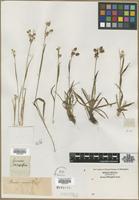
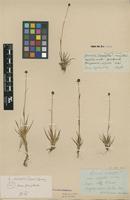
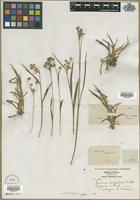
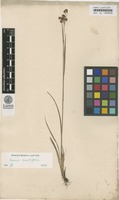
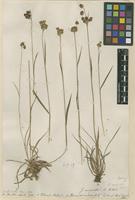
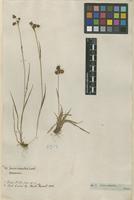
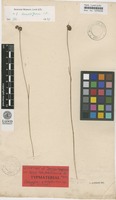
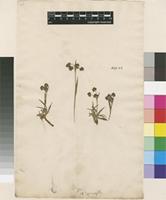
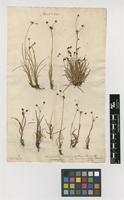
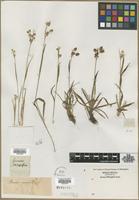
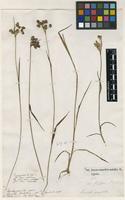
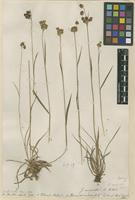
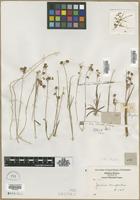
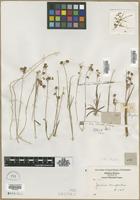
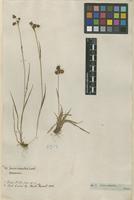
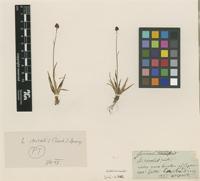
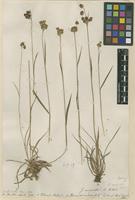
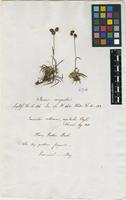
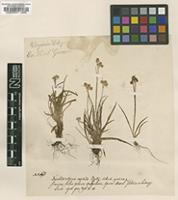
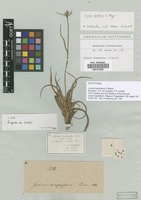
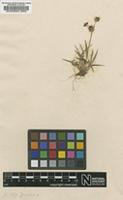
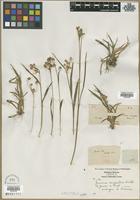
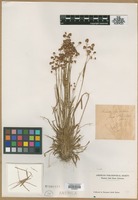
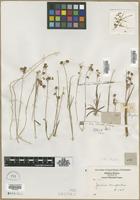
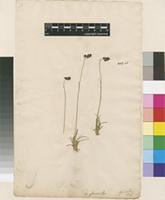
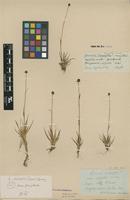
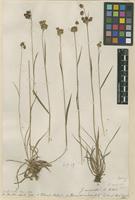
Juncus campestrisL. [family JUNCACEAE ] (stored under name);
Related name
Juncus campestris
Luzula nivalis
Luciola indet.
Luzula campestris
Juncus sp.
Luzula arcuata
Luciola congesta
Juncus spicatus
Luzula hyperborea
Juncus arcuatus
Flora
Entry for Luzula campestris (Linnaeus) de Candolle [family JUNCACEAE]
Herbarium
Flora of North America (FNA)
Collection
Flora of North America
Resource Type
Reference Sources
Entry From
Flora of North America, Vol 22,
Names
Luzula campestris(Linnaeus) de Candolle [family JUNCACEAE], in J. Lamarck and A. P. de Candolle,Fl. France, ed. 3, 3: 161. 1805
Juncus campestrisLinnaeus [family JUNCACEAE], Sp. Pl. I, 1: 329. 1753
Treatment Author(s)
Janice Coffey Swab
Information
Rhizomes conspicuous. Stolons short, slender. Culms not cespitose, decumbent, 10--20 cm. Leaves: basal leaves few, 2.5--15 cm x 4 mm, apex callous, pilose. Inflorescences racemose; glomerules 2--6, central glomerules sessile or all congested, not cylindric; peduncles straight, divergent as much as 90°, to 3 cm; proximal inflorescence bract dark, often purplish, leaflike. Flowers: tepals dark reddish, shining, with wide clear margins and apex, (apex acuminate, midrib extending as awned tip), 3--3.5 mm; outer and inner whorls equal; anthers ca. 2--6 times filament length; stigmas ± equal to style. Capsules brown, shining, (usually lighter than tepals), conspicuously shorter than to nearly equal to tepals; (beak obvious). Seeds reddish, globose, 1--1.3 mm; caruncle to 1/2 seed length. 2n = 12.
Phenology
Flowering and fruiting summer
Distribution
Canada Nfld. and Labr. (Nfld.).
Discussion
Luzula campestris may occur rarely elsewhere in Canada and the United States in lawns and cleared places (collected in Massachusetts in the 1920s). A common European species, the name is used in our floras for almost every species of the "multiflora--campestris" complex.