JSTOR Global Plants Home
  • Home
  • Browse
  • About
  • Access
  • Account
    • Saved Items
    • Profile
  • Log in

Global Plants

Skip to Main Content
  • JSTOR Global Plants Home
  • Global Plants

    • Browse
    • About
    • Access
    • Account
      • Saved Items
      • Profile
Log in
  • Browse
  • About
  • Access
  • Account
    • Saved Items
    • Profile
Advanced Search

Compilation
Jasminum rotundatum

8 Images see all

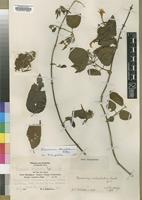
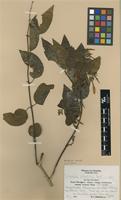
Type? of Jasminum rotundatum Knoblauch [family OLEACEAE]
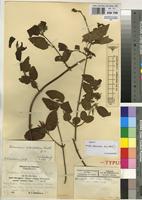
Type of Jasminum rotundatum Knobl. [family OLEACEAE]
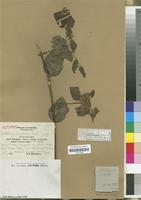
Isotype of Jasminum rotundatum Knobl. [family OLEACEAE]
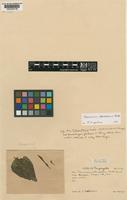
Type of Jasminum rotundatum Knoll [family OLEACEAE]
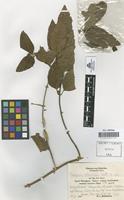
Isotype of Jasminum rotundatum Knobl. [family OLEACEAE]
Type of Jasminum rotundatum Knobl. [family OLEACEAE]
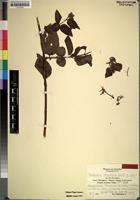
Isotype of Jasminum rotundatum Knobl. [family OLEACEAE]
Jasminum stenolobum Rolfe [family OLEACEAE]
Previous
Next

Name

Identification
Jasminum rotundatum Knoblauch [family OLEACEAE ] (stored under name); Verified by Knobl., 1934
Related name
  • Jasminum streptopus
  • Jasminum rotundatum
  • Jasminum tomentosum
  • Jasminum stenolobum

Flora

Entry for Jasminum stenolobum Rolfe [family OLEACEAE]
Herbarium
Royal Botanic Gardens, Kew (K)
Collection
Flora Zambesiaca
Resource Type
Reference Sources
Entry From
FZ, Vol 7, Part 1, page 300, (1983) Author: F. K. Kupicha
Names
Jasminum stenolobum Rolfe [family OLEACEAE], in Gates, Matabelelanded. 2: 403 (1889). — Harvey in F.C. 4 481 (1907). — Gilg & Schellenb. in Engl., Bot. Jahrb. 51: 91 (1913). — 0. B. Miller, B.C.L.: 48 (1948). — Turrill in F.T.E.A., Oleaceae: 24 (1952). — Verdoorn in Bothalia 6: 569, t. 10 (1956); in Fl. Southern Afr.26: 111 (1963). — F. White, F.F.N.R.: 336 (1962). — Fanshawe, Check–list Woody Pl. Zamb.: 24 (1973). — R. B. Drumm. in Kirkia 10: 267 (1975). Type: Zimbabwe, Matabeleland, Oates (K, holotype).
Jasminum tomentosum Knobl. [family OLEACEAE], in Engl., Bot. Jahrb. 17; 536 (1893). — Turrill, op.cit.: 29 (1952). Type from Kenya.
Jasminum oleicarpum (“oleaecarpum”) Baker [family OLEACEAE], in Kew Bull. 1895: 95 (1895); in F.T.A. 4 8 (1902), pro parte. Syntypes: Mozambique, “Tette”, fr.ii.1859, Kirk (K, lectotype of Turrill) and “opposite Senna”, fr. i.1859, both J. multipartitum; “Tette”, fl. xi.1858, Kirk (K) and “Rovuma R., 30 miles up”, 28.iii.1861, Kirk (K), bothJ. stenolobum.
Jasminum rotundatum Knobl. [family OLEACEAE], in Notizbl. Bot. Gart. Berl. 11: 1078 (1934), emend, op. cit. 12: 201 (1934). — Turrill, op. cit.: 30 (1952)r. Type from Tanzania.
Jasminum tomentosum var. lutambense Knobl. [family OLEACEAE], op. cit. 13: 283 (1936). Type from Tanzania.
Information
Suffrutex or low shrub 0·5–1·5 m. tall, rhizomatous, with much–branched sprawling stems. Young shoots, petioles and inflorescences crispate–pilose with white or yellowish silvery hairs, bark of older twigs grey or brownish, smooth. Petioles 5–13 mm. long, articulated in the middle or towards the base. Leaves pilose, not darkening on drying; lamina 0·9–6 x 0·6–2 cm., very variable in shape, elliptic–ovate, elliptic–oblong or narrowly lanceolate to suborbicular, the apex tapering, rounded or occasionally emarginate, with minute thickened point, the base acute or obtuse. Venation visible on both surfaces, main nerves raised below; lateral nerves several, the basal ones joining with others before reaching leaf apex. Acarodomatia absent. Flowers terminal on short branches/solitary or in 3 (5)–flowered. cymes, sweetly scented; pedicels 3–10 mm. long. Calyx crispate–pilose; tube 2–3 mm. long; lobes 7–15, 2·5–9 mm. long, filiform. Corolla pure white; tube 16–33 mm. long; lobes 9–13, 12–22 mm. long, oblong or narrowly elliptic, the apex cuspidate or shortly acuminate. Stamens inserted near top of corolla tube; filaments short; anthers 2–5–4–5 mm. long, reaching to within 1/2–2/5 anther lengths of base of corolla lobes. Style either exserted from or 1/5–2/5 as long as corolla tube, with bifid stigma of variable form. Fruits 1–2–lobed, lobes 1–1–5 cm. long when dry, ellipsoid.
Habitat
In Brachystegia woodland, on sandy soils, often on termitaria.
Distribution
Mozambique M between Bela Vista and Porto Henrique, fl. 23.viii.1944, Mendonça 1858 (LISC).Mozambique MS Manica, Rotanda, 4 km. on road to Mavita, fi. 30.x.1965, Torre & Pereira 12611 (LISC).Mozambique T Tete, Estima, fr. 29.i.1972, Macedo 4739 (LISC; LMA; LMU).Mozambique Z Mocuba, Namagoa, 60–120 m., fl. xi.1942, Faulkner 262 (K; PRE; SRGH).Malawi S Ntcheu Distr., Livulezi R., fr. 31.i.1968, Jeke 147 (K; MAL; SRGH).Malawi C Kasungu National Park, 1010 m., fl. 5.xii.1970, Hall–Martin 1036 (SRGH).Zimbabwe S Ndanga Distr., Gudus, Sangwe Reserve, 430 m., fl. i.1960, Farrell 119 (BM; PRE; SRGH).Zimbabwe E Umtali Commonage, fl. 9.xi.1948, Chase 1331 (BM; K; LISC; SRGH).Zimbabwe C Salisbury Distr., Twentydales, fl. 22.xi.1970, Linley 569 (SRGH).Zimbabwe W Wankie Distr., S. of Main Camp, Wankie National Park, fl. 9.xii.1968, Rushwonh 1327 (K; LISC; SRGH).Zambia S Mazabuka Distr., near Lochinvar Ranch, fr. 3.i.1964, van Rensburg 2711 (K; SRGH).Zambia E Nsadzu to Chipata (Ft. Jameson) road near Chadiza turn–off, 900 m., fl. 25.xi.1958, Robson 708 (K; LISC; SRGH).Zambia C Concord Ranch 3 km. S. of Chisamba railway station, fl. 6. i. 1958, Benson 215 (BM).Botswana SE 8 km. E. of Lothlekane, fr. 23.iii.1965, Wild (S Drummond 7256 (SRGH).Mozambique N near Nampula, fl. l.xi.1942, Mendonça 1186 (BM; LISC).Malawi N Mzimba Distr., Mzambazi to Mperembe, 400 m., fl. 30.xii.1975, Pawek 10658 (K; MAL; PRE; SRGH).Zimbabwe N Mtoka Distr., Nyaderi Bridge, fl. 5.xh.1968, Milller & Burrows 958 (K; SRGH).Zambia N Mpika Distr., Luangwa Valley Game Reserve, c. 610 m., fl. 30.xii.1966, Prince 54 (K; SRGH).Botswana N Chobe Distr., Nungwe Valley, 910 m., fl. 2.i.1967, Henry 49 (SRGH).
Distribution (external)
Kenya
Tanzania
S. Africa (N. Natal, W. and N. Transvaal)
Notes
Fanshawe (loc. cit.) records J. stenolobum also from Barotseland (Zambia (B)). J. stenolobum is closely related to J. brachyscyphum and J.multipartitum (nos. 6 & 7), from which it is most easily distinguished by its indumentum. Notes on specimens from the F.Z. area suggest that the flowers of J.stenolobum are pure white, not pink or maroon on the outside as in the other two species. In S. Africa and the F.Z. area J.stenolobum usually has flowers solitary or in threes, but in Tanzania the inflorescences are often many–flowered.

Related Materials

  • Terms and Conditions
  • Privacy Policy
  • Cookie Policy
  • Cookie Settings
  • Accessibility
  • Help
  • Contact Us
  • Facebook
  • Twitter
ITHAKA

JSTOR is part of ITHAKA, a not-for-profit organization helping the academic community use digital technologies to preserve the scholarly record and to advance research and teaching in sustainable ways.

©2000-2026 ITHAKA. All Rights Reserved. JSTOR®, the JSTOR logo, JPASS®, Aluka®, and ITHAKA® are registered trademarks of ITHAKA.

╳