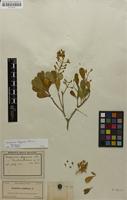
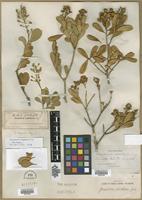
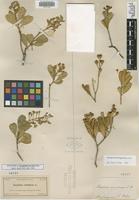
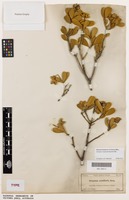
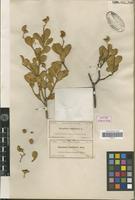
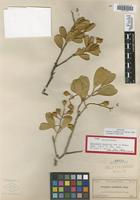
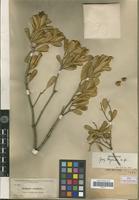
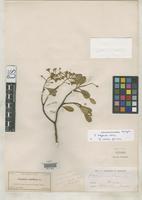
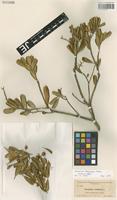
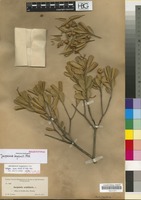
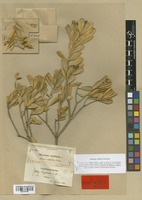
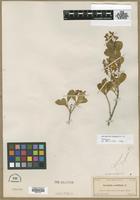
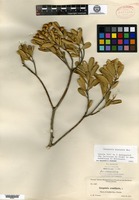
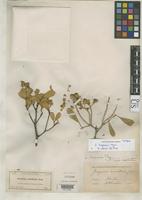
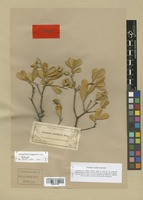
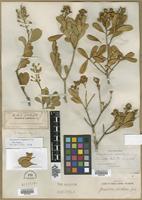
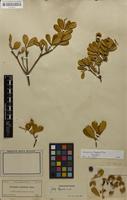
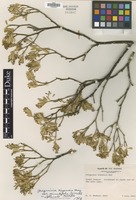
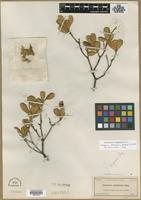
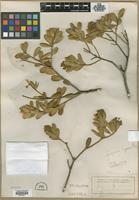
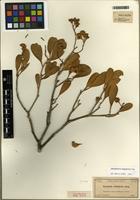
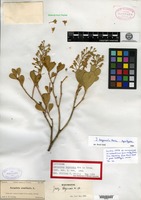
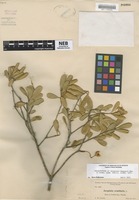
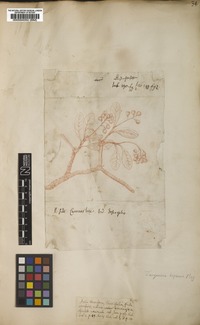
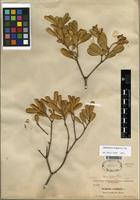
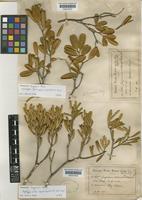
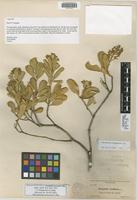
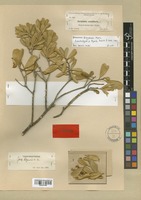
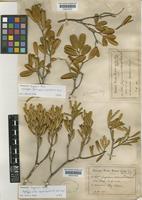
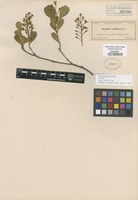
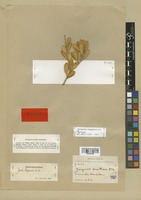
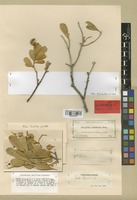
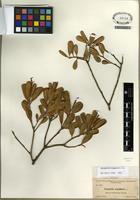
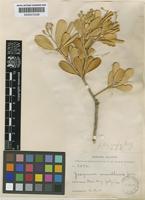
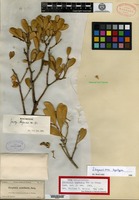
Jacquinia keyensisMez [family THEOPHRASTACEAE ] (stored under name); Verified by Charles Dennis Adams,
Related name
Jacquinia armillaris
Jacquinia keyensis
Common name
Joewood, Flora of North America Vol. 8
Flora
Entry for Jacquinia keyensis Mez [family THEOPHRASTACEAE]
Herbarium
Flora of North America (FNA)
Collection
Flora of North America
Resource Type
Reference Sources
Entry From
Flora of North America, Vol 8,
Names
Jacquinia keyensisMez [family THEOPHRASTACEAE], in I. Urban, Symb. Antill., 2: 444. 1901 ,
Treatment Author(s)
R. David Whetstone
Richard P. Wunderlin
Information
Shrubs or trees to ca. 6 m; twigs gray, lepidote when young, glabrescent. Stems light gray, nearly smooth. Leaves alternate or indistinctly pseudoverticillate; petiole to 5 mm, puberulous-lepidote; blade 1–4.5 × 0.5–2.5 cm, coriaceous, margins slightly to strongly revolute, apex obtuse to rounded or retuse, mucronate. Racemes 4–30-flowered, to 6 cm, commonly exceeding leaves. Pedicels 7–12 mm; bracts lanceolate, 0.5–0.7 mm. Flowers: sepals 2–2.5(–4) mm, margins entire or erose; petals 6–9 mm, lobes ca. as long as or longer than tube; stamens shorter than staminodes; staminodes oblong, 3.5–4.5 × 2–3(–4) mm, apex obtuse, rounded, or truncate. Berries orange-red, 9–10 mm diam., pericarp smooth. Seeds brown, 3–5 mm.
Phenology
Flowering year-round
Altitude range
0–10 m
Distribution
West Indies (Bahamas, Cayman Islands, Cuba, Hispaniola, Jamaica).USA Fla.
Discussion
Jacquinia keyensis is localized in the coastal strand; it grows mostly on coral exposures within the salt-spray community of the Monroe County keys, and Miami-Dade and Lee counties. It is listed as threatened by the state of Florida.
The name Jacquinia armillaris Jacquin has been misapplied to Florida material of J. keyensis.