JSTOR Global Plants Home
  • Home
  • Browse
  • About
  • Access
  • Account
    • Saved Items
    • Profile
  • Log in

Global Plants

Skip to Main Content
  • JSTOR Global Plants Home
  • Global Plants

    • Browse
    • About
    • Access
    • Account
      • Saved Items
      • Profile
Log in
  • Browse
  • About
  • Access
  • Account
    • Saved Items
    • Profile
Advanced Search

Compilation
Julbernardia magnistipulata

3 Images see all

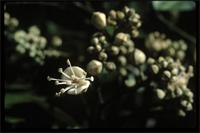
Julbernardia magnistipulata (Harms) Troupin from Kenya.
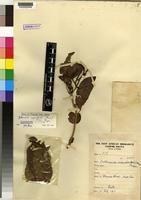
Isosyntype of Julbernardia magnistipulata (Harms) Troupin [family LEGUMINOSAE]
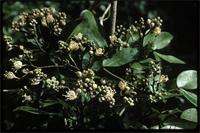
Julbernardia magnistipulata (Harms) Troupin from Kenya
Previous
Next

Name

Identification
Julbernardia magnistipulata (Harms) Troupin [family LEGUMINOSAE ]
Related name
  • Julbernardia magnistipulata

Flora

Entry for JULBERNARDIA magnistipulata (Harms) Troupin [family LEGUMINOSAE-CAESALPINIOIDEAE]
Herbarium
Royal Botanic Gardens, Kew (K)
Collection
Flora of Tropical East Africa
Resource Type
Reference Sources
Entry From
Flora of Tropical East Africa, page 1, (1967) Author: J. P. M. Brenan
Names
JULBERNARDIA magnistipulata (Harms) Troupin [family LEGUMINOSAE-CAESALPINIOIDEAE], in B.J.B.B. 20: 314 (1950); J. Léon. in Mém. 8°, Classe Sci., Acad. Roy. Belg. 30(2): 192 (1957); K.T.S.: 105 (1961). Type: Tanganyika, Lushoto District, Amani, Zimmermann 2003 (B, syn. †) & Grote 3437 (B, syn. †, EA, isosyn.!)
Berlinia magnistipulata Harms [family LEGUMINOSAE-CAESALPINIOIDEAE], in N.B.G.B. 8: 148 (1922); L.T.A.: 691 (1930); T.S.K.: 63 (1936)
Isoberlinia magnistipulata (Harms) Milne-Redh. [family LEGUMINOSAE-CAESALPINIOIDEAE], in K.B. 1937: 415 (1937); T.T.C.L.: 104 (1949)
Information
Evergreen tree, rarely a bush, (2.5–)10–25 m. high, with smooth grey or grey-brown bark; young branchlets glabrous. Leaves: stipule-lobes large, foliaceous, ± persistent, 0.4–4.7 cm. long, 0.25–3 cm. wide; petiole with rhachis 3.8–9 cm. long; leaflets in (l–)2–3 pairs, elliptic, oblong-elliptic or obovate-elliptic, or ovate-lanceolate, 6–11.3(–15) cm. long, 2.3–5(–7.8) cm. wide, obtuse, glabrous (including margins). Panicles up to ± 20 cm. long and wide, brown-tomentellous; pedicels of open flowers 4–7 mm. long. Flowers cream to white. Bracteoles 8–9 mm. long and wide, brown-tomentellous or -tomentose outside. Sepals imbricate, rotund to suborbicular, 3.5–5 mm. long, 3–4 mm. wide. Petals very unequal; larger one suborbicular, shortly clawed, 7 mm. long, 6 mm. wide; others ovate or oblanceolate, 2–5 mm. long, 1–1.5 mm. wide. Pods obovate-oblong or oblong, glabrescent to glabrous when mature, 5.5–14 cm. long, 2.5–3.5(–5) cm. wide. Seeds dark brown, 1.6–2.3 × 1.3–1.8 cm.
Range
DISTR. K7; T3 not known elsewhere
Altitude range
0–1150 m.
Distribution
KENYA Kwale District about 3 km. on Kinango–Mariakani road, 29 Aug. 1953, Drummond & Hemsley 4039!KENYA Mombasa District Port Tudor, Sulemani in F.H. 3236!KENYA Kilifi District 42 km. NW. of Malindi, Marafa, 20 Nov. 1961, Polhill & Paulo 803 !TANGANYIKA Lushoto District Sigi R., 4 Nov. 1936, Greenway 4710! & Lushoto–Mombo road, Sept. 1953, Eggeling 6698!TANGANYIKA Pangani District Bushiri, 30 Sept. 1950, Faulkner 682 !
Notes
There is at Kew a Kenya specimen said to have been collected on the Mau (G. S. Baker 308 !). This is so far outside the otherwise known area of the species that, unless it is confirmed, an error in labelling must be strongly suspected.The nomen nudum Berlinia obliqua A. Peter is mentioned in T.T.C.L.: 89. The specimen cited, B. D. Burtt 274 (EA !) is Julbernardia magnistipulata. Berlinia obliqua appears on numerous specimens collected by Peter. Some of them are J. magnistipulata, others are Cynometra sp. A (see p. 115).The pods of J. magnistipulata are usually about 3–3.5 cm. wide. Wigg in F.H. 1029, from Tanganyika, Lushoto District, Mombo–Lushoto road, has them about 4–5 cm. wide. There is insufficient evidence to indicate if this variant is worth taxonomic recognition, and for the present I am regarding it merely as an extreme of J. magnistipulata.

Related Materials

  • Terms and Conditions
  • Privacy Policy
  • Cookie Policy
  • Cookie Settings
  • Accessibility
  • Help
  • Contact Us
  • Facebook
  • Twitter
ITHAKA

JSTOR is part of ITHAKA, a not-for-profit organization helping the academic community use digital technologies to preserve the scholarly record and to advance research and teaching in sustainable ways.

©2000-2026 ITHAKA. All Rights Reserved. JSTOR®, the JSTOR logo, JPASS®, Aluka®, and ITHAKA® are registered trademarks of ITHAKA.

╳