JSTOR Global Plants Home
  • Home
  • Browse
  • About
  • Access
  • Account
    • Saved Items
    • Profile
  • Log in

Global Plants

Skip to Main Content
  • JSTOR Global Plants Home
  • Global Plants

    • Browse
    • About
    • Access
    • Account
      • Saved Items
      • Profile
Log in
  • Browse
  • About
  • Access
  • Account
    • Saved Items
    • Profile
Advanced Search

Compilation
Isopyrum biternatum

9 Images see all

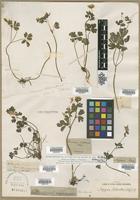
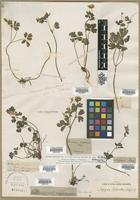
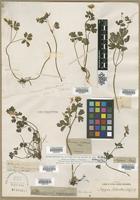
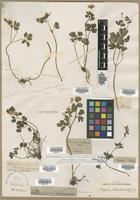
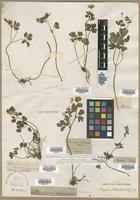
Type of Enemion biternatum Raf. [family RANUNCULACEAE]
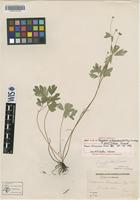
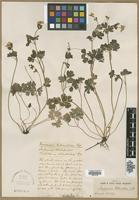
Holotype of Isopyrum biternatum (Raf.) Torr. & A.Gray f. acutilobum Fassett [family RANUNCULACEAE]
Enemion biternatum Raf. [family RANUNCULACEAE]
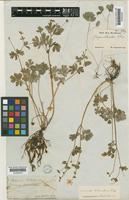
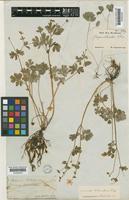
Filed as Isopyrum biternatum Torr. & A.Gray [family RANUNCULACEAE]
Enemion biternatum Raf. [family RANUNCULACEAE]
Type of Isopyrum biternatum Raf. [family RANUNCULACEAE]
Type of Enemion biternatum Raf. [family RANUNCULACEAE]
Previous
Next

Name

Identification
Enemion biternatum Raf. [family RANUNCULACEAE ] (stored under name); Isopyrum biternatum Torr. & A.Gray [family RANUNCULACEAE ]
Related name
  • Anemone lexingtoniensis
  • Isopyrum americanum
  • Enemion biternatum
  • Isopyrum biternatum

Flora

Entry for Enemion biternatum Rafinesque [family RANUNCULACEAE]
Herbarium
Flora of North America (FNA)
Collection
Flora of North America
Resource Type
Reference Sources
Entry From
Flora of North America, Vol 3,
Names
Enemion biternatum Rafinesque [family RANUNCULACEAE], J. Phys. Chim. Hist. Nat. Arts, 91: 70. 1820
Isopyrum biternatum (Rafinesque) Torrey & A. Gray [family RANUNCULACEAE]
Information
Stems 10-40 cm, weakly rhizomatous; roots fibrous. Leaves: leaflets irregularly 2-3-lobed, lobes sometimes with 1-3 secondary lobes, apex rounded, glandular-apiculate; surfaces abaxially glabrous. Inflorescences axillary, flowers solitary or loosely grouped in 2-4-flowered leafy racemes; peduncle not strongly clavate. Flowers: sepals 5.5-13.5 × 3.5-8.5 mm; stamens 25-50; filaments filiform to club-shaped, 1.8-5.8 mm. Follicles sessile, upright to widely divergent; body widely elliptic to widely obovate, 3.5-6.5 mm, gradually contracted into style beak; beak 1.7-3 mm. Seeds 2.1-2.7 mm, minutely pubescent. 2n = 14.
Phenology
Flowering spring
Altitude range
25-1000 m
Distribution
USA Ala.USA Ark.USA Fla.USA Ill.USA Ind.USA IowaUSA Kans.USA Ky.USA Mich.USA Minn.USA Miss.USA Mo.USA N.Y.USA N.C.USA OhioUSA Okla.USA S.C.USA S.Dak.USA Tenn.USA Va.USA W.Va.USA Wis.Canada Ont.
Discussion
Enemion biternatum has been mistaken for the superficially similar Thalictrum thalictroides because of its white flowers and compound Thalictrum-like leaves. Enemion biternatum is easily distinguished, however, by its few-seeded follicles and deeply lobed leaves with glandular-apiculate apices. Thalictrum thalictroides, on the other hand, is characterized by having achenes and somewhat crenate leaves with notched apices.

Related Materials

  • Terms and Conditions
  • Privacy Policy
  • Cookie Policy
  • Cookie Settings
  • Accessibility
  • Help
  • Contact Us
  • Facebook
  • Twitter
ITHAKA

JSTOR is part of ITHAKA, a not-for-profit organization helping the academic community use digital technologies to preserve the scholarly record and to advance research and teaching in sustainable ways.

©2000-2026 ITHAKA. All Rights Reserved. JSTOR®, the JSTOR logo, JPASS®, Aluka®, and ITHAKA® are registered trademarks of ITHAKA.

╳