JSTOR Global Plants Home
  • Home
  • Browse
  • About
  • Access
  • Account
    • Saved Items
    • Profile
  • Log in

Global Plants

Skip to Main Content
  • JSTOR Global Plants Home
  • Global Plants

    • Browse
    • About
    • Access
    • Account
      • Saved Items
      • Profile
Log in
  • Browse
  • About
  • Access
  • Account
    • Saved Items
    • Profile
Advanced Search

Compilation
Isoglossa woodii

5 Images see all

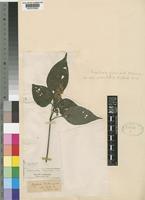
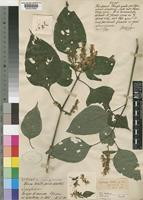
Isoglossa woodii C.B.Clarke [family ACANTHACEAE]
Type of Isoglossa woodii C.B.Clarke [family ACANTHACEAE]
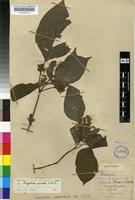
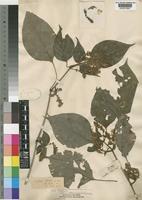
Isoglossa woodii C.B.Clarke [family ACANTHACEAE]
Isosyntype of Isoglossa woodii C.B.Clarke [family ACANTHACEAE]
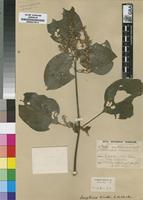
Isoglossa woodii C.B.Clarke [family ACANTHACEAE]
Previous
Next

Name

Identification
Isoglossa woodii C.B.Clarke [family ACANTHACEAE ] (stored under name); Verified by Not on sheet,
Related name
  • Ecteinanthus origanoides
  • Isoglossa woodii

Flora

Entry for ISOGLOSSA Woodii C. B. Clarke [family ACANTHACEAE]
Herbarium
Royal Botanic Gardens, Kew (K)
Collection
Flora Capensis
Resource Type
Reference Sources
Entry From
Flora Capensis, Vol 5, page 1, (1912) Author: By C. B. CLARKE.
Names
ISOGLOSSA Woodii C. B. Clarke [family ACANTHACEAE]
Information
stems and leaves sparingly hairy; leaves up to 5 by 2–3 in., ovate, acuminate, tapering into a petiole 1–2 in. long; inflorescences 2 by 1/3– 1/2 in., hardly interrupted, forming terminal panicles 2–4 in. in diam., and also remote axillary inflorescences; floral leaves 1/8– 1/5 in. long, obovate, suddenly contracted into a small acute tip; bracteoles 1/8 in. long, linear; calyx 1/8 in. long; segments linear, with many gland-headed hairs; corolla 1/3 in. long; capsule 1/3 in. long, stalked, with 4 tubercular-scabrous flattened seeds in the upper half. null
Distribution
EASTERN REGION Natal; Inanda, Wood, 786! edges of woods, Berea, near Durban, 100–200 ft., Wood, 3945! and without precise locality, Gerrard, 1897!
Notes
“This plant does not flower every year; it is commonly believed to flower once in seven years only; this year, 1888, it has produced flowers in great abundance” (Wood).

Related Materials

  • Terms and Conditions
  • Privacy Policy
  • Cookie Policy
  • Cookie Settings
  • Accessibility
  • Help
  • Contact Us
  • Facebook
  • Twitter
ITHAKA

JSTOR is part of ITHAKA, a not-for-profit organization helping the academic community use digital technologies to preserve the scholarly record and to advance research and teaching in sustainable ways.

©2000-2026 ITHAKA. All Rights Reserved. JSTOR®, the JSTOR logo, JPASS®, Aluka®, and ITHAKA® are registered trademarks of ITHAKA.

╳