JSTOR Global Plants Home
  • Home
  • Browse
  • About
  • Access
  • Account
    • Saved Items
    • Profile
  • Log in

Global Plants

Skip to Main Content
  • JSTOR Global Plants Home
  • Global Plants

    • Browse
    • About
    • Access
    • Account
      • Saved Items
      • Profile
Log in
  • Browse
  • About
  • Access
  • Account
    • Saved Items
    • Profile
Advanced Search

Compilation
Iris foliosa

2 Images see all

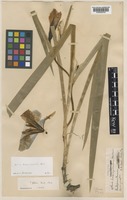
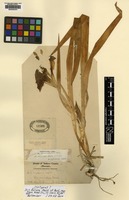
Iris foliosa Mack. & Bush [family IRIDACEAE]
Isotype of Iris foliosa Mack. & Bush [family IRIDACEAE]
Previous
Next

Name

Identification
Iris foliosa Mack. & Bush [family IRIDACEAE ] (stored under name); Verified by Dykes, W.R., Iris brevicaulis Raf. [family IRIDACEAE ] Verified by Henderson, N.C., Iris hexagona Walter [family IRIDACEAE ]
Related name
  • Iris foliosa
  • Iris brevicaulis
  • Iris hexagona
Common name
  • Short-stem iris, Flora of North America Vol. 26

Flora

Entry for Iris brevicaulis Rafinesque [family IRIDACEAE]
Herbarium
Flora of North America (FNA)
Collection
Flora of North America
Resource Type
Reference Sources
Entry From
Flora of North America, Vol 26,
Names
Iris brevicaulis Rafinesque [family IRIDACEAE], Fl. Ludov., 20. 1817
Iris alabamensis Small [family IRIDACEAE]
Iris foliosa Mackenzie & Bush [family IRIDACEAE]
Iris mississippiensis Alexander [family IRIDACEAE]
Treatment Author(s)
Norlan C. Henderson
Information
Rhizomes freely branching, producing extensive clumps, 1–2.5 cm diam. Stems declining or semi- erect, sharply zigzag, with short branch at each of 2–3 bends, leaf at every bend, flower bud at every bend, solid, 2.5–3 dm. Leaves: basal erect, spreading, or prostrate, blade deep green, ensiform, 3.5–7 dm × 1.5–3.5 cm, somewhat glaucous; cauline at each of 2–3 nodes, subtending and exceeding short branch and flower, blade 2–6 dm. Inflorescences with terminal unit 2-flowered, each short branch unit 1-flowered; spathes foliaceous, lanceolate, 3–5 cm, subequal, apex acute; outer green, exceeding inner; inner partly scarious. Flowers: perianth rich blue or blue-violet; floral tube funnelform, 1–2 cm; sepals ovate, 7.5–9 × 2.5–3 cm, base abruptly attenuate, claw light greenish yellow with darker veins, with prominent yellow midrib and large, yellow-white signal at union of limb and claw; petals erect or spreading-erect, lighter blue than sepals, oblanceolate, 5–6.5 × 1.5–2 cm; ovary prominently 6-angled, 1–1.3 cm; style greenish, 3.5–4 cm, crests reflexed, semiovoid to subquadrate, 1.2–1.5 cm, margins irregularly toothed or entire; stigmas 2-lobed, lobes rounded-deltoid; pedicel 1–1.3 cm. Capsules hexagonal to almost circular in cross section with 6 equally placed ribs, with short beak at apex, 3–5 × 2–2.5 cm. Seeds in 2 rows per locule, light brown, irregularly circular, flattened, 3–5 mm, very corky. 2n = 42, 44.
Phenology
apr-may (spring), jun (summer)
Distribution
USA Ala.USA Ark.USA Fla.USA Ill.USA Ind.USA Kans.USA Ky.USA La.USA Miss.USA Mo.USA Okla.USA Tenn.Canada Ont.
Discussion
Iris brevicaulis hybridizes with I. fulva to produce I. ×fulvala Dykes, and with I. giganticaerulea to produce I. ×flexicaulis Small.

Related Materials

  • Terms and Conditions
  • Privacy Policy
  • Cookie Policy
  • Cookie Settings
  • Accessibility
  • Help
  • Contact Us
  • Facebook
  • Twitter
ITHAKA

JSTOR is part of ITHAKA, a not-for-profit organization helping the academic community use digital technologies to preserve the scholarly record and to advance research and teaching in sustainable ways.

©2000-2026 ITHAKA. All Rights Reserved. JSTOR®, the JSTOR logo, JPASS®, Aluka®, and ITHAKA® are registered trademarks of ITHAKA.

╳