JSTOR Global Plants Home
  • Home
  • Browse
  • About
  • Access
  • Account
    • Saved Items
    • Profile
  • Log in

Global Plants

Skip to Main Content
  • JSTOR Global Plants Home
  • Global Plants

    • Browse
    • About
    • Access
    • Account
      • Saved Items
      • Profile
Log in
  • Browse
  • About
  • Access
  • Account
    • Saved Items
    • Profile
Advanced Search

Compilation
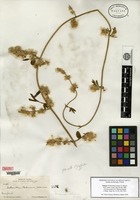
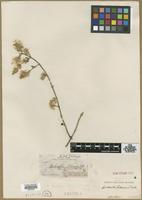
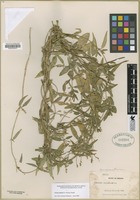
Iresine palmeri

3 Images see all

Isotype of Hebanthe palmeri S. Watson [family AMARANTHACEAE]
Type? of Hebanthe palmeri S.Watson [family AMARANTHACEAE]
Filed as Iresine palmeri (S. Wats.) Standl. [family AMARANTHACEAE]
Previous
Next

Name

Identification
Hebanthe palmeri S.Watson [family AMARANTHACEAE ] (stored under name); Verified by Not on Sheet, Hebanthe palmeri S.Watson [family AMARANTHACEAE ] Verified by Not on Sheet, Iresine palmeri (S.Wats.) Standl. [family AMARANTHACEAE ] Verified by Standley, P.C.,
Related name
  • Hebanthe palmeri
  • Iresine palmeri
Common name
  • Palmer’s bloodleaf, Flora of North America Vol. 4

Flora

Entry for Iresine palmeri (S. Watson) Standley [family AMARANTHACEAE]
Herbarium
Flora of North America (FNA)
Collection
Flora of North America
Resource Type
Reference Sources
Entry From
Flora of North America, Vol 4,
Names
Iresine palmeri (S. Watson) Standley [family AMARANTHACEAE], J. Wash. Acad. Sci., 5: 395. 1915
Hebanthe palmeri S. Watson [family AMARANTHACEAE], Proc. Amer. Acad. Arts, 18: 144. 1883
Treatment Author(s)
Steven E. Clemants
Information
Shrubs or vines, at least 3 dm. Stems sometimes scandent or decumbent, woody nearly throughout, scabrous. Leaves opposite; blade lanceolate, narrowly ovate, or lance-oblong, 12–60 × 5–17 cm, glabrous. Inflorescences: pistillate plants with panicles 2.5–6 cm; bracts and bracteoles ± equaling tepals; staminate plants not seen. Flowers: tepals green, oval, 1–1.4 mm, herbaceous, apex obtuse, pilose. Utricles exserted, subglobose, 1.7 mm, apex truncate. Seeds 1 mm.
Phenology
mar-may (spring)
Altitude range
0–10 m;
Distribution
Mexico.USA Tex.

Related Materials

  • Terms and Conditions
  • Privacy Policy
  • Cookie Policy
  • Cookie Settings
  • Accessibility
  • Help
  • Contact Us
  • Facebook
  • Twitter
ITHAKA

JSTOR is part of ITHAKA, a not-for-profit organization helping the academic community use digital technologies to preserve the scholarly record and to advance research and teaching in sustainable ways.

©2000-2026 ITHAKA. All Rights Reserved. JSTOR®, the JSTOR logo, JPASS®, Aluka®, and ITHAKA® are registered trademarks of ITHAKA.

╳