JSTOR Global Plants Home
  • Home
  • Browse
  • About
  • Access
  • Account
    • Saved Items
    • Profile
  • Log in

Global Plants

Skip to Main Content
  • JSTOR Global Plants Home
  • Global Plants

    • Browse
    • About
    • Access
    • Account
      • Saved Items
      • Profile
Log in
  • Browse
  • About
  • Access
  • Account
    • Saved Items
    • Profile
Advanced Search

Compilation
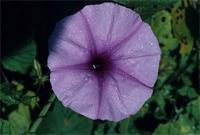
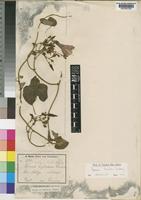
Ipomoea ficifolia

14 Images see all

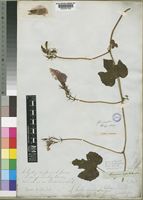
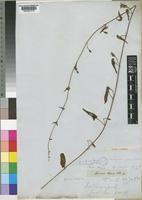
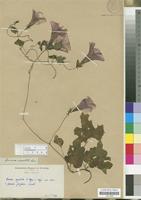
Ipomoea ficifolia Lindl. [family CONVOLVULACEAE]
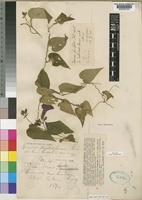
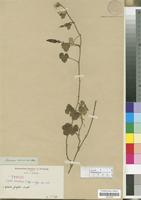
Holotype of Ipomoea ficifolia Lindl. subvar. auriculata Hallier f. [family CONVOLVULACEAE]
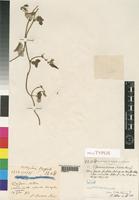
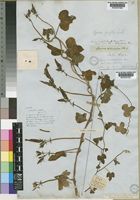
Isotype of Ipomoea engleriana Dammer [family CONVOLVULACEAE]
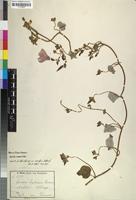
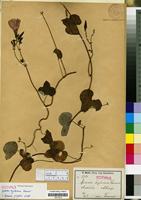
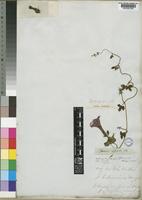
Ipomoea ficifolia Lindl. [family CONVOLVULACEAE]
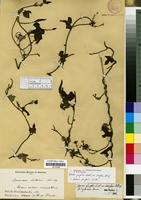
Filed as Ipomoea ficifolia Lindl. [family CONVOLVULACEAE]
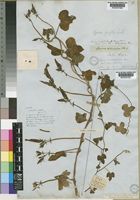
Type? of Ipomoea holosericea E. Meyer in Drège nom. nud. [family CONVOLVULACEAE]
Isotype of Ipomoea ficifolia Hallier f. var. laxiflora [family CONVOLVULACEAE]
Type? of Ipomoea ficifolia Lindl. var. laxiflora Hall. f. [family CONVOLVULACEAE]
Ipomoea ficifolia Lindl. [family CONVOLVULACEAE]
Type of Ipomoea pharbitiformis Baker [family CONVOLVULACEAE]
Ipomoea ficifolia Lindl. [family CONVOLVULACEAE]
Ipomoea ficifolia
Ipomoea ficifolia Lindl. var. laxiflora [family CONVOLVULACEAE]
Previous
Next

Name

Identification
Ipomoea ficifolia Lindl. [family CONVOLVULACEAE ]
Related name
  • Ipomoea ficifolia

Flora

Entry for Ipomoea ficifolia [family CONVOLVULACEAE]
Herbarium
South African National Biodiversity Institute, Compton Herbarium, Cape Town (SAM)
Collection
Flora of Southern Africa
Resource Type
Reference Sources
Entry From
Flora of South Africa, (2003) Author: Dr J.P. Roux
Names
Ipomoea ficifolia [family CONVOLVULACEAE]
Common names
Convolvulus trilobus Thunb.: 35 (1794), non Desr. (1792). Type: Cape Province, Humansdorp?, Thunberg s.n. (U, holo.).
Information
Perennial with tuberous root. Stems usually climbing, herbaceous becoming woody, up to 2.5 m long, often striate, sparsely hairy becom­ing scabridulous in older parts. Leaves ovate-cordate to suborbicular-reniform in outline, 20-90 x 15-80 mm, base cordate, sinus broad and shallow, apex acute or acuminate, margin ± crenate, entire or frequently 3-lobed, divided up to middle, terminal lobe ovate to ovate-triangu­lar, constricted at base, basal lobes rounded, obliquely ovate to semi-orbicular, upper surface green, thinly hairy, lower surface mostly floc-cosely or cobwebby tomentose with soft white hairs when young except on yellow-bristly veins, glabrescent when older; petiole striate, hairy, 10-50 mm long. Inflorescence lax, cymosely 1-many-flowered; peduncle pilose, 20-150 mm long; bracteoles hairy, linear-lan­ceolate, 7-11 mm long; pedicels up to 15 mm long. Sepals equal, hairy, lanceolate, 10-15 mm long. Corolla funnel-shaped, 40-60 mm long, limb as much wide, shallowly 5-lobed, pale magenta, pink or purple, glabrous or with a few pilose hairs on midpetaline areas. Capsule sub-globose to ovoid, 7-9 mm in diameter, usually glabrous. Seeds compressed-globose, 3-4 mm long, yellow-pubescent, often with long white hairs on edges. Flowering time November to June, mostly March to May.
Habitat
Distinguished by its long, narrow, eglandular sepals and 40-60 mm long corolla.
Use
21. Ipomoea ficifolia Lindl. in Botanical Register 26: 90 (1840); Lindl.: t. 13 (1841); Hallier f.: 135 (1893a); Hallier f.: 35 (1899b); Baker & C.H.Wright: 64 (1904); J.M.Wood: t. 525 (1912); A.Meeuse: 738 (1957a); Verde: 111 (1963a); A.Batten & G.W.Bokelmann: 123, t. 98 (1966); A.Batten: 230 (1986); Gone.: 83 (1987); Gone.: 90 (1992). Type: a plant culti­vated in the Victoria Nursery, Bath, England, Nov. 1840 (CGE, holo.).
Range
Occurs from Somalia, Kenya, Tanzania and Mozambique to Swaziland, KwaZulu-Natal and the Eastern Cape. Found in bushland, littoral scrub and grassland, mostly on rocky or sandy soil, often along the coast. Sometimes a weed of cultivated ground. Map 51.

Related Materials

  • Terms and Conditions
  • Privacy Policy
  • Cookie Policy
  • Cookie Settings
  • Accessibility
  • Help
  • Contact Us
  • Facebook
  • Twitter
ITHAKA

JSTOR is part of ITHAKA, a not-for-profit organization helping the academic community use digital technologies to preserve the scholarly record and to advance research and teaching in sustainable ways.

©2000-2026 ITHAKA. All Rights Reserved. JSTOR®, the JSTOR logo, JPASS®, Aluka®, and ITHAKA® are registered trademarks of ITHAKA.

╳