JSTOR Global Plants Home
  • Home
  • Browse
  • About
  • Access
  • Account
    • Saved Items
    • Profile
  • Log in

Global Plants

Skip to Main Content
  • JSTOR Global Plants Home
  • Global Plants

    • Browse
    • About
    • Access
    • Account
      • Saved Items
      • Profile
Log in
  • Browse
  • About
  • Access
  • Account
    • Saved Items
    • Profile
Advanced Search

Compilation
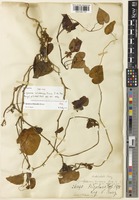
Ipomoea denticulata

9 Images see all

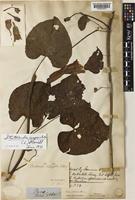
Stictocardia campanulata (L.) Merr. [family CONVOLVULACEAE]
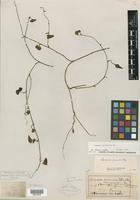
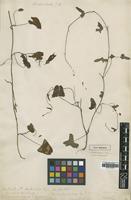
Xenostegia tridentata (L.) D.F.Austin & Staples [family CONVOLVULACEAE]
Isotype of Ipomoea nicobarica Kurz [family CONVOLVULACEAE]
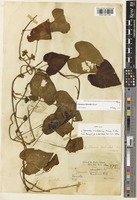
Type of Ipomoea denticulata R.Br. [family CONVOLVULACEAE]
Type of Ipomoea denticulata var. microphylla (Lam.) Kuntze [family CONVOLVULACEAE]
Filed as Xenostegia tridentata (L.) D.F.Austin & Staples [family CONVOLVULACEAE]
Type of Ipomoea denticulata R.Br. [family CONVOLVULACEAE]
Type of Ipomoea carnea Jacq. [family CONVOLVULACEAE]
Isotype of Ipomoea nicobarica Kurz [family CONVOLVULACEAE]
Previous
Next

Name

Identification
Ipomoea carnea Jacq. [family CONVOLVULACEAE ] Ipomoea denticulata Choisy [family CONVOLVULACEAE ] (stored under name);
Related name
  • Ipomoea carnea
  • Ipomoea denticulata
  • Xenostegia tridentata
  • Ipomoea angustifolia
  • Stictocardia campanulata
  • Stictocardia tiliifolia

Flora

Entry for MERREMIA tridentata var. angustifolia [family CONVOLVULACEAE]
Herbarium
Royal Botanic Gardens, Kew (K)
Collection
Flora of Tropical East Africa
Resource Type
Reference Sources
Entry From
Flora of Tropical East Africa, page 1, (1963) Author: B. VERDCOURT (East African Herbarium)
Names
MERREMIA tridentata var. angustifolia [family CONVOLVULACEAE]
Convolvulus hastatus Desr. [family CONVOLVULACEAE], in Lam., Encycl. 3 : 542 (1791), non Forsk. (1775). Type : East Indies, Sonnerat (P, holo.!)
Convolvulus filicaulis Vahl [family CONVOLVULACEAE], Symb. Bot. 3 : 24 (1794). Type : a plant grown by von Rohr from seed collected by Isert in Guinea (C, holo.!)
Ipomoea denticulata R. Br. [family CONVOLVULACEAE], Prodr. : 485 (1810). Type : Australia, Carpentaria, R. Brown (BM, holo.!, G, iso.!)
Ipomoea filicaulis (Vahl) Bl. [family CONVOLVULACEAE], Bijdr. : 721 (1826)
Merremia hastata (Desr.) Hall.f. [family CONVOLVULACEAE], in E.J. 16 : 552 (1893)
Merremia angustifolia (Jacq.) Hall.f. [family CONVOLVULACEAE], in E.J. 18 : 117 (1893); Bak. & Rendle in F.T.A. 4 (2) : 111 (1905); F.W.T.A. 2 : 211 (1931)
Merremia angustifolia Hall.f. var. ambigua [family CONVOLVULACEAE], in E.J. 18 : 117 (1893). Type : Ethiopia, Schimper 1195 (Z, lecto.)
Merremia tridentata (Desr.) van Ooststr. subsp. hastata [family CONVOLVULACEAE], in Blumea 3 : 317 (1939) & in Fl. Males., ser. 1, 4 (4) : 445, fig. 27 (1953)
Information
Plant glabrous or glabrescent
Range
DISTR. U1–4; K1, 4, 7; T1–4, 6–8; Z throughout tropical and South Africa; through tropical Asia to China, Malaysia and Australia
Altitude range
30–1350 m.
Distribution
KENYA Kilifi District Kibarani, 3 Apr. 1946, Jeffery 511! & 14 Feb. 1945, Jeffery 66 !TANGANYIKA Mwanza, 20 Oct. 1922, Conrads 506 ! ;TANGANYIKA Moshi District Rau, Rombo, Jan. 1929, Haarer 1763 !TANGANYIKA Kigoma, 9 Apr. 1945, Wallace 1235 !UGANDA Bunyoro District Murchison Falls, Jan. 1951, Jex Blake in E.A.H. 10086 ! & Bungungu, Jan. 1941, Purseglove 1103 ! & 1098 !ZANZIBAR Zanzibar I. , Unguja Ukoo, 28 Apr. 1961, Faulkner 2819 !
Notes
Van Ooststroom distinguishes subsp. hastata from subsp. angustifolia but records both from Africa as well as typical tridentata. The plant he figures as hastata has largewide thin leaves very similar to those of subsp. alatipes. In Africa there are some very narrow-leaved forms (e.g. Thomson, from N. of Lake Nyasa) which are distinct looking when single specimens are compared but there is every intermediate variant to be found. Hallier himself determined the Thomson specimen as M. hastata.

Related Materials

  • Terms and Conditions
  • Privacy Policy
  • Cookie Policy
  • Cookie Settings
  • Accessibility
  • Help
  • Contact Us
  • Facebook
  • Twitter
ITHAKA

JSTOR is part of ITHAKA, a not-for-profit organization helping the academic community use digital technologies to preserve the scholarly record and to advance research and teaching in sustainable ways.

©2000-2026 ITHAKA. All Rights Reserved. JSTOR®, the JSTOR logo, JPASS®, Aluka®, and ITHAKA® are registered trademarks of ITHAKA.

╳