JSTOR Global Plants Home
  • Home
  • Browse
  • About
  • Access
  • Account
    • Saved Items
    • Profile
  • Log in

Global Plants

Skip to Main Content
  • JSTOR Global Plants Home
  • Global Plants

    • Browse
    • About
    • Access
    • Account
      • Saved Items
      • Profile
Log in
  • Browse
  • About
  • Access
  • Account
    • Saved Items
    • Profile
Advanced Search

Compilation
Ipomoea curtissii

5 Images see all

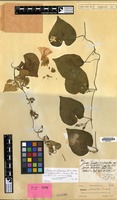
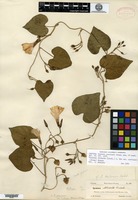
Isotype of Ipomoea curtissii House [family CONVOLVULACEAE]
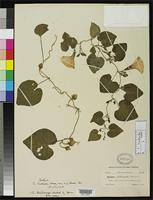
Isotype of Ipomoea curtissii House, H.D. 1908 [family CONVOLVULACEAE]
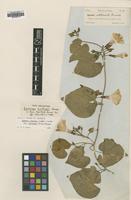
Type of Ipomoea curtissii House [family CONVOLVULACEAE]
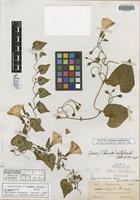
Isotype of Ipomoea curtissii House [family CONVOLVULACEAE]
Previous
Next

Name

Identification
Ipomoea curtissii House [family CONVOLVULACEAE ] Ipomoea ochracea (House) Stearn [family CONVOLVULACEAE ] (stored under name); Verified by Stearn,W.T.,
Related name
  • Ipomoea ochracea
  • Ipomoea curtissii

Flora

Entry for Ipomoea ochracea (House) Stearn ?var. curtissii [family CONVOLVULACEAE]
Herbarium
Royal Botanic Gardens, Kew (K)
Collection
Flora of Tropical East Africa
Resource Type
Reference Sources
Entry From
Flora of Tropical East Africa, page 1, (1963) Author: B. VERDCOURT (East African Herbarium)
Names
Ipomoea ochracea (House) Stearn ?var. curtissii [family CONVOLVULACEAE], in Proc. Linn. Soc. Lond. 170 : 145 adnot. (1959). Type : West Indies, Cuba, Havana, Curtiss 562 (NY, holo., BM, iso. !)
Ipomoea curtissii House [family CONVOLVULACEAE], in Ann. New York Acad. Sci. 18 : 250, 257 (1908)
Information
A much stouter plant than var. ochracea with thicker, yellowish, ridged woody stems and thicker leaves. Sepals more coriaceous, 7 × 3.5 mm. Seeds glabrous.
Range
DISTR. U1 naturalized in Cuba, Panama and Jamaica (see note).
Altitude range
1200 m.
Distribution
UGANDA Karamoja District Kanyangarang River, Dec. 1934, Tweedie 259!, & Kailekong, Sept. 1958, Wilson 496 !
Notes
I am not certain that the African plant is identical with the naturalized plant occurring in the New World of which the origin is not known. Dr. W. T. Stearn agrees with me that it is extremely similar but it is in the highest degree improbable that the New World introductions originated from Karamoja material.

Related Materials

  • Terms and Conditions
  • Privacy Policy
  • Cookie Policy
  • Cookie Settings
  • Accessibility
  • Help
  • Contact Us
  • Facebook
  • Twitter
ITHAKA

JSTOR is part of ITHAKA, a not-for-profit organization helping the academic community use digital technologies to preserve the scholarly record and to advance research and teaching in sustainable ways.

©2000-2026 ITHAKA. All Rights Reserved. JSTOR®, the JSTOR logo, JPASS®, Aluka®, and ITHAKA® are registered trademarks of ITHAKA.

╳