JSTOR Global Plants Home
  • Home
  • Browse
  • About
  • Access
  • Account
    • Saved Items
    • Profile
  • Log in

Global Plants

Skip to Main Content
  • JSTOR Global Plants Home
  • Global Plants

    • Browse
    • About
    • Access
    • Account
      • Saved Items
      • Profile
Log in
  • Browse
  • About
  • Access
  • Account
    • Saved Items
    • Profile
Advanced Search

Compilation
Ipomoea bisavium

11 Images see all

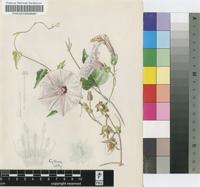
Ipomoea bisavium A.Meeuse
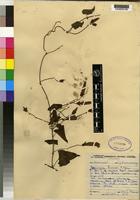
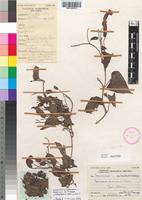
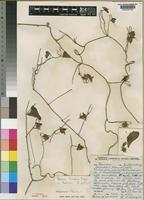
Type of Ipomoea bisavium A. Meeuse [family CONVOLVULACEAE]
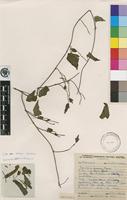
Isotype of Ipomoea bisavium A.Meeuse [family CONVOLVULACEAE]
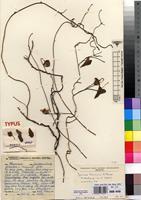
Type of Ipomoea bisavium A. Meeuse [family CONVOLVULACEAE]
Isotype of Ipomoea bisavium Meeuse A [family CONVOLVULACEAE]
Isotype of Ipomoea bisavium A.Meeuse [family CONVOLVULACEAE]
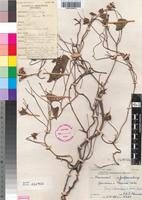
Isosyntype of Ipomoea bisavium A.Meeuse [family CONVOLVULACEAE]
Isotype of Ipomoea bisavium Meeuse A [family CONVOLVULACEAE]
Holotype of Ipomoea bisavium A.Meeuse [family CONVOLVULACEAE]
Isotype of Ipomoea bisavium Meeuse A [family CONVOLVULACEAE]
Isosyntype of Ipomoea bisavium A.Meeuse [family CONVOLVULACEAE]
Previous
Next

Name

Identification
Ipomoea bisavium A.Meeuse [family CONVOLVULACEAE ]
Related name
  • Ipomoea bisavium

Flora

Entry for Ipomoea bisavium [family CONVOLVULACEAE]
Herbarium
South African National Biodiversity Institute, Compton Herbarium, Cape Town (SAM)
Collection
Flora of Southern Africa
Resource Type
Reference Sources
Entry From
Flora of South Africa, (2003) Author: Dr J.P. Roux
Names
Ipomoea bisavium [family CONVOLVULACEAE]
Information
Tall perennial climber. Stems woody, older parts with dark, rough bark, young twigs ± herbaceous, hairy. Leaves subcordate, subentire, apex mucronate and ± acuminate, base cordate to subtruncate, basal lobes rounded, both sur­faces minutely adpressed-puberulous, ± gla-brescent; main nerves slightly prominent beneath; blade 30-70 x 15-50 mm; petiole densely adpressed-puberulous, 10-30 mm long. Inflorescence axillary, cymosely 1- to few-flow­ered; peduncle densely adpressed-puberulous, up to 70 mm long; pedicels somewhat pubes­cent, faintly striate, 5-25 mm long; bracteoles 6 x 2-3 mm, early deciduous. Sepals unequal, glabrescent; 2 outer sepals cordate-triangular, 14 mm long; third sepal ± asymmetrical 10-11 mm long, innermost two oblong-lanceolate, 9-10 mm long. Corolla funnel-shaped, pale pink to white, lower portion of tube purple-mauve inside; tube glabrous, ± 25 mm long, limb spreading, 5-angled, 40-60 mm wide; midpetaline areas strigose-pilose with white hairs on outside. Capsule ovoid-conical, glabrous, brown, 10-12 x 8 mm. Seeds 4, ± 4.5 mm long, shortly velutinous with 7 mm long fulvous hairs on angles. Flowering time April.
Habitat
Distinguished by being a woody climber with cordate-triangular outer sepals and pale pink to white corolla.
Use
11. Ipomoea bisavium A.Meeuse in Botha-lia 7: 26 (1958a); A.Meeuse: t. 1360 (1961); Retief & P.P.J.Herman: 383 (1997). Type: Northern Province, Wyllie's Poort, Meeuse 10181 (PRE, hole!; BM, BR, EA, K, L, SRGH, iso.!); Northern Province, Wyllie's Poort, Meeuse 10237 (PRE, iso.!).
Range
Endemic to the Wyllie's Poort area in the Soutpansberg in the Northern Province. Known only from the type collection; the flowering specimens (Meeuse 10181) and the fruiting specimens (Meeuse 10237) are from the same plant. Map 45.

Related Materials

  • Terms and Conditions
  • Privacy Policy
  • Cookie Policy
  • Cookie Settings
  • Accessibility
  • Help
  • Contact Us
  • Facebook
  • Twitter
ITHAKA

JSTOR is part of ITHAKA, a not-for-profit organization helping the academic community use digital technologies to preserve the scholarly record and to advance research and teaching in sustainable ways.

©2000-2026 ITHAKA. All Rights Reserved. JSTOR®, the JSTOR logo, JPASS®, Aluka®, and ITHAKA® are registered trademarks of ITHAKA.

╳