JSTOR Global Plants Home
  • Home
  • Browse
  • About
  • Access
  • Account
    • Saved Items
    • Profile
  • Log in

Global Plants

Skip to Main Content
  • JSTOR Global Plants Home
  • Global Plants

    • Browse
    • About
    • Access
    • Account
      • Saved Items
      • Profile
Log in
  • Browse
  • About
  • Access
  • Account
    • Saved Items
    • Profile
Advanced Search

Compilation
Ipomoea beraviensis

10 Images see all

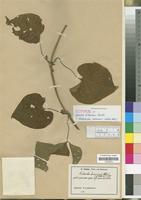
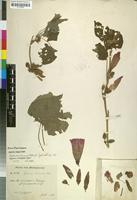
Isotype of Ipomoea hierniana Rendle [family CONVOLVULACEAE]
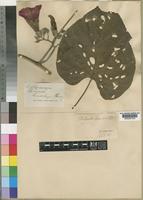
Isotype of Ipomoea beraviensis Vatke [family CONVOLVULACEAE]
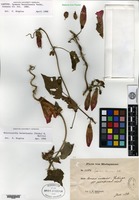
Stictocardia beraviensis Hallier f. [family CONVOLVULACEAE]
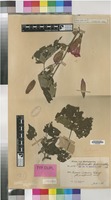
Isotype of Stictocardia beraviensis (Vatke) Hallier f. [family CONVOLVULACEAE]
Stictocardia beraviensis Hallier f. [family CONVOLVULACEAE]
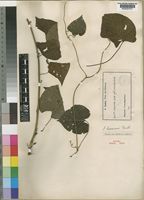
Isotype of Ipomoea beraviensis Vatke [family CONVOLVULACEAE]
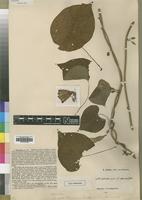
Type of Ipomoea buchanani Baker [family CONVOLVULACEAE]
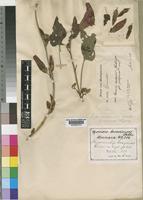
Stictocardia laxiflora (Bak.) Hall. f. [family CONVOLVULACEAE]
Type of Ipomoea hierniana Rendle [family CONVOLVULACEAE]
Previous
Next

Name

Identification
Stictocardia beraviensis Hallier f. [family CONVOLVULACEAE ] (stored under name); Ipomoea beraviensis Vatke [family CONVOLVULACEAE ]
Related name
  • Stictocardia beraviensis
  • Ipomoea beraviensis

Flora

Entry for STICTOCARDIA beraviensis (Vatke) Hall.f. [family CONVOLVULACEAE]
Herbarium
Royal Botanic Gardens, Kew (K)
Collection
Flora of Tropical East Africa
Resource Type
Reference Sources
Entry From
Flora of Tropical East Africa, page 1, (1963) Author: B. VERDCOURT (East African Herbarium)
Names
STICTOCARDIA beraviensis (Vatke) Hall.f. [family CONVOLVULACEAE], in E.J. 18 : 159 (1893); F.W.T.A. 2 : 219 (1931); T.T.C.L. : 173 (1949). Type : Madagascar, Beravi, Hildebrandt 3094 (B, holo. †, BM, K, iso.!)
Ipomoea beraviensis Vatke [family CONVOLVULACEAE], in Linnaea 43 : 514 (1882)
Argyreia ?beraviensis (Vatke) Bak. [family CONVOLVULACEAE], in F.T.A. 4 (2) : 201 (1906)
Argyreia bagshawei Rendle [family CONVOLVULACEAE], in J.B. 46 : 183 (1908). Type : Uganda, Unyoro, near Masindi, Bagshawe 869 (BM, holo.!)
Information
Strong woody twiner with densely pubescent young stems and glabrescent yellowish older ones. Leaf-blade ovate, up to 16(–23) cm. long and 15 (–20.5) cm. wide, acute or blunt at the mucronate apex, shallowly cordate or truncate, glabrous or very sparingly pilose above, very densely grey-velvety beneath to glabrous or glabrescent; lateral nerves closely parallel; petiole up to 17 cm. long. Inflorescences axillary, many-flowered; peduncle. 0.8–1 (–2.5) cm. long; pedicels 0.6–1.0 cm. long. Calyx-lobes elliptic or suborbicular, 7–10(–13) mm. long, 5–8(–12) mm. wide, blunt or emarginate, mucronulate, glabrescent above, hairy towards the base. Buds finely pubescent at the tips. Corolla very bright crimson with base of tube orange-yellow, funnel-shaped, not markedly narrowed basally, 4.5–5.5 cm. long, with tufts of hairs at the tips of the midpetaline areas. Capsule 1.4 cm. long, 1.3 cm. wide, globose. Seeds black, ± granular, 6 mm. long, 4 mm. wide. Fig. 19, p. 70.
Range
DISTR. U2–4; K2, 4, 5; T1, 4
Altitude range
900–1800 m.
Distribution
KENYA West Suk District Mwina Valley, Honoré 3451! ;KENYA Meru District Thura Forest, July 1933, Gardner 3150 ! & Meru, 16 Feb. 1933, E. H. Ward in C.M. 3251 !TANGANYIKA Bukoba District Minziro Forest Reserve, 11 Aug. 1954, Willan 154 ! ;TANGANYIKA Mwanza District Lake Victoria, Speke Gulf, 31 May 1931, B. D. Burtt 2498!TANGANYIKA Shinyanga, 1938, Koritschoner 2181!UGANDA Toro District Bwamba, Semliki Forest, Nov. 1943, Mukasa 15 ! Hapitenge, Jan. 1932, Hazel 148! ;UGANDA Busoga District Kiagwe, Namanve, Aug. 1932, Eggeling 517!
Distribution (external)
; Ethiopia
Northern Rhodesia
Congo
West Africa
Madagascar
Notes
Only one sheet (the type) has been seen from Madagascar and it differs from nearly all East African material in its narrowly ovate and less cordate leaves but it can be matched against a few sheets. Further knowledge of the variation of the species in Madagascar is needed and may show that it should be separated. Some of the Bwamba specimens approach S. laxiflora. Ipomoea hierniana Rendle probably also belongs here.

Related Materials

  • Terms and Conditions
  • Privacy Policy
  • Cookie Policy
  • Cookie Settings
  • Accessibility
  • Help
  • Contact Us
  • Facebook
  • Twitter
ITHAKA

JSTOR is part of ITHAKA, a not-for-profit organization helping the academic community use digital technologies to preserve the scholarly record and to advance research and teaching in sustainable ways.

©2000-2026 ITHAKA. All Rights Reserved. JSTOR®, the JSTOR logo, JPASS®, Aluka®, and ITHAKA® are registered trademarks of ITHAKA.

╳