JSTOR Global Plants Home
  • Home
  • Browse
  • About
  • Access
  • Account
    • Saved Items
    • Profile
  • Log in

Global Plants

Skip to Main Content
  • JSTOR Global Plants Home
  • Global Plants

    • Browse
    • About
    • Access
    • Account
      • Saved Items
      • Profile
Log in
  • Browse
  • About
  • Access
  • Account
    • Saved Items
    • Profile
Advanced Search

Compilation
Indigofera spinescens

7 Images see all

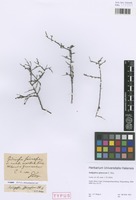
Syntype of Indigofera spinescens E. Mey. [family FABACEAE]
Indigofera nigromontana Eckl. & Zeyh. [family LEGUMINOSAE-PAPILIONOIDEAE]
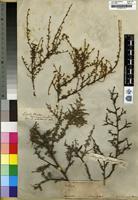
Isosyntype of Indigofera spinescens E. Mey. [family LEGUMINOSAE/FABACEAE]
Indigofera nigromontana Eckl. & Zeyh. [family LEGUMINOSAE-PAPILIONOIDEAE]
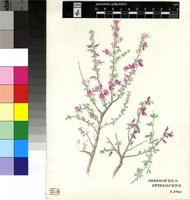
Indigofera spinescens E.Mey.
Type of Indigofera spinescens E.Mey. [family FABACEAE]
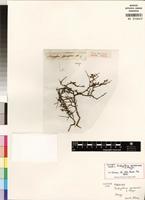
Syntype of Indigofera spinescens E. Mey. [family FABACEAE]
Previous
Next

Name

Identification
Indigofera spinescens E.Mey. [family FABACEAE ]
Related name
  • Indigofera spinescens

Flora

Entry for INDIGOFERA spinescens E. Mey. [family LEGUMINOSAE-PAPILIONOIDEAE]
Herbarium
Royal Botanic Gardens, Kew (K)
Collection
Flora Capensis
Resource Type
Reference Sources
Entry From
Flora Capensis, Vol 2, page 1, (1894) Author: (By W. H. HARVEY).
Names
INDIGOFERA spinescens E. Mey. [family LEGUMINOSAE-PAPILIONOIDEAE], ! Comm. p. 93
Information
shrubby, rigid, divaricately branched; the branches and twigs terete, spinescent; leaves subfasciculate, trifoliolate, on very short petioles; leaflets (minute) obovate, concave, thick, glabrous above, minutely strigillose beneath; stipules obsolete; racemes subsessile, laxly few-flowered, scarcely exceeding the leaf; calyx pubescent, bluntly 5-fid; petals pubescent; legumes terete, straight. A very scraggy, small bush. Leaflets about 1–1 1/2 lines long, 1/2 line wide, pale green. Flowers very small. I have not seen legumes.
Distribution
SOUTH AFRICA Dry rocky, mountain ground in Namaqualand. Leliefontein, 4000f., and Witpoort, and Zwaanepoelspoort, 3600f., Drege! (Herb. Bth., Hk., D.)
Notes
The specimens above quoted are all imperfect.

Related Materials

  • Terms and Conditions
  • Privacy Policy
  • Cookie Policy
  • Cookie Settings
  • Accessibility
  • Help
  • Contact Us
  • Facebook
  • Twitter
ITHAKA

JSTOR is part of ITHAKA, a not-for-profit organization helping the academic community use digital technologies to preserve the scholarly record and to advance research and teaching in sustainable ways.

©2000-2026 ITHAKA. All Rights Reserved. JSTOR®, the JSTOR logo, JPASS®, Aluka®, and ITHAKA® are registered trademarks of ITHAKA.

╳