JSTOR Global Plants Home
  • Home
  • Browse
  • About
  • Access
  • Account
    • Saved Items
    • Profile
  • Log in

Global Plants

Skip to Main Content
  • JSTOR Global Plants Home
  • Global Plants

    • Browse
    • About
    • Access
    • Account
      • Saved Items
      • Profile
Log in
  • Browse
  • About
  • Access
  • Account
    • Saved Items
    • Profile
Advanced Search

Compilation
Impatiens wallerana

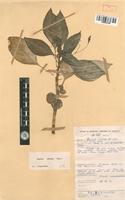
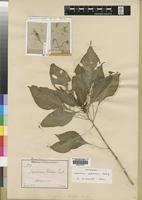
2 Images see all

Impatiens wallerana Hook , F. [family BALSAMINACEAE]
Type of Impatiens holstii Engl. [family BALSAMINACEAE]
Previous
Next

Name

Identification
Impatiens holstii Engl. [family BALSAMINACEAE ] Impatiens wallerana Hook.f. [family BALSAMINACEAE ] (stored under name);
Related name
  • Impatiens wallerana
  • Impatiens holstii

Flora

Entry for Impatiens wallerana Hook. f. [family BALSAMINACEAE]
Herbarium
Royal Botanic Gardens, Kew (K)
Collection
Flora Zambesiaca
Resource Type
Reference Sources
Entry From
FZ, Vol 2, Part 1, page 162, (1963) Author: E. Launert
Names
Impatiens wallerana Hook. f. [family BALSAMINACEAE], in Oliv., F.T.A. 1: 302 (1868). — Warb. in Engl., Bot. Jahrb. 22: 49 (1895). — Warb. & Reiche in Engl. & Prantl, Nat. Pflanzenfam. 3, 5: 392 (1895). — Gilg in Engl., Bot. Jahrb. 43: 118 (1909). — Brenan in Mem. N.Y. Bot. Gard. 8, 3: 232 (1953). TAB. 26 fig. 25. Type: Mozambique, Morrumbala, viii.1864, Waller (K, holotype).
Impatiens sultani Hook. f. [family BALSAMINACEAE], in Curt., Bot. Mag., 108: t. 6643 (1882). — O’Neillin Proc. Roy. Geogr. Soc., N. Ser. 7: 454 (1885). — Warb. in Engl., Bot. Jahrb. 22: 48 (1895). Type: description based on a plant grown at Kew Gardens from seeds sent by Kirk, the latter probably collected on the Mamboia (Zanzibar coast) hills.
Impatiens holstii Engl. & Warb. [family BALSAMINACEAE], in Engl., Pflanzenw. Ost-Afr. C: 254 (1895). — Warb. in Engl., Bot. Jahrb. 22: 48 (1895). Type from Tanganyika.
Information
Juicy perennial herb, 30–50 (80) cm. high, usually branched to form a flat top; stems erect or straggling, succulent, thick, glabrous or rarely scattered-pilose, usually translucent, green or reddish, sometimes rooting at lower nodes. Leaves spirally arranged, very rarely apparently opposite, petiolate; lamina very variable in shape and size, (3) 4·5–10 (15) × (2) 2·5–5 (7·5) cm., broadly elliptic or ovate to elliptic-oblong or ovate-oblong, subsucculent, usually translucent, dark or pale green to reddish-green on both surfaces, glabrous on both surfaces or rarely scattered-pilose beneath (mainly on the nerves), apex acute, often acuminate or cuspidate, rarely obtuse, margin crenate-denticulate, often with tentacular hairs on the apex of the crenations towards the base, base usually narrowly (but sometimes broadly) cuneate or rarely rounded and usually with the lamina running down the petiole and thus forming a narrow wing; secondary nerves 7–12 pairs, not very prominent beneath; petiole (1) 2–4·5 (6·5) cm. long, succulent, usually glabrous. Flowers in few-flowered axillary and/or terminal racemes, rarely apparently 1-flowered by reduction (but then the “pedicel” always with a small bract about the middle), very variable in colour and size, dark carmine, wine-red, pink, orange, violet, rarely white; bracts up to 6 mm. long, lanceolate-triangular, acute; pedicel 1–2·5 (3) cm. long, slender, succulent, usually glabrous. Lateral sepals (3) 4–7 × 2·25–3 mm. (in cultivated specimen sometimes slightly larger), ovate-lanceolate or lanceolate-triangular, acute, glabrous (always?), green; posterior sepal relatively small, up to 1·5 cm. long, c. 0·5 cm. deep, shallowly navicular, bluntish-keeled, abruptly constricted into the spur, distally sometimes subcaudate, usually acute or subobtuse; spur up to 4 cm. long, slender, slightly curved, usually with the end somewhat thickened, glabrous. Anterior petal up to 12 mm. long, up to 18 mm. broad (when flattened), very broadly ovate or obcordate, with the apex usually retuse to emarginate, rarely acute, dorsally very narrowly cristate; lateral united petals very deeply 2-lobed (the lobes appearing nearly separate), with the lobes nearly equal in shape and size, 10–20 × 7–15 mm. (sometimes even larger), obliquely obovate, obovate-spathulate or obovate-cuneate, with the apex rounded or sub-truncate (see t. 26 fig. 25). Ovary usually glabrous. Capsule up to 18 mm. long, broadly oblique-fusiform, glabrous. Seeds numerous, c. 1·75 × 1·5 mm., pyriform, rusty or blackish, ± densely covered with short thick hairs on papillose bases.
Habitat
Frequent in rain-forest gullies, along water courses in forests, in damp shady places, on decaying tree trunks and on rocky river banks.
Distribution
Mozambique MS Manica, Moribane, R. Furozi, fl. & fr. 30.x.1953, Pedro 4169 (LMJ).Mozambique Z Morrumbala Mt., E. hillside, R. Inhambondua, fl. & fr. 27.x.1945, Pedro 485 (LMJ; PRE; SRGH).Malawi S Chola Distr., Chola Mt., 1200 m., fl. 24.ix.1946, Brass 17779 (SRGH).Zimbabwe E Chirinda, fl. 28.iii.1950, Hack 131/50 (SRGH).
Distribution (external)
Kenya
Zanzibar
Tanganyika

Related Materials

  • Terms and Conditions
  • Privacy Policy
  • Cookie Policy
  • Cookie Settings
  • Accessibility
  • Help
  • Contact Us
  • Facebook
  • Twitter
ITHAKA

JSTOR is part of ITHAKA, a not-for-profit organization helping the academic community use digital technologies to preserve the scholarly record and to advance research and teaching in sustainable ways.

©2000-2026 ITHAKA. All Rights Reserved. JSTOR®, the JSTOR logo, JPASS®, Aluka®, and ITHAKA® are registered trademarks of ITHAKA.

╳