JSTOR Global Plants Home
  • Home
  • Browse
  • About
  • Access
  • Account
    • Saved Items
    • Profile
  • Log in

Global Plants

Skip to Main Content
  • JSTOR Global Plants Home
  • Global Plants

    • Browse
    • About
    • Access
    • Account
      • Saved Items
      • Profile
Log in
  • Browse
  • About
  • Access
  • Account
    • Saved Items
    • Profile
Advanced Search

Compilation
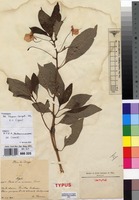
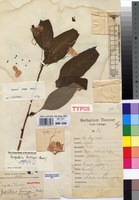
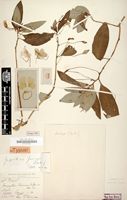
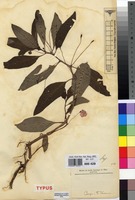
Impatiens thonneri

4 Images see all

Type of Impatiens thonneri De Wild. & T.Durand [family BALSAMINACEAE]
Holotype of Impatiens thonneri De Wild. & T.Durand [family BALSAMINACEAE]
Type of Impatiens thonneri De Wild. & T.Durand [family BALSAMINACEAE]
Previous
Next

Name

Identification
Impatiens thonneri De Wild. & T.Durand [family BALSAMINACEAE ] Verified by Not on sheet., Impatiens irvingii Hook.f. [family BALSAMINACEAE ] (stored under name); Verified by Not on sheet.,
Related name
  • Impatiens thonneri
  • Impatiens irvingii

Flora

Entry for Impatiens irvingii Hook. f. ex Oliv. [family BALSAMINACEAE]
Herbarium
Royal Botanic Gardens, Kew (K)
Collection
Flora Zambesiaca
Resource Type
Reference Sources
Entry From
FZ, Vol 2, Part 1, page 162, (1963) Author: E. Launert
Names
Impatiens irvingii Hook. f. ex Oliv. [family BALSAMINACEAE], F.T.A. 1: 300 (1868). — Warb. in Engl., Bot. Jahrb. 22: 48 (1895). — Gilg in Engl., Bot. Jahrb. 43: 111 (1909). — De Wild., Plant. Bequaert. 1: 360 (1922). — Keay, F.W.T.A. ed. 2, 1: 161 (1954). — G. M. Schulze in Exell & Mendonça, C.F.A. 2, 2: 160 (1956). — Wilczek & Schulze, F.C.B. 9: 415 (1960). TAB. 26 fig. 13. Type from Nigeria.
Impatiens kirkii Hook. f. ex Oliv. [family BALSAMINACEAE], F.T.A. 1: 300 (1868). — Warb. in Engl., Bot. Jahrb. 23: 48 (1895). Type: Nyasaland, W. side of Lake Nyasa, Kirk (K, holotype).
Impatiens kirkii var. hypoleuca Welw. ex. Hiern [family BALSAMINACEAE], Cat. Afr. Pl. Welw. 1: 110 (1896). Type from Angola.
Impatiens thonneri De Wild. & Dur. [family BALSAMINACEAE], Pl. Thonn. Congol.: 24, t. 11 (1900). — T. & H. Dur., Syll. Fl. Cong.: 80 (1901). — De Wild., Etudes Fl. Bang. Ubang.: 342 (1911). Type from the Congo.
Information
Perennial herb usually much branched; stems up to 1·5 m. long or even more, succulent, prostrate or ascending, rarely erect, red or green tinged with red, usually somewhat swollen at the nodes, glabrous or hairy (sometimes all over) with a very dense velvety indumentum. Leaves spirally arranged, sessile or petiolate; lamina (4) 6–13 (16) × (1) 1·5–3·5 (4·5) cm., lanceolate, oblong-lanceolate, ovate-lanceolate, oblong-elliptic or rarely elliptic, chartaceous, usually olive or dark green on the upper surface, glaucous, silvery or greyish-green on the lower one, glabrous on both surfaces or pubescent on the lower and glabrous or sparsely pilose on the upper one, or often with a very dense velvety indumentum below, apex acute or very rarely subobtuse and usually acuminate, margin crenate-denticulate or rarely serrate and sometimes ciliate towards the base, base cuneate or rarely subrounded; secondary nerves 8–13 pairs; petiole up to 3 cm. (in our region leaves subsessile in only specimen known), glabrous or more often pilose or pubescent. Flowers axillary, solitary or in clusters of 2 or 3, pale purple or violet; bracts up to 4 mm. long, lanceolate-triangular or subulate, acute, usually densely pilose, rarely glabrous; pedicels up to 9 cm. long, slender, pilose or glabrous. Lateral sepals 4–7 × 1·5–2·5 (3) mm., lanceolate to ovate-lanceolate, rarely oblong-lanceolate, acuminate, usually ± densely pilose, sometimes glabrous. Posterior sepal 9–14 mm. long, c. 2·5 mm. deep, shallowly and obliquely navicular, abruptly constricted into the spur, distally caudate, usually ± densely pilose, rarely glabrous; spur up to 5·5 cm. long, rather slender, subconical in the upper half, cylindric in the lower one, with a subacute end, ± densely pilose, rarely glabrous, strongly incurved when young, slightly incurved or often nearly straight when older. Anterior petal 8–15 mm. high and up to 17 mm. broad (when flattened), dorsally very narrowly cristate with crest often rim-like, apex usually entire, mucronate. Lateral united petals very variable in size, (13) 17–25 (30) mm. long, deeply 2-lobed; lobes nearly always ± overlapping, usually glabrous, rarely pubescent outside; anterior lobe 10–18 × 7–15 mm., obliquely semi-elliptic, semi-circular or rarely obovate, entire, with the lower margin usually ± straight; posterior lobe usually somewhat smaller (very rarely a little larger) than the anterior one, usually obovate, rarely subcircular, entire (see t. 26 fig. 13). Ovary glabrous. Capsule up to 1·8 cm. long, fusiform, glabrous. Seeds numerous, c. 2·5 × 1·7 mm., obovate in outline, brownish, with a papillose surface, glabrous.
Habitat
In moist places in forests, beside watercourses and in swamps.
Distribution
Malawi N Nkata Bay, 600 m., fl. 21.ii.1961, Richards 14440 (K; SRGH).
Distribution (external)
Angola
Congo
Cameroons
Uganda
Guinea
Tanganyika
Notes
A very variable species in accordance with its wide distribution.

Related Materials

  • Terms and Conditions
  • Privacy Policy
  • Cookie Policy
  • Cookie Settings
  • Accessibility
  • Help
  • Contact Us
  • Facebook
  • Twitter
ITHAKA

JSTOR is part of ITHAKA, a not-for-profit organization helping the academic community use digital technologies to preserve the scholarly record and to advance research and teaching in sustainable ways.

©2000-2026 ITHAKA. All Rights Reserved. JSTOR®, the JSTOR logo, JPASS®, Aluka®, and ITHAKA® are registered trademarks of ITHAKA.

╳