JSTOR Global Plants Home
  • Home
  • Browse
  • About
  • Access
  • Account
    • Saved Items
    • Profile
  • Log in

Global Plants

Skip to Main Content
  • JSTOR Global Plants Home
  • Global Plants

    • Browse
    • About
    • Access
    • Account
      • Saved Items
      • Profile
Log in
  • Browse
  • About
  • Access
  • Account
    • Saved Items
    • Profile
Advanced Search

Compilation
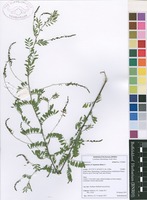
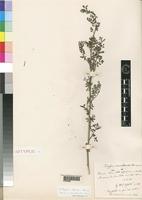
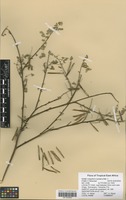
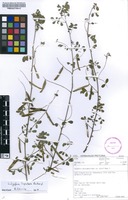
Indigofera lupatana

12 Images see all

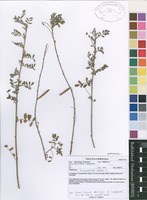
Filed as Indigofera lupatana Baker f. [family FABACEAE]
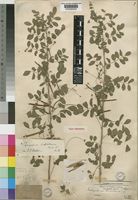
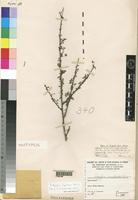
Isotype of Indigofera commiphoroides Chiov. [family LEGUMINOSAE]
Filed as Indigofera lupatana Baker f. [family FABACEAE]
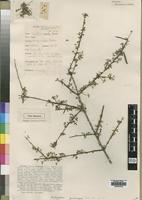
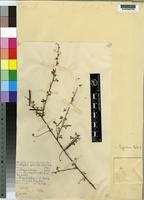
Type of Indigofera goniocarpa Baker f. [family LEGUMINOSAE]
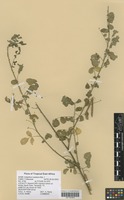
Indigofera lupatana Baker f. [family LEGUMINOSAE-PAPILIONOIDEAE]
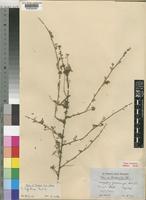
Isotype of Indigofera lupatana Baker f. [family LEGUMINOSAE]
Holotype of Indigofera commiphoroides Chiov. [family LEGUMINOSAE]
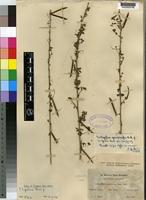
Isotype of Indigofera lupatana Baker f. [family LEGUMINOSAE]
Indigofera lupatana Baker f. [family LEGUMINOSAE-PAPILIONOIDEAE]
Filed as Indigofera lupatana Baker f. [family FABACEAE]
Previous
Next

Name

Identification
Indigofera goniocarpa Baker f. [family LEGUMINOSAE ] Indigofera lupatana Baker f. [family LEGUMINOSAE ] (stored under name);
Related name
  • Indigofera tinctoria
  • Indigofera lupatana
  • Indigofera commiphoroides
  • Indigofera goniocarpa

Flora

Entry for INDIGOFERA lupatana Bak. f. [family LEGUMINOSAE-PAPILIONOIDEAE]
Herbarium
Royal Botanic Gardens, Kew (K)
Collection
Flora of Tropical East Africa
Resource Type
Reference Sources
Entry From
Flora of Tropical East Africa, page 1, (1971) Author: J. B. GILLETT, R. M. POLHILL & B. VERDCOURT
Names
INDIGOFERA lupatana Bak. f. [family LEGUMINOSAE-PAPILIONOIDEAE], L.T.A.: 154 (1926); Gillett in K.B., Add. Ser. 1: 98 (1958); K.T.S.: 366 (1961); F.F.N.R.: 155 (1962). Type: Mozambique, Lupata, Kirk (K, holo.!, LISC, iso.!)
INDIGOFERA goniocarpa Bak. f. [family LEGUMINOSAE-PAPILIONOIDEAE], in J.B. 71: 341 (1933); T.T.C.L.: 428 (1949). Type: Tanganyika, Dodoma District, Kazikazi, B. D. Burtt 3572 (BM, holo. !, EA, K, iso. !)
INDIGOFERA commiphoroïdes Chiov. [family LEGUMINOSAE-PAPILIONOIDEAE], in Cuf., Miss. Biol. Boran.: 69, t. 11 (1939). Type: S. Ethiopia, Arero, Cufodontis 340 (FI, holo. !)
Information
Softly woody shrub up to 2.5 m. tall, everywhere sparsely appressed white strigulose. Leaves varying greatly in size according to the rainfall, sometimes tufted on condensed short shoots; stipules triangular-subulate, 2–4 mm. long; rhachis up to 45 mm. long, including a petiole of ± 10 mm., prolonged up to 5 mm. beyond lateral leaflets; stipellae absent or almost so; leaflets 7–9, rarely 5 or 11, cuneate, oblong-obovate, often emarginate, up to 20 mm. long and 12 mm. wide. Racemes many-flowered, sessile or, when much elongated, shortly pedunculate, 1–13 cm. long; bracts lanceolate, ± 1 mm. long, occasionally persistent; pedicel up to 2 mm. long, reflexed in fruit, but, by a bending of its base, the fruit itself is spreading or ascending. Calyx 2.5 mm. long; lobes triangular-acuminate, twice as long as the tube. Corolla white strigulose outside. Stamens ± 3 mm. long. Pod pointed, markedly tetragonal or almost winged, the wing, but not the sutures, slightly undulate, 3–4 cm. long, ± 3.5 mm. wide and 4 mm. thick, sparsely white strigulose; endocarp not spotted. Seeds 4–8, tetragonal, twice as long as wide.
Range
DISTR. K1, 4, 6, 7; T1–7 S. Ethiopia
Altitude range
250–2100 m.
Distribution
KENYA Northern Frontier, Moyale, 3 July 1952, Gillett 13491 !KENYA Machakos District Chyulu foothills, 14 May 1938 (fr.), Bally 714!KENYA Masai District Rift Valley near Ngong, 29 Dec. 1932, Napier & Mainwaring 2388 !TANGANYIKA Mwanza District Ilemera, Rumara, 5 May 1953, Tanner 1490!TANGANYIKA Pare District Kisangara, May 1928, Haarer 1358!TANGANYIKA Kilosa District Tembo, Jan. 1931, Haarer 1952 !
Distribution (external)
Mozambique
Malawi
Zambia
Rhodesia
South Africa (Transvaal)

Related Materials

  • Terms and Conditions
  • Privacy Policy
  • Cookie Policy
  • Cookie Settings
  • Accessibility
  • Help
  • Contact Us
  • Facebook
  • Twitter
ITHAKA

JSTOR is part of ITHAKA, a not-for-profit organization helping the academic community use digital technologies to preserve the scholarly record and to advance research and teaching in sustainable ways.

©2000-2026 ITHAKA. All Rights Reserved. JSTOR®, the JSTOR logo, JPASS®, Aluka®, and ITHAKA® are registered trademarks of ITHAKA.

╳