JSTOR Global Plants Home
  • Home
  • Browse
  • About
  • Access
  • Account
    • Saved Items
    • Profile
  • Log in

Global Plants

Skip to Main Content
  • JSTOR Global Plants Home
  • Global Plants

    • Browse
    • About
    • Access
    • Account
      • Saved Items
      • Profile
Log in
  • Browse
  • About
  • Access
  • Account
    • Saved Items
    • Profile
Advanced Search

Compilation
Hypoxis nitida

3 Images see all

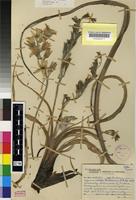
Type of Hypoxis nitida I.Verd. [family HYPOXIDACEAE]
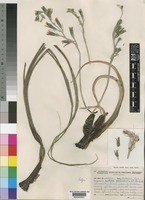
Isotype of Hypoxis nitida Verd. [family HYPOXIDACEAE]
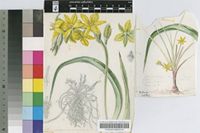
Hypoxis nitida I.Verd.
Previous
Next

Name

Identification
Hypoxis nitida I.Verd. [family HYPOXIDACEAE ]
Related name
  • Hypoxis nitida

Flora

Entry for Hypoxis obtusa Burch. ex Ker Gawl. [family HYPOXIDACEAE]
Herbarium
Royal Botanic Gardens, Kew (K)
Collection
Flora Zambesiaca
Resource Type
Reference Sources
Entry From
FZ, Vol 12, Part 3, page 1, (2001) Author: I. Nordal & C. Zimudzi
Names
Hypoxis obtusa Burch. ex Ker Gawl. [family HYPOXIDACEAE], in Bot. Reg.: tab. 159 (1816)*. —J.G. Baker in J. Linn. Soc., Bot. 17: 114 (1878) pro parte quoad typ. —Nel in Bot. Jahrb. Syst. 51: 334 (1914). —Norlindh in Norlindh & Weimarck in Bot. Not. 1937: 167 (1937) pro parte. Type from South Africa (N Cape Province).
Hypoxis angolensis Baker [family HYPOXIDACEAE], in Trans. Linn. Soc. London, Bot. 1: 266 (1878). —Rendle in Hiern, Cat. Afr. Pl. Welw. 2: 31 (1899). Type from Angola.
Hypoxis iridifolia Baker [family HYPOXIDACEAE], in J. Linn. Soc., Bot. 17: 117 (1878). —Hilliard & Burtt, Bot. South. Natal Drakensberg: 128 (1987). Type: \"Tropical South Africa\" (probably Zimbabwe, Matabeleland), Oct. 1872, Baines s.n. (K, holotype).
Hypoxis ludwigii [family HYPOXIDACEAE], sensu Nel in Bot. Jahrb. Syst. 51: 308 (1914) quoad specim. Oates s.n.
Hypoxis villosa [family HYPOXIDACEAE], sensu Eyles in Trans. Roy. Soc. S. Africa 5: 328 (1916) quoad specim. Gibbs 192.
Hypoxis nitida I. Verd. [family HYPOXIDACEAE], in Fl. Pl. Africa 27: pl. 1058 (1949). Syntypes from Zimbabwe, Matopos, 22.xii.1920, Borle 48 (BM; BR); and from South Africa.
Hypoxis obtusa complex [family HYPOXIDACEAE], sensu Nordal et al. in Nordic J. Bot. 5: 28 (1985) pro parte.
Hypoxis villosa complex [family HYPOXIDACEAE], sensu Zimudzi in Kirkia 16: 15 (1997) pro parte.
Information
Perennial herb 16–50 cm tall. Rhizome stout, vertical 4–7 × 3.5–6 cm, turbinate to ± cylindrical, equatorially ringed by stout contractile roots. Leaves 5–15, trifarious, shiny green, erect at first soon becoming arcuate to ± straggling, conduplicate at least towards the base, overlapping and sheathing at the base, the sheaths with broad hyaline wings; lamina 10–70 × 0.6–3 cm (width measured when folded blades are spread apart and flattened), linear, gradually tapering to a narrowly acute apex, 35–70-ribbed with ribs uniformly broad and mostly very closely spaced, glabrous on both surfaces, or sometimes thinly loosely strigose-pubescent in young leaves, the margins and abaxial midrib conspicuously very densely matted white strigose, the hairs 3–6-armed (stellate) with ± flattened arms; outermost leaves reduced to membranous sheaths with or without blades, the entire outer surface obscured by a sericeous indumentum soon glabrescent; pseudostem up to 5 cm long and up to 12 mm in diameter. Inflorescences 1–4, usually overtopping the arcuate leaves, appearing before the leaves. Scapes up to c. 30 cm long, flattened in cross-section and up to 5 mm wide, ± densely white strigose particularly towards the apex and on the margins towards the base, the hairs unequally 3–6-armed (stellate) with 1–2 strongly developed arms directed to the apex and 1–2(4) arms directed to the base. Flowers 2–13, erect-ascending, in a raceme-like ± cylindrical arrangement 3–13 cm long; bracts 7–25(30) mm long, subulate to linear-lanceolate; pedicels ascending, the lower ones 5–20 mm long, the upper decreasing in length. Outer tepals (7)11–18(22) × 4–7.5 mm, lanceolate, ± involute on the margins, somewhat coriaceous, ± densely greyish-white strigose-sericeous to tawny hispid outside; the inner 10–14 × 6–10 mm, broadly elliptic to ovate, ± involute on the margins, membranous, glabrous, or the abaxial midrib strigose-sericeous; the indumentum hairs 3–6-armed (stellate) with one arm strongly developed, ascending and up to c. 5 mm long. Filaments 2–5 mm long, narrowly triangular; thecae 5–8 mm long. Style 1–2 mm long; stigma c. 3 mm long. Capsule 5–7 mm long and 5–7 mm in diameter, turbinate, circumscissile. Seeds black and glossy, 1.3–2 × 1–1.5 mm, ovoid; testa smooth or ± covered in closely-spaced incipient dome-shaped undulations, the cuticle smooth.
Habitat
Open dry grasslands, on dambo margins and in mixed deciduous woodlands on sandy soil, often after annual fires
Altitude range
1000–1830 m.
1830
1000
Distribution
Botswana N Ramokgwebana area near Tshesebe (Tsessebe) Railway Station, fl. & fr. 6.i.1974, Ngoni 244 (K; SRGH).Zimbabwe W Matobo Distr., Farm Besna Kobila, fl. & fr. xi.1953, Miller 1977 (K; LISC; SRGH).Botswana SE c. 30 km WNW of Lobatse on Kanye road, fl. & fr. 18.i.1960, Leach & Noel 187 (K; SRGH).Zimbabwe C Harare Distr., Hatcliffe, c. 17 km NNE of Harare on Dombashawa road, fl. & fr. 26.ix.1955, Drummond 4883 (BR; K; LISC; SRGH).Zimbabwe E Mutasa Distr., Stapleford road, 3.1 km from junction with Penhalonga to Watsomba road, 1830 m, fl. & fr. 20.xii.1995, Wilkin 728 (K).
Distribution (external)
South Africa (Transvaal, KwaZulu-Natal, Cape)
Angola
Notes
Miller 7126 (Zimbabwe, Matobo, Farm Besna Kobila) differs from typical H. obtusa in that the stellate hairs on the leaf margin are not strongly flattened (but are loosely stellate, with branches ± erect and intertwined), and the veins are not closely spaced.

Related Materials

  • Terms and Conditions
  • Privacy Policy
  • Cookie Policy
  • Cookie Settings
  • Accessibility
  • Help
  • Contact Us
  • Facebook
  • Twitter
ITHAKA

JSTOR is part of ITHAKA, a not-for-profit organization helping the academic community use digital technologies to preserve the scholarly record and to advance research and teaching in sustainable ways.

©2000-2026 ITHAKA. All Rights Reserved. JSTOR®, the JSTOR logo, JPASS®, Aluka®, and ITHAKA® are registered trademarks of ITHAKA.

╳