JSTOR Global Plants Home
  • Home
  • Browse
  • About
  • Access
  • Account
    • Saved Items
    • Profile
  • Log in

Global Plants

Skip to Main Content
  • JSTOR Global Plants Home
  • Global Plants

    • Browse
    • About
    • Access
    • Account
      • Saved Items
      • Profile
Log in
  • Browse
  • About
  • Access
  • Account
    • Saved Items
    • Profile
Advanced Search

Compilation
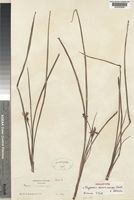
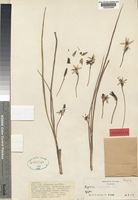
Hypoxis macrocarpa

2 Images see all

Holotype of Hypoxis macrocarpa E.M.Holt & Staubo [family HYPOXIDACEAE]
Holotype of Hypoxis macrocarpa E.Holt & I.Staubo [family HYPOXIDACEAE]
Previous
Next

Name

Identification
Hypoxis macrocarpa E.Holt & I.Staubo [family HYPOXIDACEAE ] Verified by Holt & Staubo, Hypoxis cuanzensis Welw. ex. Bak. [family HYPOXIDACEAE ] (stored under name); Verified by C.Zimudzi,
Related name
  • Hypoxis urceolata
  • Hypoxis macrocarpa
  • Hypoxis cuanzensis

Flora

Entry for Hypoxis schimperi Baker [family HYPOXIDACEAE]
Herbarium
Royal Botanic Gardens, Kew (K)
Collection
Flora of Tropical East Africa
Resource Type
Reference Sources
Entry From
Flora of Tropical East Africa, page 1, (2006) Author: J. WILAND-SZYMAŃSKA & I. NORDAL
Names
Hypoxis schimperi Baker [family HYPOXIDACEAE], in J.L.S. 17: 110 (1878) & in F.T.A. 7: 378 (1898); Nel in E.J. 51: 305 (1914); Cufodontis in E.P.A.: 1578 (1971); Nordal in Fl. Eth. 6: 89 (1997). Type: Ethiopia, Gonder (Begemder), Schimper 1118 (K!, holo.)
Hypoxis macrocarpa Holt & Staubo [family HYPOXIDACEAE], in Nord. J. Bot. 5: 25 (1985). Type: Tanzania, Ufipa District, Sumbawanga, near Mpui, Richards 8768 (K!, holo.)
Hypoxis cuanzensis [family HYPOXIDACEAE], sensu Zimudzi in Kirkia 16: 15 (1997); Nordal & Zimudzi in F.Z. 12: 7 (2001), non H. cuanzensis Baker
Information
Slender herbs up to 45 cm tall. Corm ± cylindrical, 2–4.5≈1.5–3 cm, white or greenish-yellow inside. Leaves forming a whitish pseudostem up to 5 cm long, narrowly lanceolate, ± erect, up to ± 45 cm≈1.5–6 mm, glabrous or thinly pilose, mostly on the margins and midrib abaxially (outside) with hairs 2-armed, the arms fine, appressed, ± unequal; only 2 visible veins except the midrib.Inflorescences 1–6, with slender scapes up to 21 cm long, 0.7–1 mm wide. Flowers most often solitary; pedicels 2–6 mm long; bracts 5–15 mm long, filiform to linear-lanceolate; tepals up to ± 12≈3–4 mm, narrowly elliptic, thinly pilose abaxially (outside); stamens equal, filaments subulate, 1.3–4 mm long, anthers 2.6–3.2 mm long, not split at the apex; ovary obconical, 3 mm long, style 0.5–1.6 mm long, stigma 1.5–2.3 mm long. Capsule 5–10≈4–5 mm, turbinate-cylindric, thinly pilose, circumscissile. Seeds dark brown, 0.8–1.2 mm diameter, globose; testa papillose, each papilla with a minutely wrinkled cuticle and 3–4 longitudinal narrow wing-like ribs (as in Fig. 1: 3 & 6, p. 4).
Range
DISTR. K 3, 4?, 5?, 7; T 2?, 4, 5, 7, 8
Altitude range
900–2400(–3400?) m
Distribution
KENYA Trans-Nzoia District Kitale, 6.5 km on road to Moi’s [Hemstead] Bridge, 6 Aug. 1968, Agnew, Kibe & Mathenge 10588! & near Kapenguria road 5 km from Kitale, May 1954, Rayner 541!KENYA Teita District NE slope of Yale Mt, 10 Apr. 1966, Gillett 17261!TANZANIA Mpanda District Kapapa Camp, 28 Oct. 1959, Richards 11621!TANZANIA Kondoa District Bereko, 17 Jan. 1974, Richards & Arasululu 28737!TANZANIA Songea District 6.5 km west of Songea, 6 Jan. 1956, Milne-Redhead & Taylor 8058!
Distribution (external)
Ethiopia
Zambia
Zimbabwe
Notes
In F.Z. this taxon was named H. cuanzensis Baker. The type of H. cuanzensis (Welwitsch 4056) is from Angola. These two taxa are closely related, but they differ somewhat in seed cuticular folding and petal shape, H. cuanzensis being somewhat narrower, and in leaf venation, veins being more prominent in H. cuanzensis. It is uncertain whether the two taxa deserve taxonomic recognition at species level. The plants from East Africa (and in the F.Z. area) are very similar to the type of H. schimperi from Ethiopia, and should be named accordingly. Plants with seed cuticle folding identical to H. schimperi, but with somewhat narrower leaves (and often with four tepals) were named H. monanthos Baker for in Central Africa (see Wiland-Szymaƒska in Ann. Missouri Bot. Gard. 88: 333, 2001). Relations between these three taxa need further investigation. Three East African specimens appear to deviate in testa structure (Moreau 80 from T 2, Gatheri, Mungai & Kibui 79/84 from K 4, Davis 81 from K 5), lacking the typical cuticular folding, which might be due to seeds being unripe. Two of them are from higher altitudes (2500–3460 m) than the rest of specimens. This also needs further investigation.

Related Materials

  • Terms and Conditions
  • Privacy Policy
  • Cookie Policy
  • Cookie Settings
  • Accessibility
  • Help
  • Contact Us
  • Facebook
  • Twitter
ITHAKA

JSTOR is part of ITHAKA, a not-for-profit organization helping the academic community use digital technologies to preserve the scholarly record and to advance research and teaching in sustainable ways.

©2000-2026 ITHAKA. All Rights Reserved. JSTOR®, the JSTOR logo, JPASS®, Aluka®, and ITHAKA® are registered trademarks of ITHAKA.

╳