JSTOR Global Plants Home
  • Home
  • Browse
  • About
  • Access
  • Account
    • Saved Items
    • Profile
  • Log in

Global Plants

Skip to Main Content
  • JSTOR Global Plants Home
  • Global Plants

    • Browse
    • About
    • Access
    • Account
      • Saved Items
      • Profile
Log in
  • Browse
  • About
  • Access
  • Account
    • Saved Items
    • Profile
Advanced Search

Compilation
Hypoxis galpinii

8 Images see all

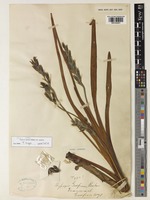
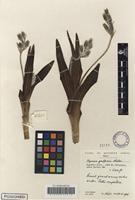
Type of Hypoxis galpinii Baker [family HYPOXIDACEAE]
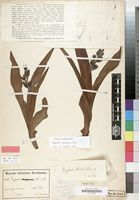
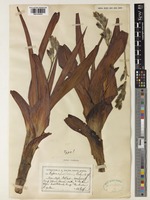
Type of Hypoxis stricta Nel [family HYPOXIDACEAE]
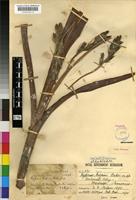
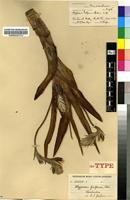
Type of Hypoxis galpinii Baker [family HYPOXIDACEAE]
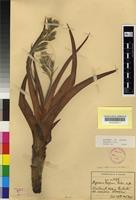
Filed as Hypoxis galpinii Baker [family HYPOXIDACEAE]
Type of Hypoxis galpinii Baker [family HYPOXIDACEAE]
Isotype of Hypoxis galpinii Baker [family HYPOXIDACEAE]
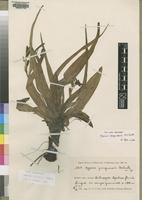
Isotype of Hypoxis pungwensis Norl. [family HYPOXIDACEAE]
Previous
Next

Name

Identification
Hypoxis stricta Nel [family HYPOXIDACEAE ] Verified by Not on sheet., Hypoxis galpinii Baker [family HYPOXIDACEAE ] (stored under name); Verified by Not on sheet.,
Related name
  • Hypoxis galpinii
  • Hypoxis stricta
  • Hypoxis pungwensis
  • Hypoxis villosa

Flora

Entry for Hypoxis galpinii Baker [family HYPOXIDACEAE]
Herbarium
Royal Botanic Gardens, Kew (K)
Collection
Flora of Tropical East Africa
Resource Type
Reference Sources
Entry From
Flora of Tropical East Africa, page 1, (2006) Author: J. WILAND-SZYMAŃSKA & I. NORDAL
Names
Hypoxis galpinii Baker [family HYPOXIDACEAE], in F.C. 6: 188 (1896), as galpini; Nel in E.J. 51: 320 (1914); Zimudzi in Kirkia 16: 16 (1996); Nordal & Zimudzi in F.Z. 12, 3: 11 (2001). Type: South Africa, ‘Transvaal’, Galpin 1098 (K!, holo.; PRE!, iso.)
Hypoxis infausta Nel [family HYPOXIDACEAE], in E.J. 51: 319–320 (1914). Type: Tanzania, Morogoro District, Uluguru, Stuhlmann 9161 (B!, holo.)
Information
Medium robust herbs up to 40 cm tall. Corm subglobose, 4–5.5≈1.5–3.7 cm, orange inside, crowned by black fibrous remnants of former leaves. Leaves dark green, drying red-brown, with sheathing basal part, forming a short pseudostem, erect, coriaceaous, lanceolate, ± flat, eventually conduplicate, 14–40≈1–2.2 cm, with white hairs on margins and midrib abiaxially, otherwise glabrous on both surfaces or with sparse indumentum also on the lamina; hairs tufted, 3–9(–12)-armed, up to 5 mm long; veins 13–45, unequal. Inflorescences 2–7, with scapes 11.5–30 cm long, 1.5–3 mm wide. Flowers 4–10, in a spiciform arrangement; pedicels 2–8 mm long (upper flowers usually sessile); bracts 10–20 mm long, subulate to lanceolate; tepals 7–11≈3–5(–6.5) mm, broadly elliptic, inner slightly wider than the outer; stamens unequal, outer 3.5–5.2 with filaments 1.7–2.2 mm long, inner 3.5–5 mm long with filaments 1.4–1.7 mm long, filaments subulate, anthers 2.5–4.8 mm long with thecae fused; ovary obconical 3–4≈2–3 mm, style 0.8–2.5 mm long, stigma 1.2–2.5 mm long with 3 free or fused erect lobes. Capsule cylindric-turbinate to clavate, 5–10≈4.5–5 mm, circumscissile. Seeds black and glossy, 1.5–1.6≈1.2–1.4 mm, ovoid; testa most often papillate (as in Fig. 1: 2 & 5, p. 4), cuticle smooth.
Range
DISTR. T 6, 7
Altitude range
1900–2600 m
Distribution
TANZANIA Morogoro District Uluguru, Lukwangule Plateau, over Chenzema Mission, 13 Mar. 1953, Drummond & Hemsley 1565!TANZANIA Iringa District Ifiga, 11 Mar. 1934, Troll 5383!TANZANIA Mbeya District Usafwa, Ntumbi, 21 Dec. 1978, Leedal 5248!
Distribution (external)
Zimbabwe
South Africa
Notes
Plants from East Africa are more slender and have narrower leaves than those of the type specimen from South Africa. The specimens from Iringa and Mbeya deviate by having hairs also on the lamina surface. Specimens similar to the Iringa collections are, however, also found on the Inyanga Mountains in Zimbabwe. So far we do not recommend taxonomic delimitation on the subspecific level.

Related Materials

  • Terms and Conditions
  • Privacy Policy
  • Cookie Policy
  • Cookie Settings
  • Accessibility
  • Help
  • Contact Us
  • Facebook
  • Twitter
ITHAKA

JSTOR is part of ITHAKA, a not-for-profit organization helping the academic community use digital technologies to preserve the scholarly record and to advance research and teaching in sustainable ways.

©2000-2026 ITHAKA. All Rights Reserved. JSTOR®, the JSTOR logo, JPASS®, Aluka®, and ITHAKA® are registered trademarks of ITHAKA.

╳