JSTOR Global Plants Home
  • Home
  • Browse
  • About
  • Access
  • Account
    • Saved Items
    • Profile
  • Log in

Global Plants

Skip to Main Content
  • JSTOR Global Plants Home
  • Global Plants

    • Browse
    • About
    • Access
    • Account
      • Saved Items
      • Profile
Log in
  • Browse
  • About
  • Access
  • Account
    • Saved Items
    • Profile
Advanced Search

Compilation
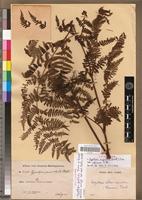
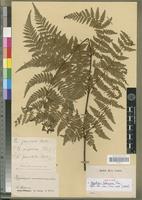
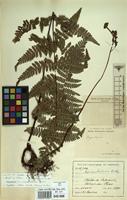
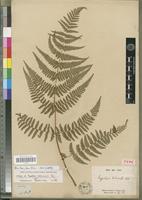
Hypolepis villoso-viscida

12 Images see all

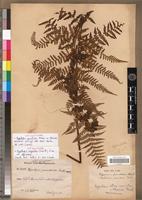
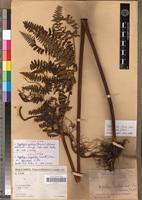
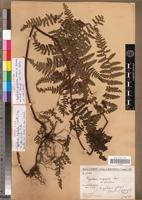
Isosyntype of Hypolepis rugosula (Labill.) J.Sm. var. africana C.Chr. [family PTERIDOPHYTA]
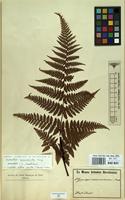
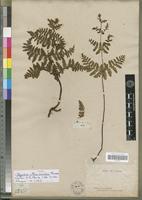
Isotype of Hypolepis helenensis Fée [family PTERIDOPHYTA]
Syntype of Hypolepis repens (L.) C.Presl var. colorata Christ [family DENNSTAEDTIACEAE]
Isotype of Hypolepis helenensis Fée [family PTERIDOPHYTA]
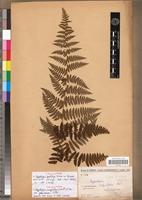
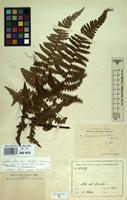
Type of Cheilanthes amaurorachis Kunze [family ADIANTACEAE]
Isosyntype of Hypolepis rugosula (Labill.) J.Sm. var. africana C.Chr. [family PTERIDOPHYTA]
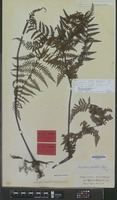
Isotype of Hypolepis chilensis Fée [family PTERIDOPHYTA]
Isosyntype of Hypolepis rugosula (Labill.) J.Sm. var. africana C.Chr. [family PTERIDOPHYTA]
Isotype of Polypodium villoso-viscidum Thouars [family PTERIDOPHYTA]
Syntype of Hypolepis repens (L.) C.Presl var. colorata Christ [family DENNSTAEDTIACEAE]
Previous
Next

Name

Identification
Cheilanthes amaurorachis Kunze [family ADIANTACEAE ] Verified by Not on sheet, Hypolepis villoso-viscida (Thouars) Tardieu [family DENNSTAEDTIACEAE ] (stored under name); Verified by Not on sheet,
Related name
  • Cheilanthes amaurorachis
  • Hypolepis goetzei
  • Hypolepis rugosula
  • Hypolepis repens
  • Hypolepis helenensis
  • Polypodium villoso-viscidum
  • Hypolepis villoso-viscida

Flora

Entry for HYPOLEPIS goetzei Reimers [family DENNSTAEDTIACEAE]
Herbarium
Royal Botanic Gardens, Kew (K)
Collection
Flora of Tropical East Africa
Resource Type
Reference Sources
Entry From
Flora of Tropical East Africa, page 1, (1999) Author: B. Verdcourt, B.Sc., Ph.D.
Names
HYPOLEPIS goetzei Reimers [family DENNSTAEDTIACEAE], in N.B.G.B. 12: 189 (1934); Faden in U.K.W.F., ed. 2: 24 (1994). Type: Madagascar, Ankafina (near Fianarantsoa), Hildebrandt 4139 (B, syn., BM!, isosyn.); between R. Mangoro and R. Matitana, Tanala, Kitching (K!, syn.); Pic d’Ivohibe, Humbert 3324 (BM-Herb. Christensen!, syn.) & ‘mountains of Central and East Africa’ (no specimens cited)
Hypolepis tenuifolia [family DENNSTAEDTIACEAE], [sensu Peter, F.D.-O.A.: 42 (1929), pro parte, non Bernh.]
Hypolepis rugosula C. Chr. var. africana [family DENNSTAEDTIACEAE], in Dansk Bot. Arkiv 7: 121 (1932); Alston, Ferns W.T.A.: 33 (1959); Pic. Serm. in B.J.B.B. 53: 258 (1983). Types as for H. goetzei
Hypolepis villoso-viscida [family DENNSTAEDTIACEAE], [sensu Tardieu, in Fl. Madag. 5(1): 6, fig. 1/3–5 (1958) pro parte, non (Thouars) Tardieu, sensu stricto]
Hypolepis rugosula [family DENNSTAEDTIACEAE], [sensu Faden in U.K.W.F.: 29, fig. on 31 (1974), non (Labill.) J. Sm.]
Information
Rhizome as in H. sparsisora. Fronds well-spaced, 0.7–2.1 m tall; stipe dark purplish or red, 30–60 cm long, rough with minute spinules and with stiff brown multicellular hairs; lamina triangular, 2–3-pinnatifid; rachis similar to stipe; pinnae triangular-lanceolate, 15–25 cm long, stalked, texture thicker than in last species; pinnules of third order elements divided into lanceolate or oblong lobed segments 0.5–2 cm long, the lobes oblique, rounded; midribs etc. with multicellular hairs. Sori with oblong or triangular green pseudo-indusia or sometimes naked (not in Africa).
Range
DISTR. U 2; K 1, 3, 4, ?5, 6; T 2, 6
Altitude range
(1500–)2100–3050(–3550) m
Distribution
UGANDA Toro District Ruwenzori, 4 Oct. 1905, Dawe 569! & Bujuku Valley, near Bigo Camp, 2 Apr. 1948, Hedberg 646!;KENYA Northern Frontier Province Mt Nyiru, 13 Dec. 1972, Cameron 139!;TANZANIA Moshi District Kilimanjaro, between Bismarck and Peter’s Huts, June 1926, Peter 41958! & E Kilimanjaro, 20 Feb. 1971, Vesey-FitzGerald 6995!;UGANDA Kigezi District E Virunga Mts, between Muhavura and Mgahinga, 14 Nov. 1954, Stauffer 783!KENYA Trans-Nzoia District NE Elgon, Apr. 1959, Tweedie 1810!;KENYA Nyeri District Mt Kenya, Naro Moru Track, 6 Sept. 1963, Verdcourt 3727!TANZANIA Morogoro District Uluguru Mts, Lukwangule Plateau, Nov. 1898, Goetze 287
Distribution (external)
; Bioko
Congo (Kinshasa) (Kivu)
Ethiopia
St. Helena
Madagascar
Mascarenes
Notes
The exact name for this species will not be certain until the genus has been revised as a whole. A revision of the New Zealand species (Brownsey & Chinnock in New Zealand J. Bot. 22: 43–80 (1984)) has demonstrated that H. rugosula (Labill.) J. Sm. (as rugulosa ) is an Australian endemic and does not occur in New Zealand. At one time its range was thought to include New Zealand, New Caledonia and Chile. Tardieu-Blot has used the earlier name H. villoso-viscida based on Polypodium villoso-viscida Thouars (Type: Tristan d’Acunha, du Petit- Thouars (P, holo.)). I have examined two sheets from Tristan preserved at Kew and find they differ in indumentum and pinnule-segments from East African material. Tardieu-Blot sinks H. rugosula into H. villoso-viscida and clearly considers the latter is an earlier name for the whole complex. I am also not certain the Réunion material (with no pseudo-indusium) is the same. Reimers cites var. africana in synonymy when establishing H. goetzei so the types are the same for both; Schlieben 4897 (B, BM!) and Goetze 287 (B) cannot be the types. Tardieu-Blot does not cite H. rugosula var. africana in her synonymy but includes two of the syntypes in her citation of specimens. I have deliberately refrained from selecting a lectotype.

Related Materials

  • Terms and Conditions
  • Privacy Policy
  • Cookie Policy
  • Cookie Settings
  • Accessibility
  • Help
  • Contact Us
  • Facebook
  • Twitter
ITHAKA

JSTOR is part of ITHAKA, a not-for-profit organization helping the academic community use digital technologies to preserve the scholarly record and to advance research and teaching in sustainable ways.

©2000-2026 ITHAKA. All Rights Reserved. JSTOR®, the JSTOR logo, JPASS®, Aluka®, and ITHAKA® are registered trademarks of ITHAKA.

╳